—Barrington Williams, B1Daily
Alabama politics has a habit of recycling the same polished names, the same cautious talking points, the same carefully packaged “electable” candidates who move like chess pieces instead of people.
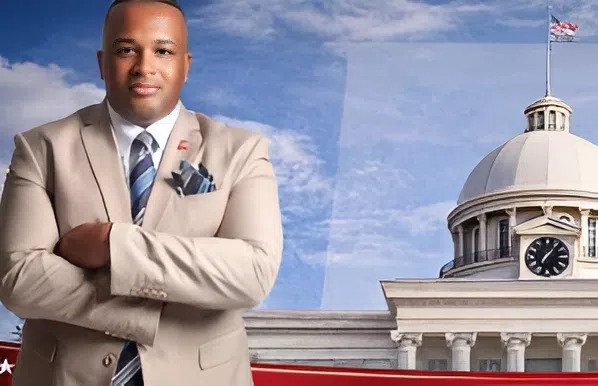
And then there’s Ja’Mel Brown, who walks into the room less like a politician and more like a rowdy pastor that refuses to ask permission to be heard.
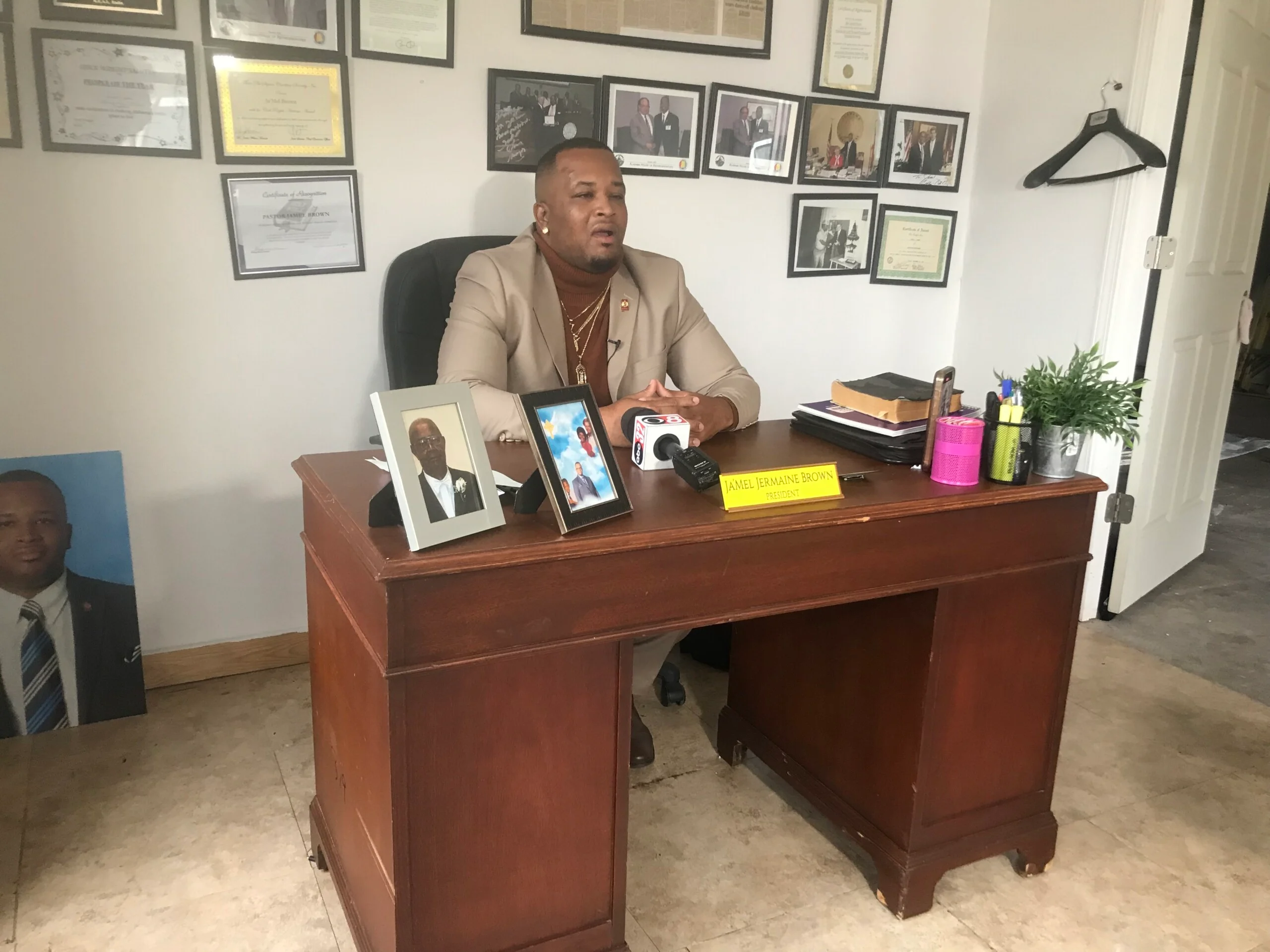
At first glance, Brown doesn’t fit the traditional mold. He’s a pastor, a community activist, and a relatively young candidate in a crowded Democratic primary field that includes heavyweights like Doug Jones. But dismissing him on résumé alone misses the deeper current shaping this race. Brown represents something far more volatile and potentially powerful: a coalition rooted in grassroots frustration, economic urgency, and a demand for unapologetic policy commitments.
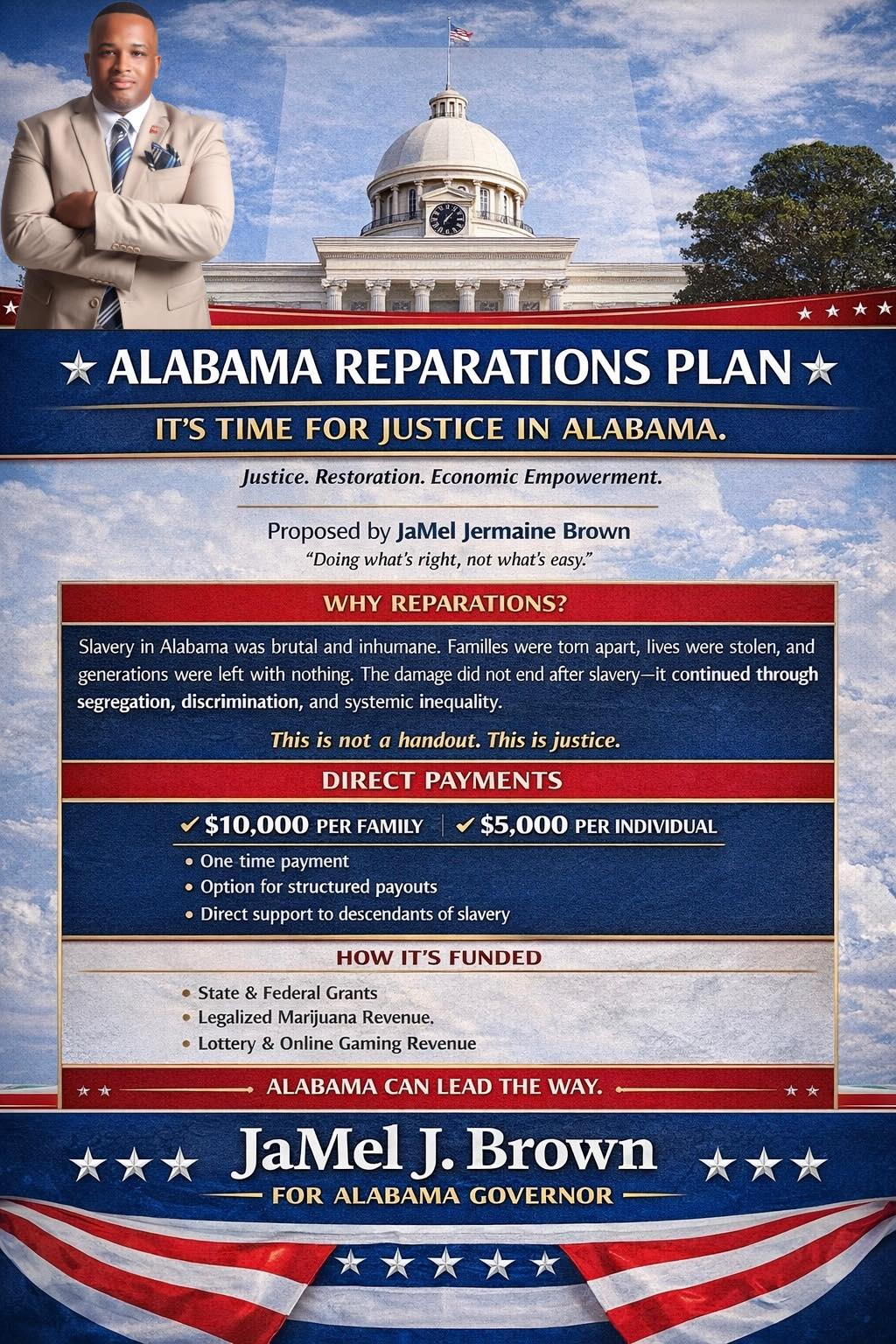
Brown’s campaign has centered on bread-and-butter issues that resonate in a state where economic inequality remains stubbornly entrenched.
He supports reparations, he has emphasized economic relief, justice reform, and education improvements as core pillars of his platform. His “First 100 Days” framework, which includes direct financial support proposals for low-income families, signals a willingness to embrace redistributive policy ideas that establishment candidates often sidestep. This matters in Alabama, where many rural and Black communities feel locked out of economic growth that seems to orbit somewhere else entirely.
But policy alone doesn’t explain why Brown is gaining attention. His real advantage lies in political positioning. While other candidates lean on institutional credibility, Brown leans into cultural fluency.
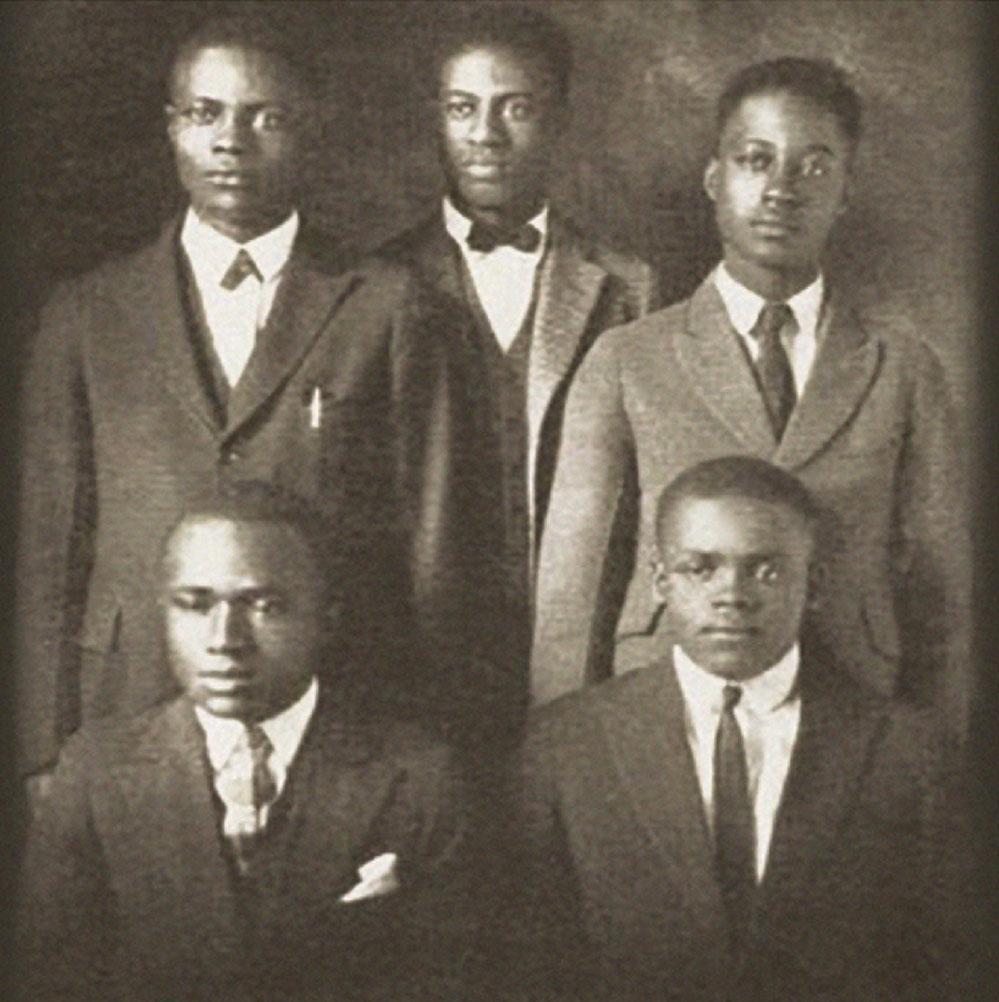
Brown proudly supports reparations for Freedmen.
He has openly framed himself as someone who can navigate multiple worlds, from grassroots communities to political institutions, arguing that adaptability is key to leadership. That framing is not accidental. It’s a direct appeal to voters who feel alienated by both parties yet still demand representation that reflects their lived experience.
Where Brown separates himself most sharply is in his willingness to engage with issues that sit at the intersection of race and economics. His campaign rhetoric and outreach have increasingly emphasized support for Black economic empowerment, including strengthening Black-owned businesses and addressing systemic disparities in access to capital. While not every policy proposal has been formally codified, the political signal is unmistakable: Brown is positioning himself as a candidate willing to entertain reparative frameworks and targeted economic investment in historically marginalized communities.
In a state like Alabama, that is both a risk and an opportunity. The risk is obvious. Alabama’s electorate has trended reliably conservative at the statewide level for decades, and any platform perceived as too radical can become an easy target. The opportunity, however, lies in turnout mathematics. Black voters make up a substantial portion of the Democratic primary electorate, and enthusiasm gaps have historically shaped outcomes more than persuasion. A candidate who can energize that base, particularly younger voters, can punch far above their perceived weight.
Brown’s outsider status also works in his favor in an era where political distrust runs high. He is not burdened by past votes in Congress or long legislative records that opponents can weaponize. Instead, he presents himself as a blank canvas for voters who want disruption rather than continuity. His growing social media presence and direct communication style amplify that image, allowing him to bypass traditional media filters and speak directly to supporters.
Of course, the path forward is anything but easy. The Democratic field remains crowded, and name recognition still heavily favors established figures. Fundraising disparities could also limit Brown’s ability to compete statewide, particularly in a media environment where visibility often follows money. And Alabama’s broader political landscape remains a steep climb for any Democrat, regardless of platform.
Yet, dismissing Brown as a fringe candidate would be a mistake. His campaign taps into a deeper undercurrent: a growing impatience with incrementalism and a desire for candidates who are willing to confront structural inequality head-on. In that sense, his candidacy is less about political pedigree and more about political timing.
If Alabama’s 2026 gubernatorial race becomes a contest between caution and conviction, between institutional familiarity and grassroots energy, Ja’Mel Brown may find himself not just in the conversation, but reshaping it.
Because sometimes the candidate who looks least “electable” on paper is the one rewriting the rules in real time.
—Barrington Williams, B1Daily




Leave a comment