—Travis Luyindama, B1Daily
Handheld gaming PCs have mutated from niche Linux experiments into a miniature hardware arms race where cooling systems, memory bandwidth, RDNA cores, battery chemistry, and SSD speeds matter more than brand loyalty. The modern handheld market now resembles a tiny cyberpunk scrapyard stuffed with portable GPUs pretending to be consoles.
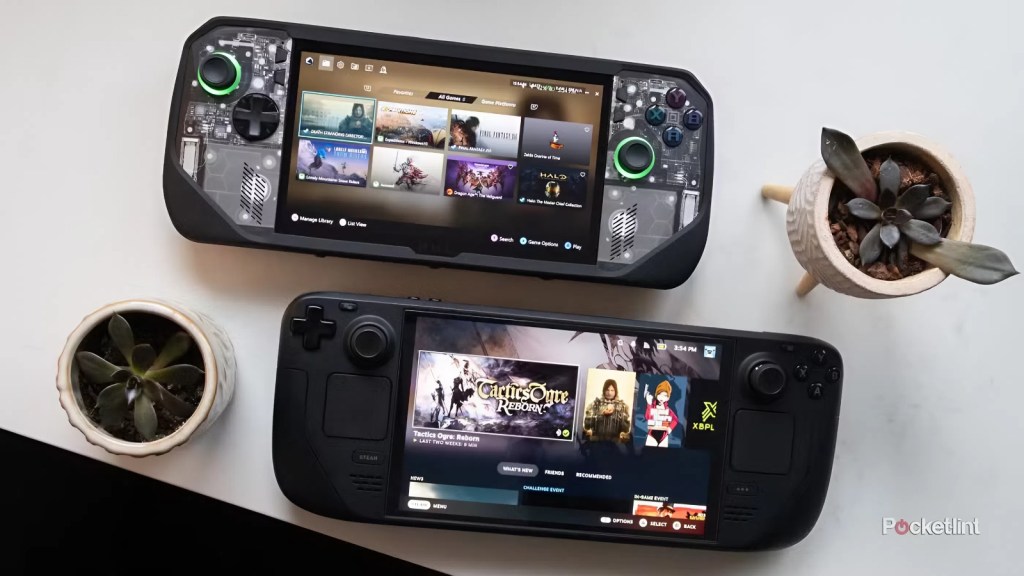
At the center of the fight are three distinct philosophies: Valve’s Steam Deck, ASUS’s ASUS ROG Ally line, and a rapidly expanding ecosystem of emulation-focused handhelds from companies like AYANEO, GPD, Retroid, and Anbernic. Each category solves a different hardware problem, which is why no single device has completely dominated the market.
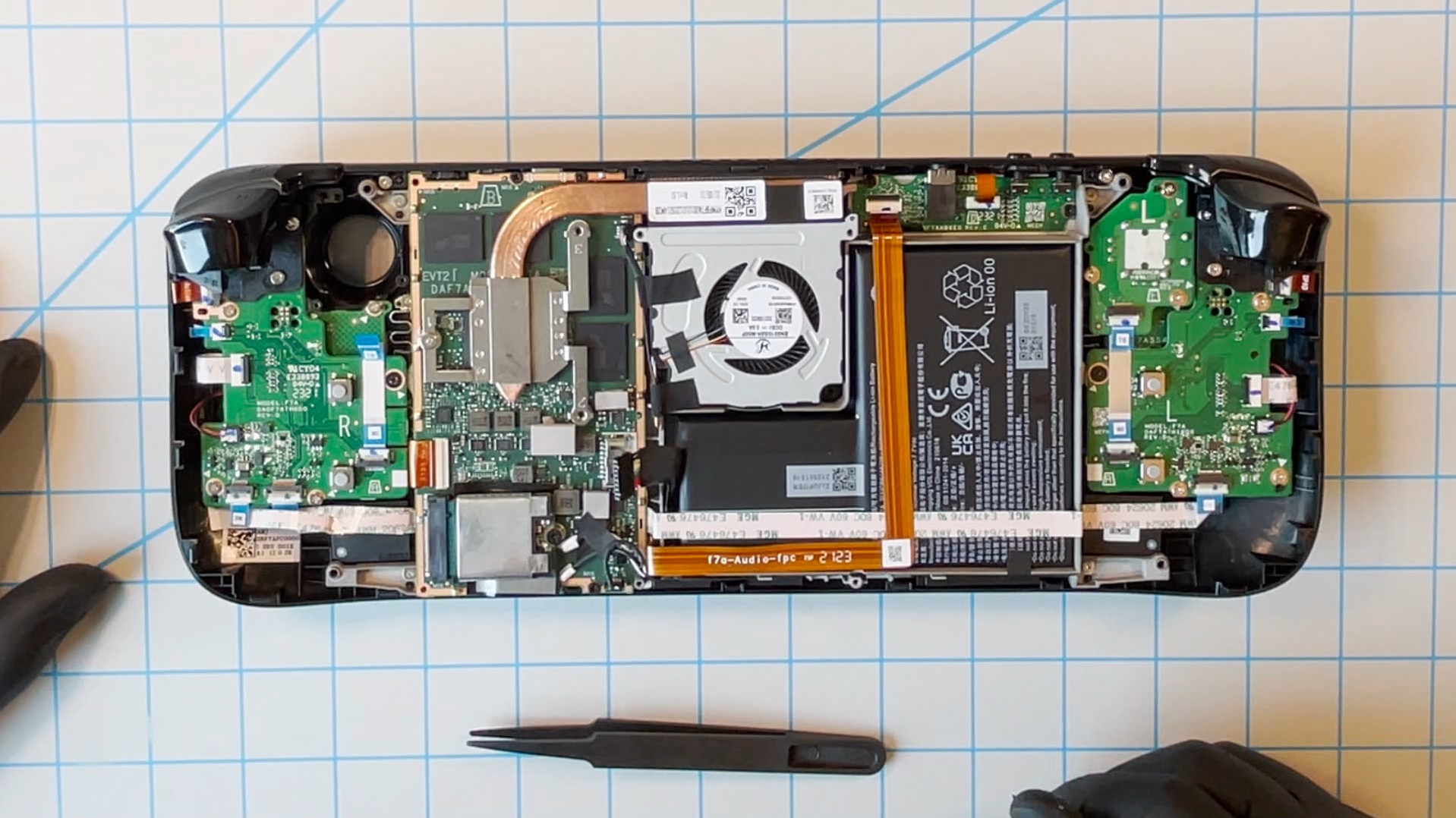
The Steam Deck remains the most balanced handheld gaming system because Valve engineered both the hardware and operating system together like a tightly compressed engine tuned for efficiency rather than raw brute force. Its custom AMD APU combines Zen 2 CPU cores with RDNA 2 graphics, specifications that may appear outdated beside newer competitors until real-world thermal performance and battery life enter the equation. The Steam Deck thrives in lower wattage ranges between roughly 10 and 15 watts, allowing it to maintain stable frame pacing, quieter fan acoustics, and longer battery endurance than many rivals. SteamOS also removes much of the unnecessary Windows overhead that consumes memory and CPU resources in competing handhelds. The OLED revision strengthened the platform further by adding a vastly superior display, better battery efficiency, and improved thermals while maintaining the same hardware philosophy that made the original Deck successful.
Valve’s greatest engineering achievement is arguably not raw performance but consistency. Suspend and resume functionality works almost console-like, thermal throttling is predictable, and the system’s repair-friendly design makes long-term ownership less painful than most consumer electronics. The weakness, however, is obvious: modern AAA games increasingly expose the aging limitations of the RDNA 2 graphics architecture. The Steam Deck survives partly because its native 800p display acts as a pressure-release valve, dramatically reducing GPU load compared to full 1080p handheld competitors.
The ROG Ally approaches the market from the opposite direction. ASUS essentially built a miniature Windows gaming laptop with controller grips attached. Powered by AMD’s Z1 Extreme processor, the Ally delivers significantly stronger GPU throughput and CPU headroom than the Steam Deck, especially in demanding modern titles and higher-end emulation workloads. Games targeting Unreal Engine 5, PlayStation 3 emulation, Xbox 360 emulation, and Nintendo Switch emulation all benefit from the Ally’s additional horsepower and faster LPDDR5X memory bandwidth. The newer Ally X model improved battery capacity, cooling efficiency, ergonomics, and storage expansion, making it a more mature design than the original release.
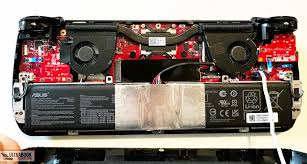
Yet the Ally’s extra power creates unavoidable thermodynamic consequences. At higher wattages, the device can drain its battery with startling speed while generating substantial heat. Windows also remains both a blessing and a curse. Native Game Pass support, wider launcher compatibility, anti-cheat support, and desktop functionality make the Ally more versatile than the Steam Deck, but Windows background processes consume resources continuously and still feel awkward on handheld hardware. Sleep and resume reliability also lags behind Valve’s Linux-based ecosystem. The Ally ultimately behaves less like a console and more like a compressed gaming PC fighting against the laws of physics.
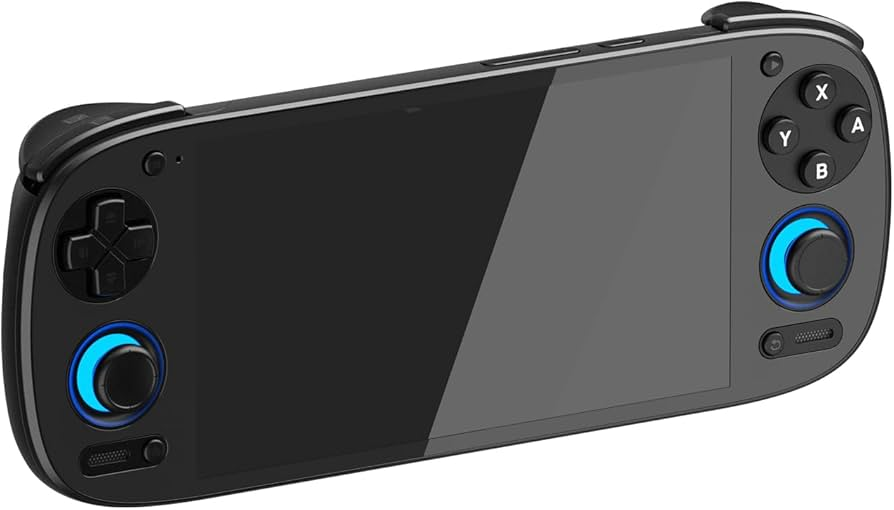
Meanwhile, the third-party emulation market has transformed into a bizarre laboratory of specialized hardware experimentation. Companies like AYANEO, GPD, Retroid, and Anbernic now release devices targeting nearly every performance tier imaginable. Some focus on low-power ARM-based emulation using smartphone processors optimized for battery life and retro gaming efficiency. Devices such as the Retroid Pocket 5 and Anbernic RG556 excel at emulating PlayStation 1, Dreamcast, PSP, and even portions of the GameCube library while remaining cool, quiet, and highly portable. ARM architecture delivers exceptional performance-per-watt efficiency because these chips were originally designed for mobile devices rather than desktop-class gaming workloads.
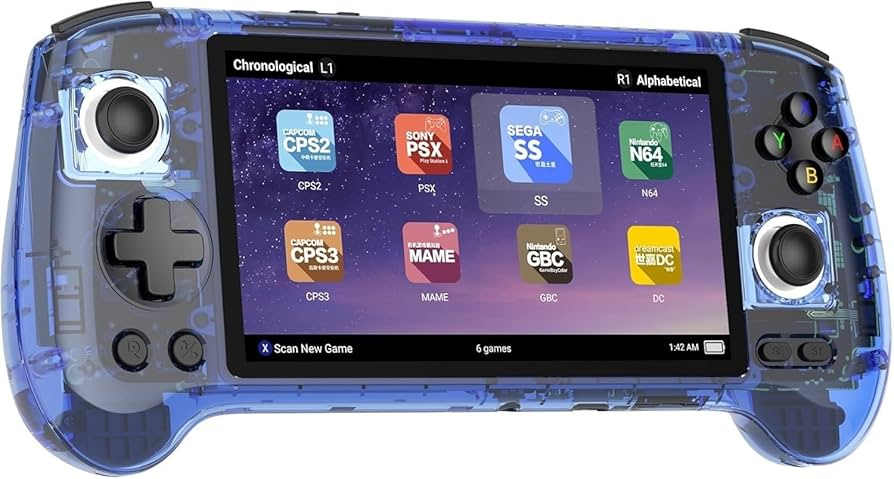
However, ARM handhelds still struggle with more demanding console generations like PlayStation 3 and Xbox 360 due to the immense CPU translation overhead required by modern emulators. That limitation led companies like AYANEO and GPD to pursue far more powerful x86 handhelds that blur the line between portable gaming systems and compact gaming laptops. Devices such as the AYANEO Kun and GPD Win Mini feature Ryzen 7 or Ryzen 9 processors, massive RAM capacities, high refresh rate displays, and even external GPU support through OCuLink connections. These machines can achieve astonishing performance levels for handheld hardware, but they also drift into gaming laptop pricing territory while battling severe thermal and battery limitations.
Another corner of the market has pursued hardware accuracy instead of raw power. The Analogue Pocket uses FPGA technology to recreate retro hardware behavior at the chip level rather than relying on software emulation. For retro enthusiasts, this approach produces lower latency and more authentic hardware behavior that closely mirrors original consoles. FPGA handhelds are less flexible than software emulation devices but offer a level of authenticity many preservation-focused gamers consider unmatched.
The most important battle across the entire handheld market is not actually teraflops or CPU branding. It is memory bandwidth and thermal engineering. Modern handheld APUs rely entirely on unified memory architectures because they lack dedicated VRAM pools found in desktop GPUs. Faster LPDDR5X memory can dramatically improve integrated graphics performance because the GPU continuously feeds from system RAM. Cooling systems matter equally because sustained performance determines actual gaming quality far more than short-lived benchmark spikes. A handheld briefly running at 35 watts before thermal throttling may perform worse during long gaming sessions than a cooler system maintaining stable clocks at 15 watts.
No single device dominates every category because the handheld gaming market has fractured around fundamentally different priorities. The Steam Deck remains the king of efficiency, ecosystem integration, and console-like usability. The ROG Ally pushes higher raw performance and broader software compatibility at the cost of heat and battery endurance. Third-party emulation devices meanwhile occupy a sprawling middle ground ranging from ultra-efficient retro handhelds to absurdly powerful portable gaming PCs that practically challenge thermodynamics itself.
The result is one of the strangest eras in gaming hardware history. Pocket-sized machines now run AAA games, emulate sixth-generation consoles, connect to external GPUs, and occasionally become hot enough to feel like miniature reactor cores balanced in human hands.
—Travis Luyindama, B1Daily






Leave a Reply