
—Kerry Hill, B1Daily
For decades, Black parents have found themselves at the center of one of America’s fiercest education debates. While politicians argue over vouchers, charter schools, education savings accounts, and open enrollment policies, many Black families are asking a much simpler question: Will this give my child a better future?
School choice has become one of the fastest-growing education reforms in the United States. Once viewed primarily as a conservative policy proposal, it has increasingly attracted support from urban parents, civil rights activists, and community organizations frustrated with persistently underperforming public schools.
Yet despite its popularity, school choice remains deeply controversial.
Supporters argue that it gives Black families opportunities that wealthier families have long enjoyed. Critics counter that it risks weakening public schools that still educate the overwhelming majority of Black students.
The reality is far more complicated than either side often admits.
Why School Choice Appeals to Many Black Families
For generations, many Black students have attended schools affected by concentrated poverty, teacher shortages, aging facilities, and lower academic performance.
Because school assignments have traditionally been tied to neighborhood boundaries, many families with limited financial resources had few alternatives.
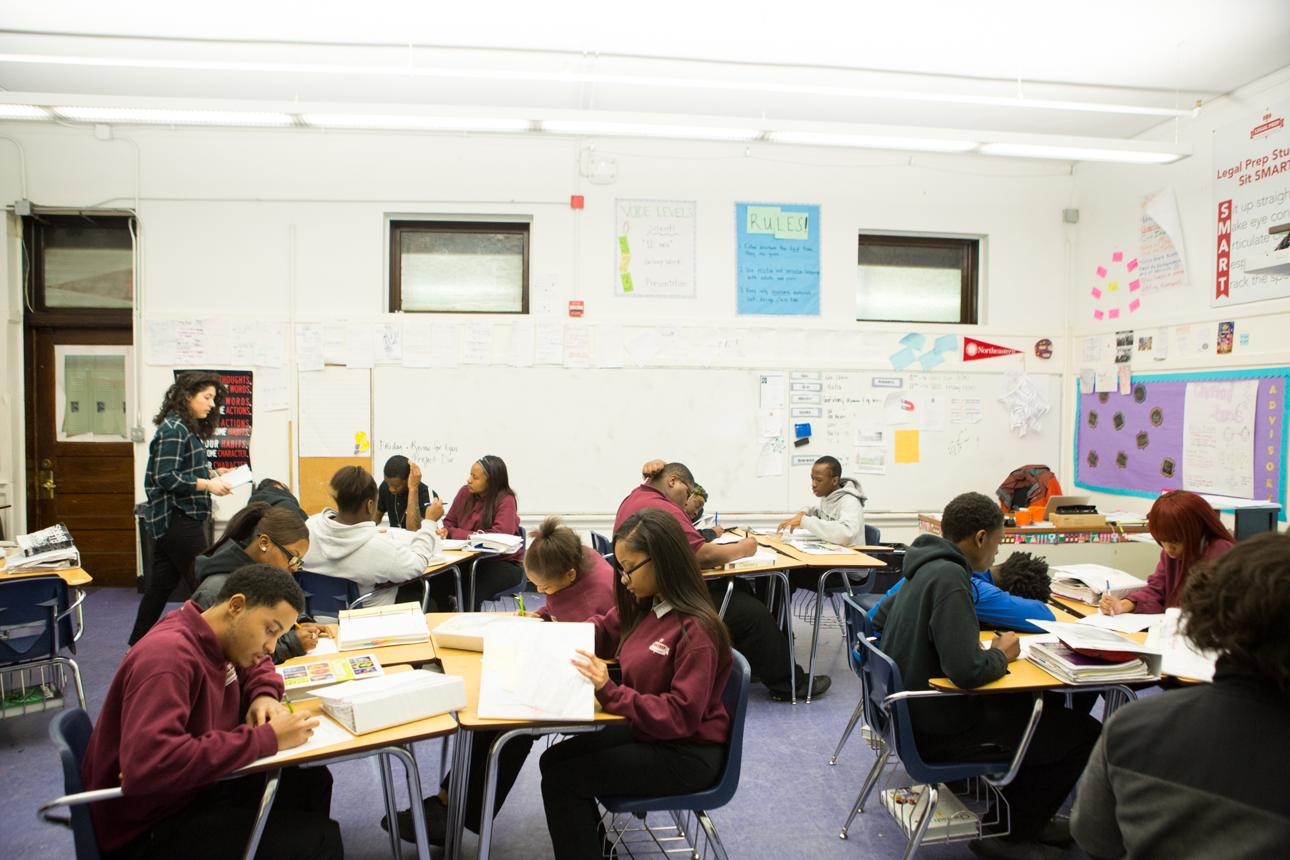
School choice attempts to change that.
Programs vary by state but generally include charter schools, private-school vouchers, education savings accounts, tax-credit scholarships, and interdistrict open enrollment.
For many Black parents, these options represent something they have rarely had: the ability to choose rather than simply accept the school assigned by their ZIP code.
In cities across America, long waiting lists for popular charter schools suggest that demand often exceeds supply.
What the Research Shows
Research on school choice paints a mixed but informative picture.
Some charter schools serving predominantly Black students have produced strong gains in reading, mathematics, graduation rates, and college enrollment. High-performing urban charter networks have demonstrated that students from disadvantaged backgrounds can achieve significant academic growth when schools combine strong leadership, rigorous instruction, and consistent expectations.
Voucher programs have produced more varied results.
Some studies show modest improvements in graduation rates and parental satisfaction. Others find little academic difference or even temporary declines in test scores after students transfer.
One reason is simple.
School choice expands options, but not every option is a good one.
Just as traditional public schools vary dramatically in quality, charter and private schools also range from exceptional to ineffective.
Choice alone cannot guarantee excellence.
Beyond Test Scores
Academic performance is only one measure families consider.
Many Black parents prioritize school safety, discipline, cultural understanding, smaller class sizes, and learning environments where their children feel respected.

For families leaving schools plagued by violence or chronic disruption, these improvements may matter as much as standardized test scores.
Parent satisfaction surveys consistently show that families participating in many school choice programs report feeling more involved in their children’s education and more confident in their schools.
That sense of empowerment should not be dismissed.
Concerns About Public Schools
Opponents of school choice argue that expanding alternatives can reduce enrollment and funding for traditional public schools.
Since public schools continue educating most Black children, critics worry that resources could become increasingly concentrated among students facing the greatest educational challenges.
Others point to accountability concerns.
Unlike traditional public schools, oversight requirements for charter schools and private-school voucher recipients differ widely from state to state.
Without strong accountability measures, ineffective schools can continue operating despite poor outcomes.
Transportation also remains a major obstacle.
A school across town may technically be available, but if families cannot reliably reach it, choice exists only on paper.
The Importance of Quality
Perhaps the most important lesson from decades of research is that school choice is not a magic solution.
High-quality schools improve student outcomes.
Low-quality schools do not.
Whether a school is public, charter, private, or magnet matters less than whether it delivers effective teaching, safe classrooms, strong leadership, and measurable academic progress.
The debate should not simply be about expanding options.
It should also focus on ensuring every option meets high standards.
A Question of Equity
School choice has exposed a broader question about educational equity.
Affluent families have long exercised school choice through private education or by purchasing homes in high-performing districts.
For many Black families, modern school choice programs seek to provide opportunities that wealthier households have effectively enjoyed for generations.
Whether those programs ultimately reduce educational inequality depends on their design, oversight, and ability to ensure that disadvantaged families can access high-quality schools rather than merely different ones.
Looking Ahead
School choice is likely to remain one of America’s defining education issues.
As more states expand educational options, policymakers will face increasing pressure to balance parental freedom with public accountability.
For Black students, the most important question is unlikely to be whether a school is public or private.
It is whether that school prepares them for college, careers, financial independence, and lifelong success.
If school choice accomplishes that goal, many families will consider it worthwhile.
If it simply moves students between struggling schools, it risks becoming another reform that promised more than it delivered.
The future of school choice should ultimately be judged not by ideology or politics, but by the educational outcomes it produces for the students it was designed to serve.
—Kerry Hill, B1Daily






Leave a comment