—Sylvester Loving, B1Daily
The brief hope that the United States and Iran were stepping back from the brink has evaporated.
After weeks of uneasy diplomacy and a fragile ceasefire, the conflict has once again erupted into open military confrontation. U.S. strikes against Iranian targets, Iranian retaliation, and escalating attacks around the Strait of Hormuz have ended any illusion that peace was securely within reach.
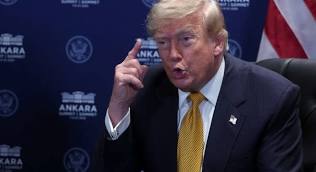
President Donald Trump declared the interim agreement with Iran “over,” signaling that negotiations had effectively collapsed while authorizing new military action against Iranian targets. Iran responded with renewed attacks, further escalating a conflict that now threatens to engulf the broader Middle East.
The Ceasefire Didn’t Last
The ceasefire was always fragile.
It was intended to create breathing room for negotiations over Iran’s nuclear program, sanctions, and regional security.
Instead, attacks on commercial shipping in the Strait of Hormuz reignited tensions. The United States responded with military strikes, arguing they were retaliation for attacks on international shipping. Iran answered with its own military response, effectively ending the diplomatic pause.
The result is a return to military escalation at one of the world’s most strategically important chokepoints.
Why the Strait of Hormuz Matters
Nearly every major economy has a stake in what happens in the Strait of Hormuz.
A significant share of the world’s oil shipments passes through the narrow waterway connecting the Persian Gulf to global markets.
When military conflict threatens commercial shipping there, energy markets react almost immediately.
Oil prices have already climbed as shipping companies reassess risks and some vessels alter their routes. If fighting intensifies, consumers around the world could eventually feel the effects through higher fuel prices and increased inflation.
Diplomacy Gives Way to Force
For months, negotiators attempted to preserve a diplomatic path.
Those efforts now appear to have stalled.
President Trump indicated that further negotiations were no longer productive, while new sanctions and military operations signaled a shift back toward coercive pressure rather than diplomacy.
Whether this represents a temporary breakdown or the beginning of a longer military campaign remains uncertain.
Regional Risks Continue to Grow
Every exchange between Washington and Tehran increases the possibility of broader regional involvement.
Military bases, commercial shipping, allied governments, and proxy organizations could all become targets if hostilities continue to expand.
History has repeatedly demonstrated that conflicts involving the United States and Iran rarely remain confined to a single battlefield.
That reality has governments across Europe, the Gulf, and Asia closely monitoring developments.
Markets Are Watching Closely
Financial markets dislike uncertainty.
War in a major energy-producing region introduces exactly that.
Energy prices, shipping costs, insurance premiums, and defense stocks all tend to react rapidly to geopolitical instability.
If the conflict becomes prolonged, its economic consequences could extend far beyond the Middle East.
Several possibilities remain on the table.
The two countries could return to indirect negotiations after another period of fighting.
Military operations could remain limited and retaliatory.
Or the conflict could broaden into a sustained regional war involving additional actors.
At this stage, none of those outcomes can be ruled out.
What is clear is that the diplomatic pause has broken down, and military confrontation has once again become the defining feature of U.S.-Iran relations.
The coming days will determine whether this latest escalation is another brief but dangerous exchange or the opening chapter of a much larger conflict with consequences reaching far beyond the Middle East.
—Sylvester Loving, B1Daily





Leave a comment