—Barrington Williams, B1Daily
In the past, reparations existed primarily as an academic debate, a demand voiced by civil rights organizations, historians, and descendants of enslaved Americans. Today, the conversation has moved into state legislatures, city halls, governor’s offices, and congressional hearing rooms across the country. What was once dismissed as politically impossible has become one of the defining policy debates shaping modern discussions on race, economic justice, and government responsibility.
Yet despite increasing public attention, the United States remains deeply divided over how reparations should be implemented, who should qualify, and whether government has a legal or moral obligation to compensate descendants of enslaved African Americans.
As the 2026 election cycle intensifies, the question is no longer whether reparations will remain part of American politics. The question is which states and local governments are willing to move beyond symbolic resolutions toward measurable policy.
California Leads the National Conversation
California has become the nation’s most closely watched laboratory for reparations policy.
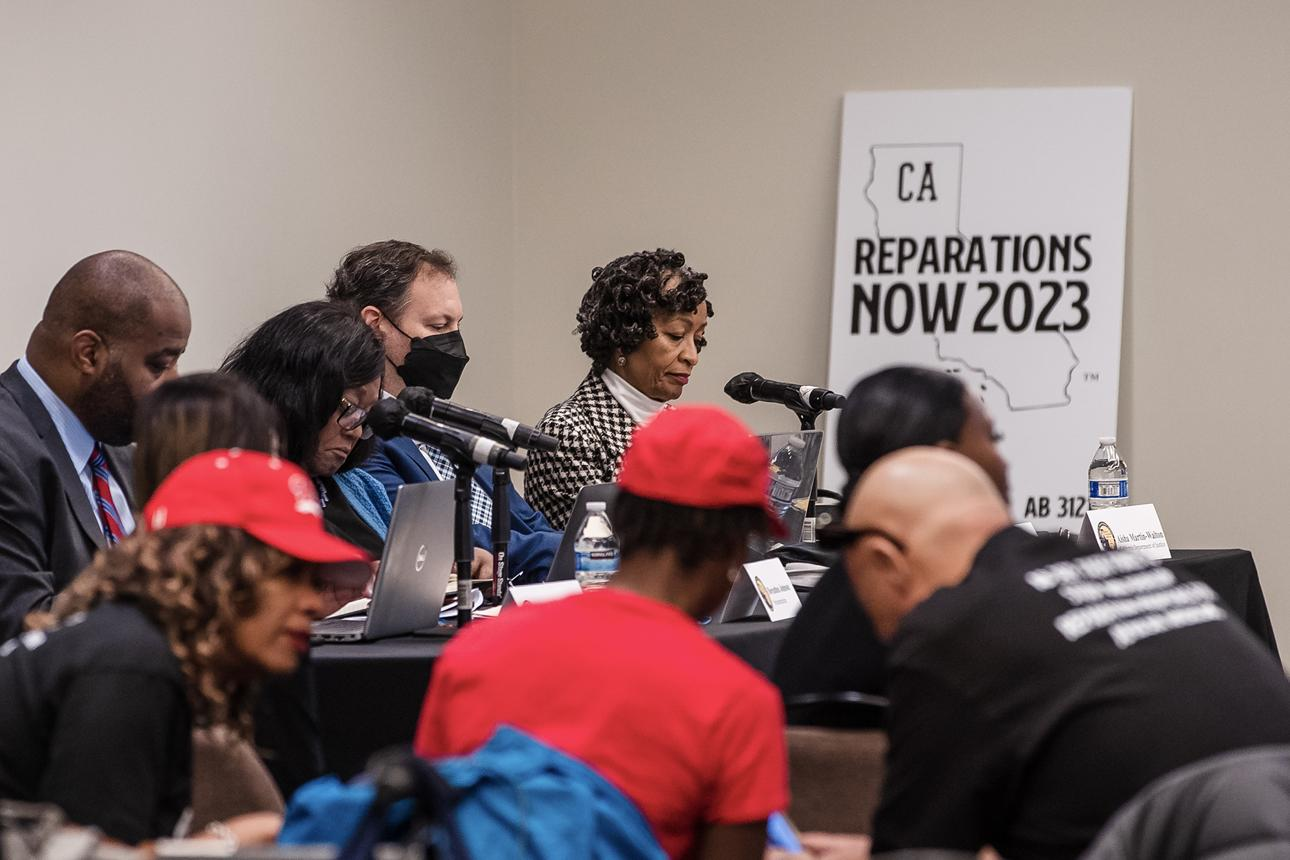
In 2020, lawmakers established the first statewide Reparations Task Force in the country. After years of hearings, historical research, and public testimony, the task force issued an extensive report examining the lasting economic effects of slavery, segregation, discriminatory housing practices, policing, education, and employment discrimination.
Although California entered the Union as a free state, the report argued that state and local policies contributed significantly to racial disparities long after slavery ended.
The task force proposed dozens of recommendations, including housing assistance, educational initiatives, criminal justice reforms, business investment, healthcare improvements, and direct compensation under certain eligibility standards.
While many recommendations have yet to become law, California demonstrated that reparations discussions could evolve beyond symbolic acknowledgments into comprehensive policy proposals.
Supporters argue California has created a blueprint other states may eventually follow. Critics counter that the projected financial costs could strain state budgets and create legal challenges regarding eligibility and equal protection.
Illinois Builds Local Momentum
Illinois has quietly become another important player.
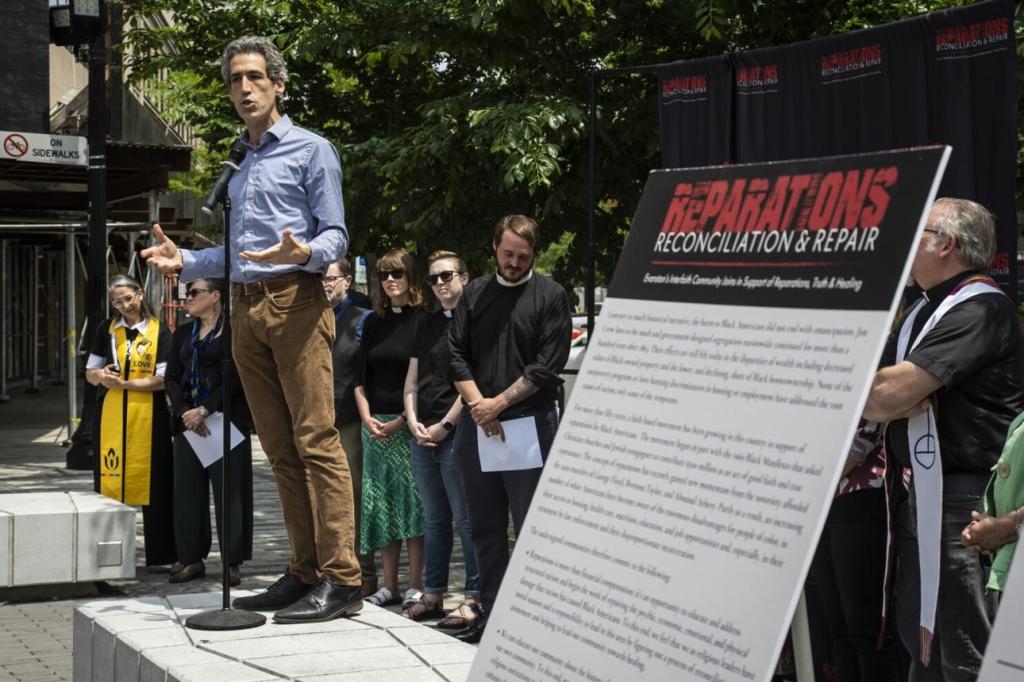
Evanston became the first American city to launch a municipal reparations program, initially funding housing grants for eligible Black residents using cannabis tax revenue.
The program was designed to address documented housing discrimination and redlining rather than slavery itself, creating a narrower legal framework focused on municipal responsibility.
While supporters celebrated Evanston as historic, critics argued that housing grants represented only a fraction of what true reparations should entail.
Still, Evanston demonstrated that cities do not necessarily have to wait for Congress before pursuing targeted reparative policies.
Chicago has also explored broader reparative initiatives through advisory committees and community organizations, although comprehensive citywide legislation has yet to emerge.
New York Continues to Study the Issue
New York lawmakers established a commission to study reparations for descendants of enslaved people and to evaluate policy options.
Supporters view the commission as an important first step toward understanding how historical discrimination contributed to present-day economic disparities.
Opponents argue that additional studies merely delay meaningful action while avoiding politically difficult decisions regarding implementation and funding.
The commission’s findings may eventually influence both state legislation and similar efforts elsewhere.
Maryland and Massachusetts Explore Their Options
Maryland has advanced discussions surrounding reparative justice through statewide commissions examining slavery’s long-term effects and possible remedies.
Massachusetts has seen growing municipal activity, with Boston creating commissions to examine historical inequities and recommend policy responses.
These initiatives generally focus on documenting historical harms, identifying affected communities, and proposing recommendations before legislatures debate specific financial commitments.
Southern States Remain Divided
Across much of the South, reparations remain politically controversial.
States with some of the nation’s largest Black populations, including Georgia, Alabama, Mississippi, Louisiana, and South Carolina, have generally shown limited legislative movement toward statewide reparations programs.
Supporters argue that these states carry unique historical responsibilities due to slavery and segregation.
Opponents frequently contend that present-day taxpayers should not bear financial responsibility for actions committed generations ago and instead advocate broader economic development policies that benefit all residents regardless of race.
The political divide reflects competing visions of historical accountability and public policy rather than disagreement over the existence of historical injustice.
Local Governments Continue Moving Faster Than Congress
One of the most significant developments has been the growing role of local government.
Cities including Asheville, North Carolina, Providence, Rhode Island, Amherst, Massachusetts, and several others have adopted resolutions acknowledging historical discrimination and committing to various forms of reparative investment.
Not every local initiative includes direct financial payments.
Some prioritize affordable housing.
Others focus on educational scholarships.
Some emphasize small-business development.
Others concentrate on community investment or restoring neighborhoods harmed by discriminatory public policies.
These differing approaches illustrate that “reparations” has become an umbrella term covering multiple policy ideas rather than one universally accepted model.
Congress Still Faces the Biggest Decision
Despite growing activity at the state and local level, many advocates continue to argue that only Congress can enact a truly national reparations program.
H.R. 40, legislation repeatedly introduced in Congress, would establish a federal commission to study proposals for reparations for descendants of enslaved Americans.
Supporters argue that a federal response is necessary because slavery and many discriminatory policies were national institutions.
Critics respond that the legislation could create complex constitutional questions surrounding eligibility, funding, and equal treatment under the law.
The proposal has become one of the clearest indicators of where elected officials stand on the broader reparations debate, even though it focuses on creating a commission rather than establishing compensation directly.
Beyond Direct Payments
One misconception dominating public debate is that reparations must consist solely of cash payments.
Many policy experts have proposed alternative approaches, including:
- Down-payment assistance for qualifying families.
- Educational grants and debt relief.
- Investment in historically underserved Black communities.
- Expanded access to capital for Black-owned businesses.
- Healthcare initiatives addressing documented disparities.
- Land restoration and housing programs.
- Tax incentives tied to wealth creation.
Supporters argue these approaches could address structural inequality while encouraging long-term economic mobility.
Critics maintain that targeted race-based programs could face legal challenges and prefer broader economic policies based on income or geographic need rather than ancestry.
A Political Issue That Is Not Going Away
Reparations have evolved from a symbolic demand into one of America’s most consequential policy debates.
For many Black Americans, the issue represents unfinished business dating back more than 160 years. They argue that political leaders have acknowledged historical injustice without fully addressing its economic consequences.
For opponents, the debate raises concerns about constitutional limits, fiscal responsibility, administrative feasibility, and fairness across generations.
Regardless of where Americans stand, one reality has become increasingly clear: the debate is no longer confined to college classrooms or advocacy organizations.
It is unfolding inside state capitols, city councils, gubernatorial campaigns, congressional races, and presidential elections. As more states establish commissions, municipalities launch pilot programs, and lawmakers introduce new proposals, reparations are likely to remain one of the defining political questions of the decade.
Whether the nation ultimately embraces a federal reparations program or continues with a patchwork of state and local initiatives, the discussion has permanently entered mainstream American politics, ensuring that future leaders will be expected not merely to acknowledge the issue but to explain precisely where they stand.
—Barrington Williams, B1Daily






Leave a comment