—Sylvester Loving, B1Daily
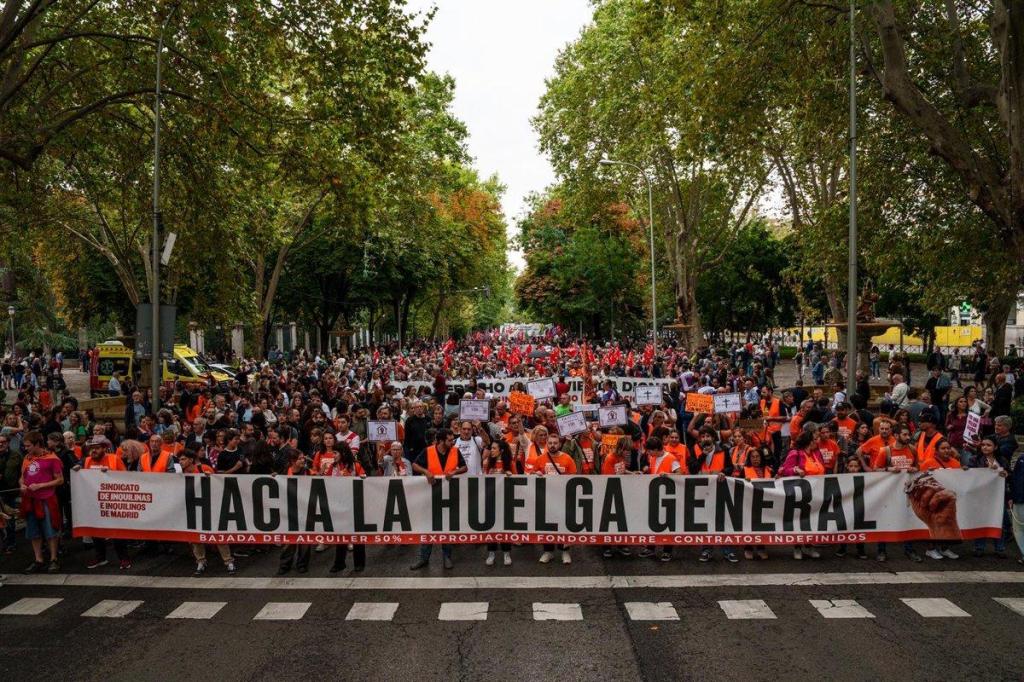
Millions of Spanish workers walked off the job Wednesday in a nationwide general strike over soaring housing costs, wages, and the growing difficulty of making ends meet.
Organized by Spain’s two largest labor unions, UGT and CCOO, alongside tenants’ organizations, the November 11 strike disrupted factories, ports, transportation networks, and businesses across the country.
The demonstration marks the first nationwide general strike jointly organized by the country’s two largest unions since 2012.
But this is hardly Spain’s first confrontation over affordability. The walkout follows a series of labor disputes, housing demonstrations, and tenant protests that have intensified throughout 2025 and 2026.
For many Spanish workers, the central grievance is increasingly familiar: having a job no longer guarantees the ability to afford a home.
A Housing Crisis Consuming Entire Paychecks
Spain’s housing shortage has become one of the country’s most pressing economic problems.
According to estimates from the Bank of Spain, the country faces a shortage of approximately 750,000 homes, a figure that could exceed one million by 2028.
The Youth Council of Spain reports that average monthly rent has reached approximately €1,176, equivalent to nearly 99% of an average young worker’s monthly salary.
That leaves little room for groceries, transportation, utilities, or savings.
In Madrid, Barcelona, and popular coastal regions, competition for housing has intensified as tourism, short-term rentals, and limited construction place additional pressure on the market.
Workers who once expected to live independently increasingly find themselves sharing apartments, remaining with family, or moving farther from employment opportunities.
The country’s labor unions argue that wage growth has failed to keep pace with these living expenses.
A Year of Strikes and Growing Public Anger
Wednesday’s nationwide walkout is the culmination of a broader protest movement rather than an isolated labor dispute.
Over the past year, Spain has experienced repeated demonstrations over rising rents, evictions, and housing speculation, alongside strikes by workers demanding improved wages and employment conditions.
Spanish labor leaders report that the number of working days lost to strikes has tripled compared with the previous year.
Tenant organizations have also become increasingly influential, organizing protests and demanding stronger restrictions on evictions and speculative housing practices.
Public anger intensified following the September eviction of 87-year-old Madrid resident Maricarmen Abascal, who subsequently died in October.
Her case became a rallying point for housing activists and helped accelerate calls for a nationwide strike.
The movement expanded further after Parliament rejected emergency housing measures intended to address evictions and rent pressures.
What began as housing demonstrations has developed into a national confrontation over wages, economic security, and government responsibility.
Factories Close and Police Confront Protesters
The strike has caused significant disruptions across several industries.
Union organizers reported participation approaching 90% in ports and automotive manufacturing, including stoppages at Volkswagen’s Navarre facility and SEAT’s Barcelona plant.
Public transportation experienced delays, while workers established picket lines outside major commercial and industrial facilities.
Tensions escalated at Madrid’s Mercamadrid wholesale market, where police confronted demonstrators during early-morning protests.
Union officials accused officers of using pepper spray against picketers. Police confirmed an arrest but did not confirm every allegation surrounding the confrontation.
The demonstrations illustrate the intensity of the dispute as workers attempt to pressure political leaders into addressing housing affordability.
Spain’s Political Establishment Faces Pressure
The strike arrives less than three weeks before Spain’s November 29 general election.
Prime Minister Pedro Sánchez and his Socialist government have faced criticism over the housing crisis, while opposition parties have challenged the government’s economic and housing policies.
The government argues that regional and municipal authorities share responsibility for insufficient construction and the expansion of short-term rentals.
Opposition leaders contend that rent controls and regulatory restrictions have discouraged investment and worsened housing shortages.
Business organizations have also criticized the strike, warning that work stoppages impose additional costs on employers already struggling with economic uncertainty.
Labor organizations reject the suggestion that the demonstrations are simply an electoral exercise.
Their demands include stronger wage growth, affordable housing, improved public services, and policies that reduce the financial burden on working households.
Economic Growth Means Little Without Affordability
Spain’s labor unrest highlights a broader economic contradiction.
A country can report economic growth, rising employment, and increased investment while ordinary households experience declining financial security.
When housing absorbs nearly an entire monthly paycheck, traditional indicators of economic success become increasingly disconnected from everyday living conditions.
That disconnect has helped unite workers and tenants who might otherwise organize around separate concerns.
The November 11 strike represents a significant escalation in Spain’s ongoing affordability debate.
Whether the government responds through housing construction, stronger tenant protections, wage policies, or some combination of reforms remains uncertain.
But after a year of protests and labor disputes, Spanish workers have made their central demand unmistakable: economic progress must translate into a standard of living people can actually afford.
—Sylvester Loving, B1Daily





Leave a Reply