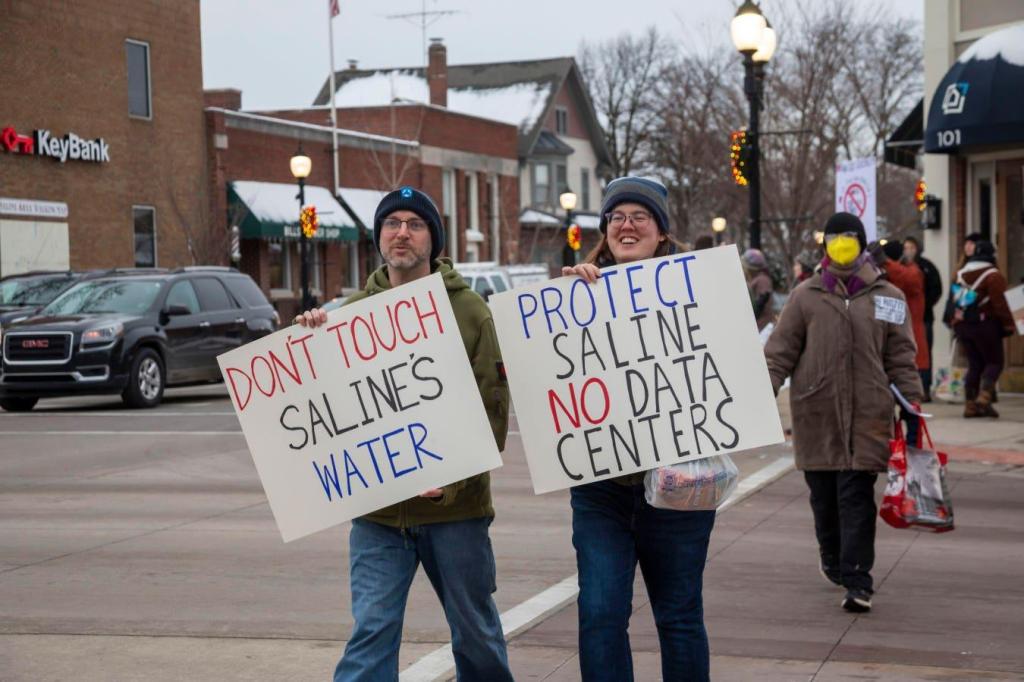
—Vanessa Edwards, B1Daily
America is experiencing one of the largest infrastructure construction booms in modern history, but the question of who will ultimately pay for it remains unsettled.
Across the country, technology corporations are racing to construct enormous data centers to power artificial intelligence, cloud computing, and digital services. These facilities require extraordinary amounts of electricity, substantial cooling infrastructure, and billions of dollars in construction investment.
The problem is not that America needs digital infrastructure. The problem is that communities are being asked to accommodate projects whose long-term costs and benefits are not always fully understood.
A temporary nationwide moratorium on approvals for major new data centers would provide an opportunity to establish consistent environmental, financial, and consumer protections before further expansion.
America’s Electrical Grid Is Already Under Pressure
Data centers are becoming major consumers of American electricity.
A 2026 Lawrence Berkeley National Laboratory report projects that data centers could account for approximately 11.8% of total U.S. electricity consumption by 2030 under its reference scenario. Depending on future technology deployment and efficiency improvements, the share could range from 9.5% to 15.3%.
That demand creates difficult questions for utilities and regulators.
New data centers may require additional power plants, transmission lines, substations, and grid upgrades. If regulators allow those expenses to be spread across ordinary customers, households and small businesses could face higher electricity bills.
Data center operators can also pay directly for infrastructure improvements, and carefully structured contracts can protect existing customers. But those safeguards are not automatic.
Americans already struggling with housing, food, insurance, and utility expenses have a legitimate interest in knowing whether major technology investments will increase their monthly bills.
Water Is Becoming Another Flashpoint
Electricity is only part of the infrastructure challenge.
Some data centers use evaporative cooling systems that consume substantial quantities of water. Their indirect water footprint can also be significant because many electricity-generating facilities require water for cooling and other operations.
The impact varies considerably depending on facility design, local climate, cooling technology, and the electricity supply.
Nevertheless, large projects in water-stressed regions raise important questions about competing demands from households, agriculture, industry, and municipal systems.
A community experiencing drought should have access to reliable estimates of a proposed facility’s water consumption before approving construction.
Public officials should also understand how water demand could change during heat waves, when both cooling requirements and pressure on local resources may increase.
The Financial Risks Extend Beyond Silicon Valley
The data center boom has also created an enormous network of financial commitments involving technology companies, banks, private credit firms, equipment manufacturers, utilities, and construction contractors.
These investments are being made partly in anticipation of future demand for artificial intelligence.
That demand may continue growing rapidly, but future revenue and profitability remain uncertain.
If companies overestimate demand or underestimate operating costs, some projects could struggle financially. Lenders and investors could face losses, while utilities might be left managing infrastructure built for customers that no longer need it.
These possibilities do not establish that a financial collapse is inevitable. They do demonstrate why regulators should examine who bears the risks when projects fail.
Taxpayers and utility customers should not automatically become responsible for infrastructure investments that primarily benefit private corporations.
Communities Are Beginning to Push Back
Opposition to data center construction has become a significant political issue.
In July 2026, New York imposed a one-year moratorium on large new data centers, citing concerns about electricity prices, water resources, and community impacts.
Texas has also paused certain approvals while officials examine proposed facilities’ electricity demand, water use, tax incentives, and effects on nearby residents.
Seattle adopted an emergency moratorium on large data center development in June.
These decisions reflect growing pressure for stronger oversight, although the restrictions differ considerably in scope.
The controversy has also crossed party lines. Residents with different political affiliations have raised similar concerns about infrastructure costs, environmental effects, and the limited influence communities sometimes have over development decisions.
Economic Development Must Be Measured Honestly
Technology companies and economic development officials emphasize that data centers can create construction jobs, generate tax revenue, attract investment, and support essential digital services.
Those benefits deserve consideration.
However, temporary construction employment should be distinguished from permanent operational jobs. Local governments should also evaluate the value of tax incentives against the revenue they expect to receive.
A project advertised as a multibillion-dollar investment does not necessarily provide an equivalent benefit to the surrounding community.
The relevant questions concern net economic value, infrastructure obligations, long-term employment, environmental costs, and whether the public receives a fair return.
A moratorium could give policymakers time to establish transparent standards for answering those questions.
What a National Moratorium Could Accomplish
A temporary federal pause on approvals for major new data centers could be structured around clear thresholds, particularly for facilities with exceptionally high electricity demand.
During that period, federal and state regulators could develop requirements for independent grid-impact assessments, public disclosure of water consumption, environmental reviews, and financial protections for utility customers.
Companies could be required to demonstrate that they can finance necessary infrastructure without transferring unreasonable costs to households.
Communities could receive stronger opportunities to participate in siting decisions, while regulators could examine whether proposed tax incentives provide measurable public benefits.
Such a moratorium would need carefully defined exemptions and a fixed duration to avoid unnecessarily disrupting essential services, existing facilities, and smaller projects with limited environmental impacts.
Critics of a broad pause reasonably warn that delaying construction could weaken American technological competitiveness, reduce investment, and postpone upgrades that might improve energy efficiency.
Those concerns make the design of any moratorium important. A pause without a clear regulatory objective would accomplish little.
America Needs Rules Before Another Construction Boom
Data centers are essential to the modern economy, and artificial intelligence may produce substantial advances in medicine, research, manufacturing, and public services.
But the potential benefits of technology do not eliminate the need for responsible infrastructure planning.
The United States has repeatedly experienced development booms in which public officials celebrated investment before fully understanding the financial and environmental consequences.
The data center industry now presents another opportunity to examine those risks before they become more difficult to manage.
A temporary moratorium would not need to represent opposition to technological progress. It could instead establish a period for evaluating costs, strengthening consumer protections, and ensuring that communities have meaningful influence over major projects.
America’s digital future will require substantial investment. The question is whether that investment can proceed without imposing avoidable costs on the people living beside it and paying for the infrastructure that supports it.
—Vanessa Edwards, B1Daily





Leave a Reply