—Barrington Williams, B1Daily
Barack Obama’s election in 2008 was a defining moment in American history. Millions celebrated the country’s first Black president as evidence that the United States had overcome an extraordinary racial barrier. But beneath the symbolism, a different debate was developing over whose interests his administration would ultimately serve.
In his September 2012 essay What Obama Has Wrought, Black Agenda Report executive editor Glen Ford challenged the political celebrations surrounding Obama’s presidency. Ford argued that the administration had strengthened corporate power while weakening the political opposition that might otherwise have challenged it.
His critique centered on a fundamental distinction: the historical importance of Obama’s presidency did not automatically make its policies beneficial to working-class Americans.
Wall Street’s Rescue and the Foreclosure Crisis
Obama inherited the worst financial crisis since the Great Depression. His administration continued financial stabilization efforts, supported the banking system, and pursued economic stimulus measures intended to prevent a deeper collapse.
Supporters credit those interventions with helping restore financial stability and employment.
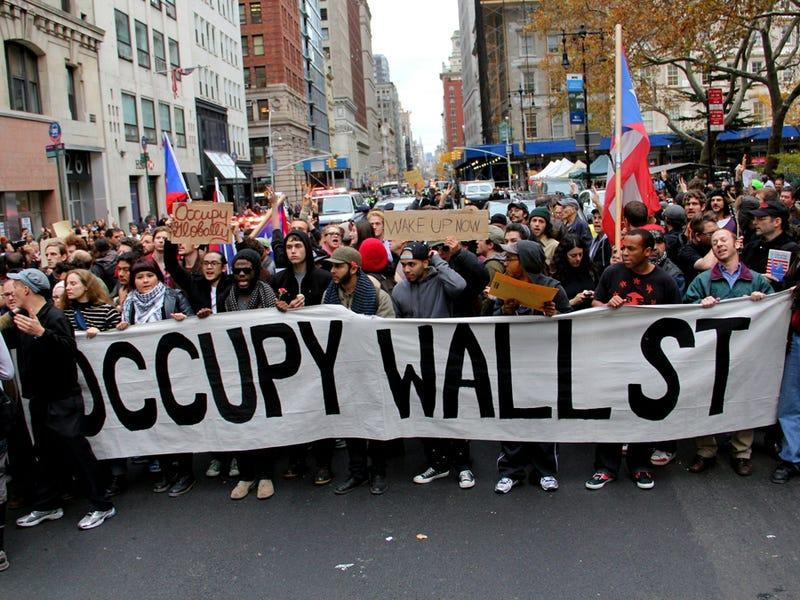
Critics, including Ford, questioned why major financial institutions received extensive government support while millions of homeowners struggled with foreclosure, unemployment, and lost wealth.
The federal response included homeowner assistance programs, but their effectiveness and reach were widely debated.
For Black Americans, who were disproportionately affected by predatory mortgage lending and the housing collapse, the consequences were particularly severe. The destruction of home equity undermined a major source of intergenerational wealth.
The debate was not simply whether financial stabilization was necessary. It concerned whether the government’s response sufficiently protected households alongside the institutions whose failures helped trigger the crisis.
The Corporate Influence Question
Ford characterized Obama’s political approach as compatible with the interests of major corporations and financial institutions.
The administration’s relationships with Wall Street executives, its approach to financial reform, and its negotiations over federal spending provided material for that criticism.
Obama signed the Dodd-Frank financial reform law, which imposed new regulatory requirements on financial institutions. His administration also supported the Consumer Financial Protection Bureau.
Those measures complicate the claim that his presidency offered no challenge to corporate interests.
Nevertheless, the administration’s willingness to negotiate spending reductions and changes to federal entitlement programs prompted criticism from progressive organizations.
Ford viewed those negotiations as evidence that Democratic leadership remained committed to preserving the existing economic order rather than fundamentally restructuring it.
Labor, Education, and the Politics of Reform
Obama entered office with significant support from organized labor and publicly advocated stronger protections for workers.
Yet the Employee Free Choice Act, a major union-backed proposal intended to make organizing easier, never became law.
His administration’s education policies also generated controversy.
Race to the Top encouraged states to adopt reforms involving teacher evaluations, academic standards, and school accountability. Supporters argued these policies could improve educational outcomes, while teachers’ unions and other critics questioned their effects on public education and job security.
Ford regarded such reforms as part of a broader effort to restructure public institutions according to market-oriented priorities.
The resulting disagreement concerned whether modernization and accountability initiatives strengthened public services or weakened the workers and communities that depended on them.
Foreign Policy and the Limits of Change
Obama campaigned on changing America’s international posture after the Iraq War.
His administration ultimately oversaw the withdrawal of American combat troops from Iraq in 2011, negotiated the Iran nuclear agreement, and pursued diplomatic engagement with Cuba.
At the same time, it expanded drone warfare, continued military operations in Afghanistan, and participated in the 2011 NATO intervention in Libya.
The collapse of Libya’s government and the instability that followed became central concerns for critics of American intervention.
Ford argued that Obama’s foreign policy demonstrated substantial continuity with earlier administrations despite the president’s image as a political reformer.
Supporters countered that Obama operated within difficult security circumstances and pursued diplomatic initiatives alongside military operations.
The disagreement illustrates why evaluating a presidency requires examining specific decisions rather than relying on its broader political branding.
Did Black Political Representation Silence Criticism?
One of Ford’s most provocative arguments concerned Obama’s relationship with Black political activism.
He believed that Obama’s popularity made some progressive organizations and Black political leaders reluctant to challenge policies they might have opposed under a Republican president.
The argument raises a difficult question about political accountability: Can a historically significant leader become less vulnerable to criticism precisely because supporters fear undermining the significance of that leader’s achievement?
There is evidence that Black activists continued challenging the administration, including over policing, economic inequality, immigration enforcement, and foreign policy.
The emergence of Black Lives Matter during Obama’s presidency demonstrates that Black political dissent did not disappear.
Nevertheless, Ford’s criticism highlights the tension between celebrating representation and demanding policy changes from those who achieve it.
A Presidency That Still Divides Political Opinion
Obama’s administration expanded health insurance coverage through the Affordable Care Act, supported economic recovery, and enacted significant financial and consumer protections.
It also presided over controversial military interventions, persistent racial wealth disparities, and a financial recovery whose benefits were distributed unevenly.
Glen Ford’s 2012 essay presented a sharply critical interpretation of those developments. His broader argument was that political identity and progressive rhetoric could coexist with policies he considered favorable to established economic power.
That interpretation remains contested, but the underlying questions are important.
Who benefits from government intervention during an economic crisis? How should political leaders balance corporate interests against the needs of working families? And should historic representation change the standards by which elected officials are judged?
Obama’s presidency can be understood as both a landmark in American political representation and a period of consequential policy disagreements.
Examining those disagreements is essential to understanding the administration’s full legacy, beyond either celebration or condemnation.
—Barrington Williams, B1Daily



Leave a Reply