—Vanessa Edwards, B1Daily
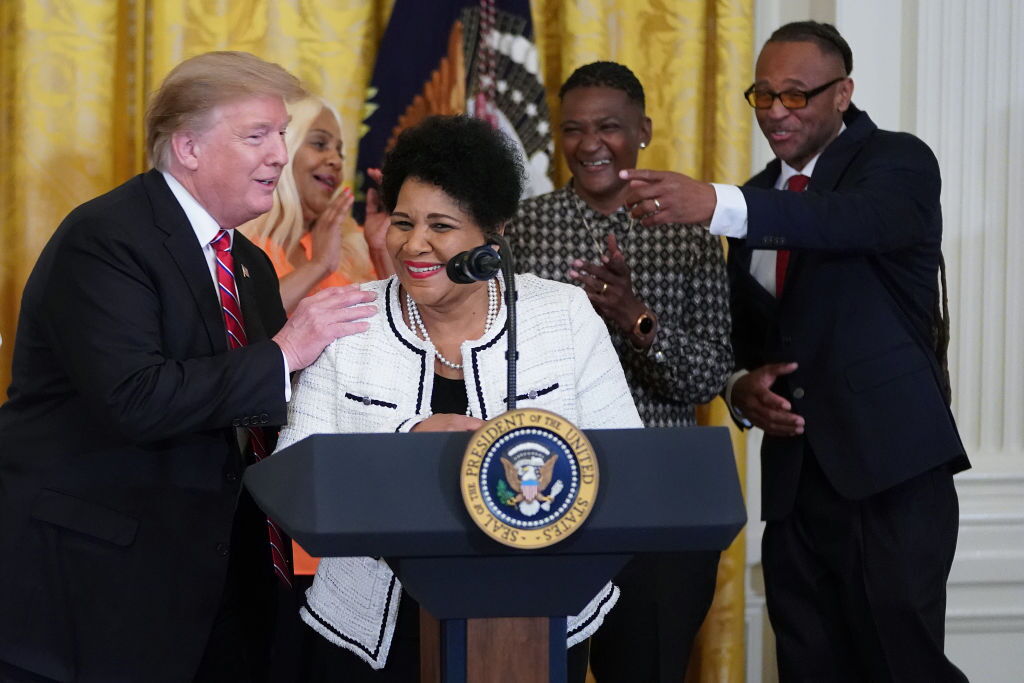
Alice Marie Johnson spent nearly 22 years in federal prison under a life sentence for a first-time, nonviolent drug offense. Today she advises the president of the United States on clemency. That extraordinary reversal says as much about America’s sentencing system as it does about the unusual political journey that brought her home.
President Donald Trump commuted Johnson’s sentence in June 2018 after a campaign that included attorney Brittany K. Barnett and a high-profile appeal by Kim Kardashian. Trump granted Johnson a full pardon in August 2020. In February 2025, he appointed her as the administration’s pardon czar, giving a former prisoner a role in recommending clemency for others.
A Life Sentence and a System Built for Severity
Johnson was convicted in the 1990s on federal drug conspiracy and money-laundering charges. She has acknowledged making serious mistakes while disputing some characterizations of her role. Her punishment, however, was extraordinary: life imprisonment for a first-time, nonviolent offense, imposed during an era when mandatory sentencing rules sharply constrained judges’ discretion.
In prison, Johnson mentored women, volunteered in hospice care and pursued educational and creative activities. Her warden and other prison officials supported her clemency request. Those facts did not erase her conviction, but they raised a question the justice system was slow to answer: how much punishment was enough?
The Obama Denial and the Trump Decision
Johnson sought clemency during Barack Obama’s presidency but was denied in January 2017, even as that administration granted relief to many other people serving lengthy federal drug sentences. That decision is a legitimate subject of scrutiny. It is not evidence that every Democrat opposed Johnson or that criminal justice reform belonged exclusively to one party.
Her case ultimately reached Trump through years of legal advocacy and Kardashian’s intervention. On June 6, 2018, Trump commuted her sentence, allowing her to leave prison. Two years later he issued a full pardon. Johnson has repeatedly credited him with giving her a second chance.
The contrast is politically uncomfortable but historically clear: one administration denied this particular petition; the next granted it. Advocates across ideological lines, including civil liberties organizations that frequently criticize Trump, welcomed her release. Johnson’s freedom was not simply the product of a party label. It followed persistent advocacy, public attention and the exercise of presidential clemency.
America’s Responsibility Goes Beyond One President
Johnson’s story should not be reduced to a contest over which political party deserves credit. Congress wrote severe sentencing laws, prosecutors pursued charges, and the courts applied a legal framework that permitted a first-time, nonviolent defendant to spend decades behind bars. Politicians from both parties helped shape the broader tough-on-crime era.
The bipartisan First Step Act, signed by Trump in 2018, reflected growing recognition that federal sentencing and reentry policies needed reform. Yet clemency remains an imperfect remedy: people with compelling cases can wait for years, and those without celebrity attention or influential advocates may never reach the president’s desk.
From Prisoner to Pardon Czar
In 2025, Trump named Johnson his pardon czar, a title for an advisory role rather than an independent constitutional office. She reviews cases and recommends candidates for clemency, but the power to grant federal pardons and commutations remains with the president.
Johnson has said she wants to examine applicants’ records, rehabilitation and readiness to return to their communities. Her experience gives her direct knowledge of incarceration and of how prison staff, family support and reentry plans can shape a person’s prospects. Her nonprofit work through Taking Action for Good has also centered on clemency advocacy.
Her appointment has drawn praise from some reform advocates, while legal observers have questioned whether a White House-centered clemency system offers equal access to applicants without money or political connections. Those concerns are important. A process designed to correct excessive punishment should be transparent enough that deserving people do not need celebrity sponsorship to be heard.
A Second Chance That Should Prompt More Questions
Alice Marie Johnson’s journey from a life sentence to a White House advisory role is a powerful example of what clemency can change. Her release did not undo the decades she lost, and her appointment cannot by itself repair the sentencing structures that kept her imprisoned.
The lasting question is whether the country can build a system in which mercy is not exceptional, rehabilitation counts, and relief does not depend on the identity of the president or the prominence of an advocate. Johnson’s case makes that challenge impossible to ignore.
—Vanessa Edwards, B1Daily


Leave a Reply