—Travis Luyindama, B1Daily
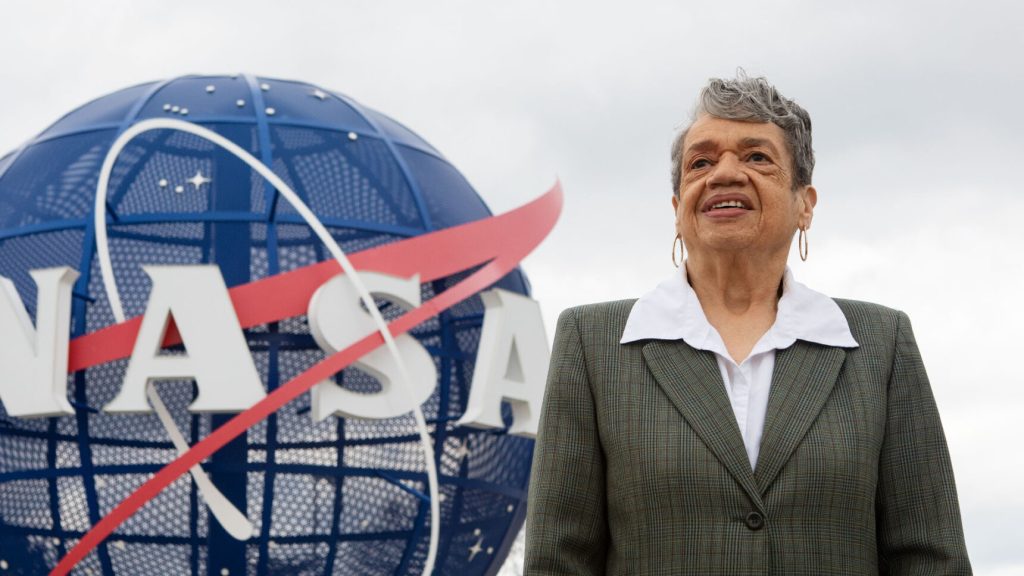
Before the term “STEM pipeline” became a slogan, Christine Darden was already inside the engine room, reshaping how America understood flight, sound, and the limits of the sky itself.
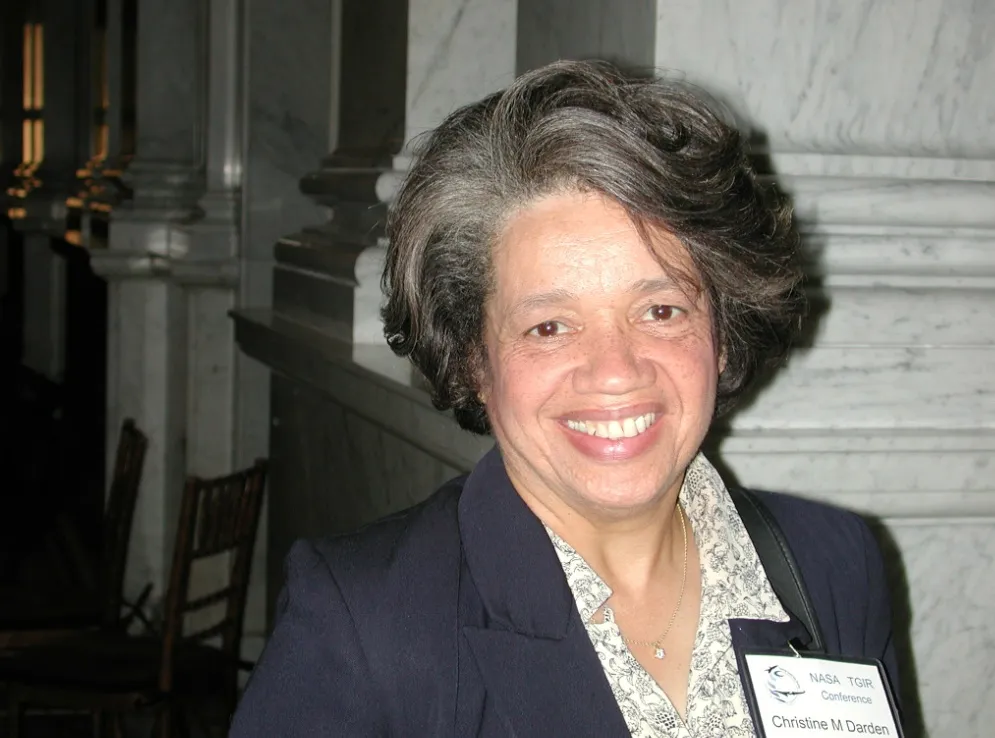
Darden’s career at NASA didn’t begin with fanfare. It began with persistence. In the 1960s, she entered the Langley Research Center as a “human computer,” one of the mathematicians tasked with performing complex calculations by hand. It was meticulous, often under-credited work, but it formed the backbone of early aerospace research. Darden, however, wasn’t content to remain in the background. She pushed for advancement, for access, for the opportunity to do more than compute.
She got it. And when she did, she aimed straight at one of aviation’s most stubborn problems: the sonic boom.
When an aircraft breaks the sound barrier, it creates a shockwave that reaches the ground as a thunderclap. That boom has long been a barrier to widespread supersonic flight over populated areas. It rattles windows, disrupts communities, and turns technological progress into a public nuisance. Darden saw not just a problem, but a puzzle worth solving.
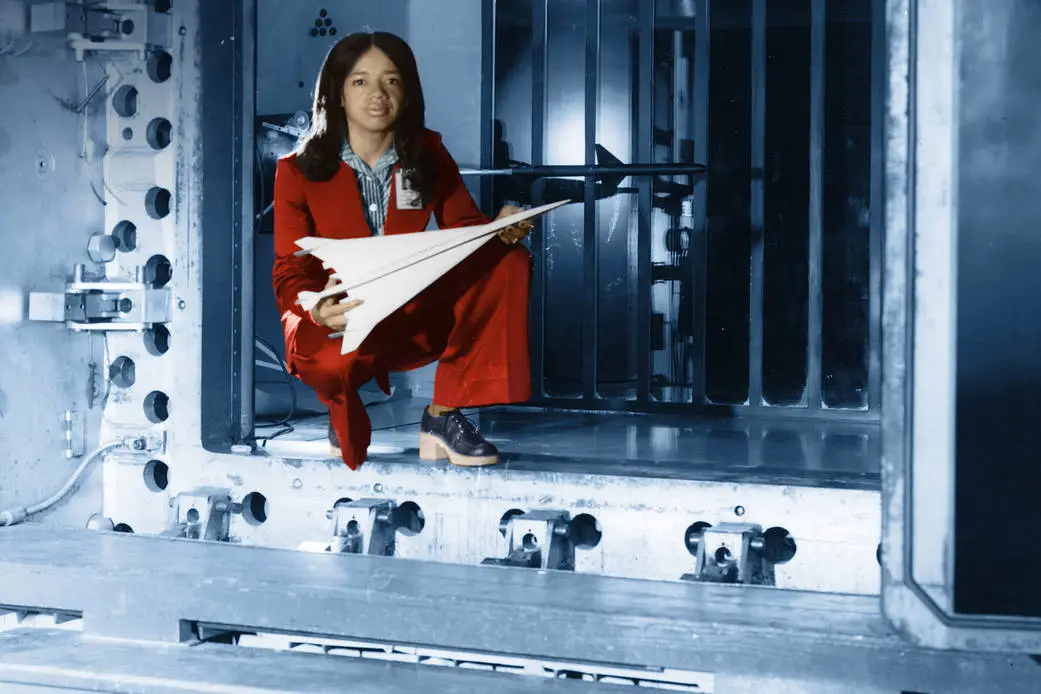
She began developing computational methods to better understand how these shockwaves form, travel, and interact with the environment. Her work focused on modeling sonic booms, using mathematical frameworks and early computer simulations to predict how different aircraft shapes and flight conditions would affect the intensity of the noise on the ground.
It wasn’t abstract theory. It was engineering with consequences.
Darden’s research helped lay the groundwork for what’s now called “low-boom” technology, an effort to design aircraft that can travel faster than sound without producing the explosive noise traditionally associated with it. By refining models of shockwave behavior, she contributed to a body of knowledge that engineers still build on today as they attempt to make supersonic travel quieter and more practical.
Her work intersected with supersonic flight in a way that bridged theory and application. She wasn’t just studying the phenomenon. She was helping reshape how it could be controlled.
Over the course of her career, Darden rose through the ranks, eventually becoming a senior executive and one of the leading voices in NASA’s high-speed flight research. She earned a doctorate in engineering, authored numerous technical papers, and mentored younger scientists entering the field.
Her contributions also extend beyond equations and simulations. Darden became one of the central figures highlighted in Hidden Figures, which brought long-overdue attention to the Black women who played critical roles in America’s space and aeronautics programs. While the film captures only a slice of her journey, it helped cement her place in the broader public imagination.
But the real story isn’t cinematic. It’s structural.
Darden’s career represents a shift from invisibility to influence. She entered NASA at a time when Black women were often confined to support roles and left having shaped core areas of aerospace research. Her work on sonic boom modeling sits quietly inside modern engineering advances, a foundational layer that doesn’t always get headlines but continues to matter.
In a field defined by speed and altitude, Darden’s impact moved differently. It built, steadily and precisely, until it changed how engineers think about the sound barrier itself.
Not louder. Smarter.
—Travis Luyindama, B1Daily





Leave a comment