
—Travis Luyindama, B1Daily
Some innovations arrive with fireworks. Others slip into history like quiet revolutions, changing the world without demanding the spotlight. Hildreth Walker Jr. belongs firmly in that second category, a man whose work helped connect Earth to the heavens and measure the distance between them with astonishing precision.
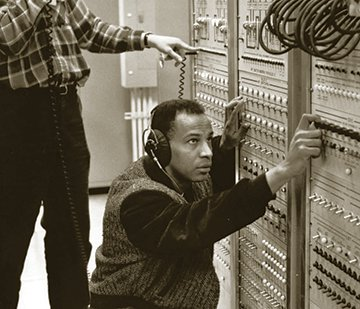
Back in 1962, when space still felt like an untamed frontier, Walker directed something that sounds routine today but was borderline science fiction at the time: the first television signal transmitted from Earth to a satellite and then back again. This wasn’t just a technical stunt. It was the birth of a new kind of communication, the early heartbeat of what would eventually become global satellite broadcasting. The idea that images could leap off the planet, bounce through orbit, and return intact was a paradigm shift. Walker helped make the sky part of the signal chain.
Fast forward to 1969, and the stakes were even higher.
As the world watched Apollo 11 Moon Landing unfold, Walker was leading a team working on a different kind of breakthrough, one that didn’t make headlines but quietly rewrote scientific accuracy. His group adapted a ruby laser system for use in measuring the distance between Earth and the Moon. The concept was elegant: fire a laser beam from Earth, bounce it off reflectors placed on the lunar surface, and measure the time it takes to return.
Simple in theory. Brutal in execution.
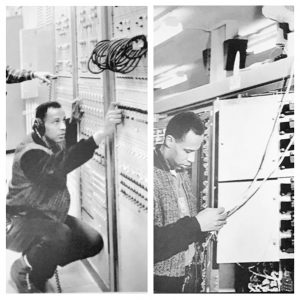
Light moves fast, absurdly fast, so measuring that round trip required extreme precision. Walker’s team refined the system to achieve accuracy within five meters, an extraordinary feat for the time. That level of precision transformed lunar science, giving researchers a far more exact understanding of the Earth-Moon relationship, orbital mechanics, and even subtle gravitational effects.
In a way, Walker’s career reads like a conversation between Earth and space. First, he helped humanity send its voice outward through satellites. Then, he helped it listen for the faint echo of light returning from the Moon. Signal out, signal back. A loop of innovation that tightened humanity’s grip on the cosmos.
What makes his work remarkable isn’t just the technology, it’s the timing. These breakthroughs came at a moment when the rules of communication and space exploration were still being written. Walker wasn’t following a roadmap. He was helping draw it.
Today, satellite television, GPS systems, and deep-space measurements all exist in a world that feels seamless, almost inevitable. But they rest on foundations built by engineers like Walker, people who turned impossible ideas into working systems under pressure, with limited tools and enormous expectations.
His legacy isn’t loud. It doesn’t need to be.
It’s written in every signal that travels beyond Earth and every precise measurement that brings the universe just a little closer to human understanding.
—Travis Luyindama, B1Daily






Leave a comment