—Pān Hě, B1Daily
For years, Western analysts treated China’s dependence on Middle Eastern oil like a permanent vulnerability. The logic seemed airtight: China imports massive amounts of crude, much of it flows through the Strait of Hormuz, and any major regional war could squeeze Beijing’s economy like a fist around a fuel line.
Then the Middle East exploded into deeper instability, shipping lanes turned into geopolitical minefields, and China responded with something startlingly old-fashioned:
Coal.
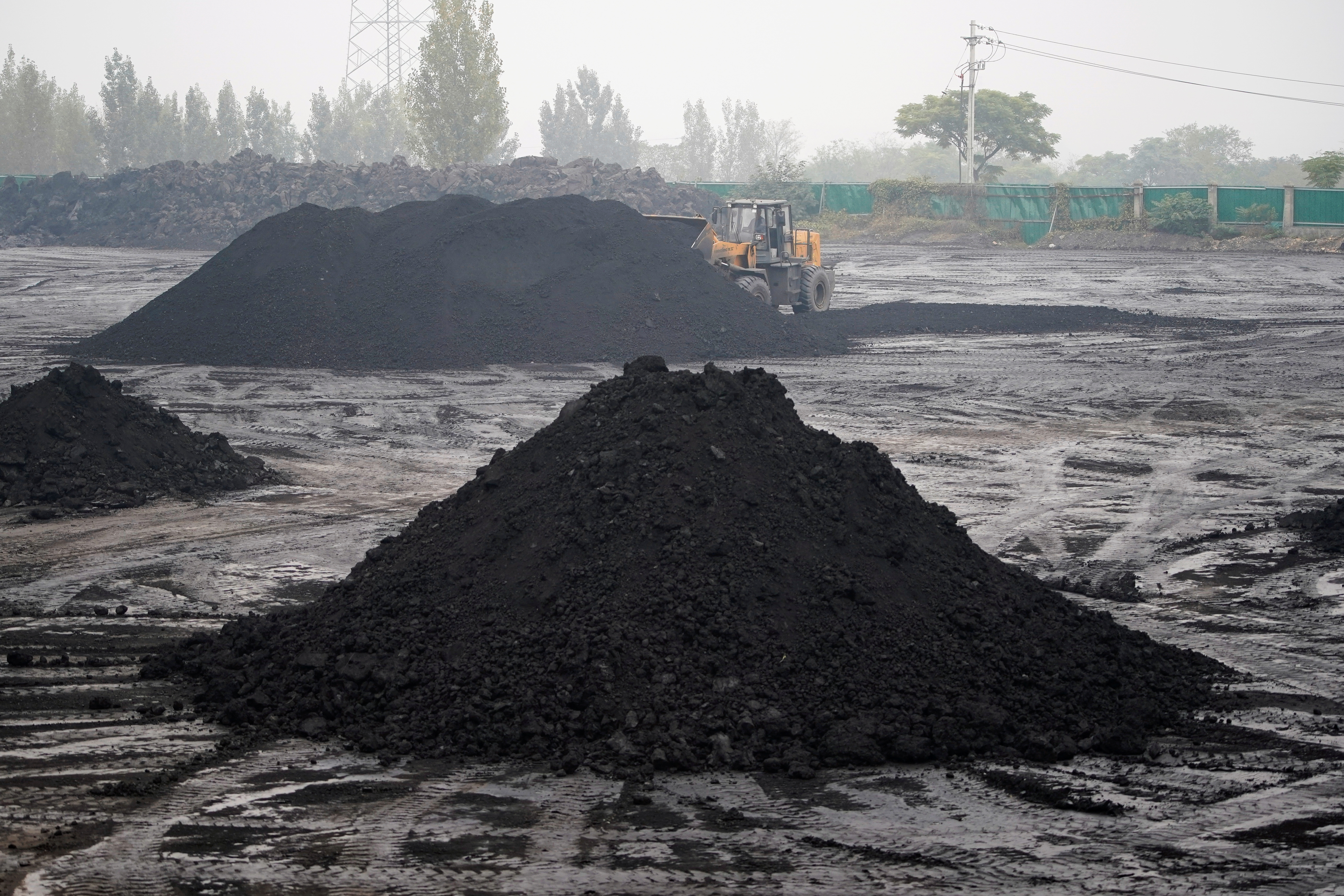
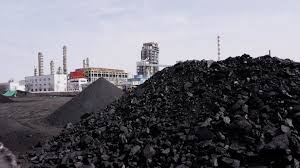
Not dirty 19th-century coal in the Dickensian smokestack sense alone, but a futuristic, state-engineered coal industrial complex stretching across Xinjiang’s deserts like a cyberpunk empire built from black rock and strategic paranoia. According to the South China Morning Post, Beijing is rapidly expanding coal-to-chemicals, coal-derived natural gas, and massive energy infrastructure projects in Xinjiang as part of a long-term strategy to reduce dependence on imported oil from the Middle East.
The message is clear: China no longer wants the Persian Gulf holding a knife to its economic throat.
That shift carries enormous implications for global politics, climate policy, and the balance of power between East and West.
The first consequence is geopolitical. China’s leadership watched the Russia-Ukraine war, sanctions battles, and the Iran conflict with cold calculation. Beijing concluded that globalization is no longer governed by efficiency. It is governed by survivability. Supply chains are now treated as potential weapons. Energy routes are military vulnerabilities. Dependence itself has become dangerous.
Chinese policymakers have repeatedly framed “energy security” as a matter of national survival.
That is why Xinjiang matters so much.
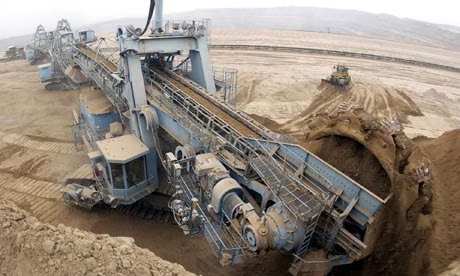
The region contains one of the largest coal reserves on Earth, with estimates around 390 billion tonnes. China is building enormous coal conversion systems there capable of turning coal into gas, chemicals, plastics, synthetic fuels, and industrial feedstocks. Autonomous electric mining trucks now crawl across the Gobi Desert while ultra-high-voltage power lines send energy eastward into China’s manufacturing core.
In effect, Beijing is trying to transform Xinjiang into an inland energy fortress.
And this is where the global implications become explosive.
For decades, the United States enjoyed enormous strategic leverage because global oil trade depended heavily on maritime routes protected by the U.S. Navy and denominated through dollar-centered systems. If China becomes less dependent on Gulf oil, less vulnerable to naval chokepoints, and more reliant on domestic coal conversion plus Russian pipeline energy, that leverage weakens.
The petrodollar system does not collapse overnight like a Hollywood skyscraper. It erodes gradually, like seawater eating steel beneath a bridge nobody realizes is weakening.
China’s energy strategy increasingly reflects preparation for a fragmented multipolar world where sanctions, blockades, and trade wars are permanent features rather than temporary crises. Analysts have already noted Beijing’s growing focus on Central Asia, Russian imports, domestic reserves, and alternative energy corridors outside traditional Western-controlled systems.
But the strategy also exposes a brutal contradiction inside modern climate politics.
China simultaneously leads the world in renewable energy expansion while massively reinforcing coal infrastructure. President Xi Jinping recently emphasized that coal remains the “foundation” of China’s energy system even while promoting green development.
To many Western observers, this sounds hypocritical. But Beijing does not see it that way. Chinese planners appear to view renewables and coal not as opposites, but as dual pillars of national resilience. Solar, wind, nuclear, and hydropower reduce long-term oil dependence. Coal provides emergency industrial stability during geopolitical shocks.
That hybrid strategy may prove enormously influential for developing nations.
Countries across Africa, Asia, and Latin America are watching closely. Many governments face the same dilemma: they want industrial growth and energy security, but Western climate policy often demands rapid fossil fuel restrictions without offering sufficient economic alternatives. China’s model effectively says: industrial sovereignty comes first, emissions targets second.
That message resonates in a world where wars, sanctions, and inflation have shattered faith in neoliberal stability.
There is also a darker dimension to this transformation.
Xinjiang is already internationally controversial because of allegations surrounding mass surveillance, detention camps, and repression targeting Uyghur Muslims. Now the region is becoming central to China’s future industrial strategy. That means global corporations, foreign governments, and energy markets may become even more entangled with a region tied to human rights controversies. The geopolitical tension there is likely to intensify, not fade.
Meanwhile, Europe faces deindustrialization fears, America wrestles with political paralysis, and China continues building giant state-directed infrastructure projects at breathtaking speed. Even critics admit Beijing’s ability to mobilize industrial policy resembles a civilization-scale machine operating on a timeline democracies increasingly struggle to match.
The deeper irony is almost cinematic.
For years, Western leaders framed coal as the fuel of the past. China is now attempting to turn it into the scaffolding of the future.
Not because coal is clean.
Not because it is ideal.
But because Beijing believes survival beats purity in an unstable century.
And if that calculation proves correct, the global energy order of the next twenty years may be shaped less by oil wells in the Gulf and more by autonomous trucks crawling across the deserts of Xinjiang beneath a haze of coal dust and satellite signals.
—Pān Hě, B1Daily





Leave a comment