—Michael Lyles, B1Daily
South Africa is entering a strange new economic era where millions of people technically live in the “connected” world but remain trapped in conditions closer to infrastructural collapse. Internet cables stretch across townships. Smartphones glow in crowded taxis. Digital banking apps spread across poor communities. Yet underneath the illusion of modernization sits a brutal reality: electricity instability, illegal power connections, vandalized infrastructure, and uneven state investment are quietly choking economic growth before it can fully mature.
The result is a country that appears digitally alive while economically flickering like a dying streetlamp.
The investigation published by TimesLIVE highlights a deeper structural contradiction haunting South Africa’s economy. Access without stability is not development. Connectivity without reliable infrastructure simply creates a fragile society permanently one blackout away from paralysis.
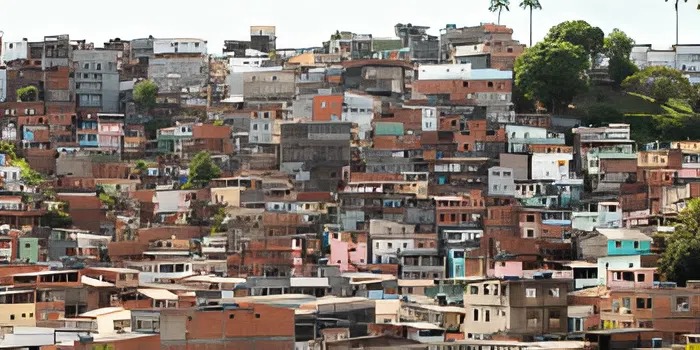
South Africa’s economic model increasingly resembles a split-screen nation. Wealthier districts operate with backup batteries, solar installations, private security, and fiber internet. Poor and working-class communities survive inside a patchwork economy powered by illegal electrical connections, failing municipal systems, and constant service interruptions. In many areas, the formal economy and the survival economy now operate side by side like overlapping electrical grids held together with tape and desperation.
The consequences ripple far beyond inconvenience.
Every unstable power line becomes an economic tax on productivity. Every blackout destroys business confidence. Every vandalized transformer delays investment. Every illegal connection increases municipal losses and weakens already strained infrastructure systems.
Cape Town alone has reportedly spent tens of millions of rand repairing infrastructure damaged by theft, sabotage, and illegal electricity hookups. Funds originally intended for upgrades and expansion are now being redirected into an endless loop of emergency repairs.
That cycle creates a devastating long-term economic trap.
Instead of building future infrastructure, municipalities are forced into permanent maintenance mode. Governments stop acting like developers and start acting like exhausted mechanics crawling underneath a broken machine that never stops leaking oil.
At the center of the crisis is unemployment.
South Africa’s unemployment rate remains among the highest in the world, particularly for young people. In many informal settlements, illegal electricity connections are not simply criminal enterprises. They are survival systems born from exclusion. Research cited by South African reporting found that many residents rely on unauthorized power access because formal electricity remains unaffordable or inaccessible.
This is where the economic discussion becomes politically explosive.
Western economic institutions often frame infrastructure problems as governance failures alone, but that explanation is incomplete. South Africa’s infrastructure crisis is also the aftershock of historical inequality. The apartheid economy was never designed to produce equal service delivery or balanced urban development. It was designed to extract labor while spatially isolating Black populations from economic investment. The physical geography of inequality still shapes modern infrastructure outcomes today.
And now climate pressures, global energy shocks, and international instability are making the situation even more dangerous.
Recent turmoil surrounding Middle East oil markets sent fears through the South African economy because fuel price increases rapidly spread through transportation, food costs, manufacturing, and household expenses. Analysts warned that rising oil prices could trigger broader economic instability and intensify inflationary pressure.
That creates a brutal domino effect.
Higher fuel prices increase transportation costs. Transportation costs increase food prices. Food prices increase household desperation. Desperation increases illegal economic activity. Infrastructure damage worsens. Municipal finances weaken further.
The system begins consuming itself from the inside like an overheating circuit board.
Meanwhile, wealthier South Africans increasingly detach from the national grid altogether through private energy solutions. Solar panels, inverters, generators, and battery systems are rapidly becoming class markers. Reliable electricity is slowly transforming from a public utility into a privatized luxury subscription.
That trend should terrify policymakers.
Because once affluent citizens no longer depend on public infrastructure, political pressure to repair public systems weakens dramatically. A two-tier infrastructure economy emerges: one South Africa powered by private resilience and another trapped in municipal decay.
This is why the country’s infrastructure crisis is not merely technical. It is existentially economic.
Modern economies cannot function consistently without stable energy systems. Manufacturing collapses under unpredictability. Foreign investors hesitate. Small businesses die first. Digital entrepreneurship becomes harder. Schools and hospitals struggle to operate. Entire communities become economically isolated despite technically being “connected.”
The tragedy is that South Africa possesses enormous economic potential. It has strategic mineral resources, financial institutions stronger than many regional peers, advanced banking systems, a massive youth population, and deep industrial capacity. Yet infrastructure instability acts like a ceiling pressing down on every growth opportunity before it can fully expand.
The global economy is entering a period where energy security, infrastructure reliability, and technological resilience will define national power. Countries that cannot stabilize those systems risk drifting into permanent developmental stagnation while richer nations accelerate into AI-driven and automated futures.
South Africa now stands at a crossroads between those worlds.
One road leads toward massive infrastructure modernization, public investment, and energy stabilization capable of unlocking growth across the economy.
The other leads toward a fragmented future where privatized islands of stability float above widening oceans of public collapse.
Right now, the lights are still on in enough places to pretend the choice has not already arrived.
But the wires are humming louder every year.
—Michael Lyles, B1Daily






Leave a comment