—Sylvester Loving, B1Daily
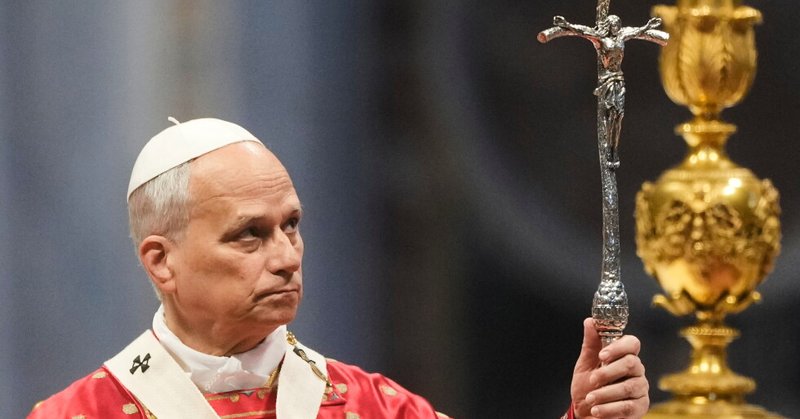
In one of the most consequential statements ever delivered from the Vatican, Pope Leo XIV formally apologized Monday for the Holy See’s direct role in legitimizing slavery and for failing to condemn the institution for centuries, marking the first time a pope has explicitly acknowledged the Vatican’s own institutional complicity in the trans-Atlantic slave trade.
The apology came in Leo’s first papal encyclical, Magnifica Humanitas (“Magnificent Humanity”), a sweeping document primarily focused on artificial intelligence, technological ethics, and what the pope described as emerging forms of “digital slavery.” But buried within the manifesto was a historic rupture with centuries of Vatican evasiveness surrounding slavery and colonialism.
“For this, in the name of the church, I sincerely ask for pardon,” Leo wrote, describing slavery as “a wound in Christian memory.”
That sentence may sound simple. Historically, it is seismic.
Previous popes condemned aspects of slavery or apologized for Christians participating in the slave trade. But no pope before Leo publicly acknowledged that earlier popes themselves helped authorize and legitimize slavery through official papal decrees issued during Europe’s colonial expansion.
Those decrees included notorious 15th-century papal bulls like Dum Diversas and Romanus Pontifex, which granted European monarchies religious justification to conquer, subjugate, and enslave non-Christian populations across Africa and the Americas. Historians and Black Catholic activists have long argued these documents provided theological fuel for centuries of colonial violence and racial hierarchy.
For generations, critics accused the Vatican of treating slavery like a regrettable historical weather event rather than a system materially supported by Church power.
Leo’s apology changes that.
The symbolism surrounding the moment is even more striking given the pope’s own background. Leo is the first American-born pontiff in history, and reports indicate his family lineage includes both enslaved people and slaveholders.
That family history hovered over the apology like cathedral bells echoing through marble halls.
Black Catholic scholars and activists immediately described the statement as historic, though many stressed that apology alone cannot resolve centuries of institutional harm.
Historian Shannen Dee Williams called the move a “monumental step” toward long-delayed truth-telling and reparative justice, arguing the Catholic Church was never merely a passive observer to white supremacy but an active participant in structures that shaped it globally.
The Vatican’s relationship with slavery has long existed as one of Christianity’s deepest historical contradictions. While some clergy opposed slavery throughout history, Church institutions themselves often owned enslaved people, profited from colonial economies, and remained slow to condemn the practice outright. The Vatican did not universally denounce slavery until the late 19th century under Pope Leo XIII, centuries after the trans-Atlantic slave trade had already devastated millions of African lives.
Even then, critics say the Church never fully confronted the scale of its own involvement.
That is why Monday’s apology landed with such force.
The encyclical also connected historic slavery to modern technological exploitation. Leo warned that artificial intelligence, algorithmic control, exploitative labor systems, and concentrated digital power risk creating “new forms of slavery and colonialism” in the modern era.
The imagery was difficult to miss: a pope apologizing for one civilization-scale system of dehumanization while warning humanity may be constructing another one out of code, surveillance, automation, and corporate power.
In many ways, the document reads like the Vatican attempting to reposition itself morally before the next global transformation fully arrives.
Still unresolved, however, is whether the Vatican will move beyond apology toward material action.
The Holy See repudiated the so-called Doctrine of Discovery in 2023, but it has never formally annulled the original papal bulls that helped justify conquest and enslavement. Reparations advocates and Black Catholic organizations have increasingly pushed for financial restitution, archival transparency, and institutional accountability beyond symbolic language alone.
That pressure is unlikely to disappear after this statement.
Because apologies carry weight. But history has a long memory, and institutions measured in centuries are judged not only by what they confess, but by what they are willing to repair afterward.
For the Vatican, Monday may have opened a new chapter.
It also reopened one of Christianity’s oldest wounds.
—Sylvester Loving, B1Daily






Leave a Reply