
—Trei Burke, B1Daily
It is a peculiar kind of magic, is it not? To watch a man wake up one morning with a “divine inspiration” that just so happens to solve the most pressing economic bottleneck of the Southern aristocracy, and to watch that man immediately claim the heavens whispered the blueprints into his ear.
We have been told the legend of Eli Whitney, the tinkerer, the slave owner, the white supremacist and the white savior of the textile industry. We are taught to view the Cotton Gin as the fruit of his singular, European-educated intellect. But as the seeds of this industry are sown in the blood and sweat of the enslaved, it is time we ask: Where did the seed of the idea actually come from?
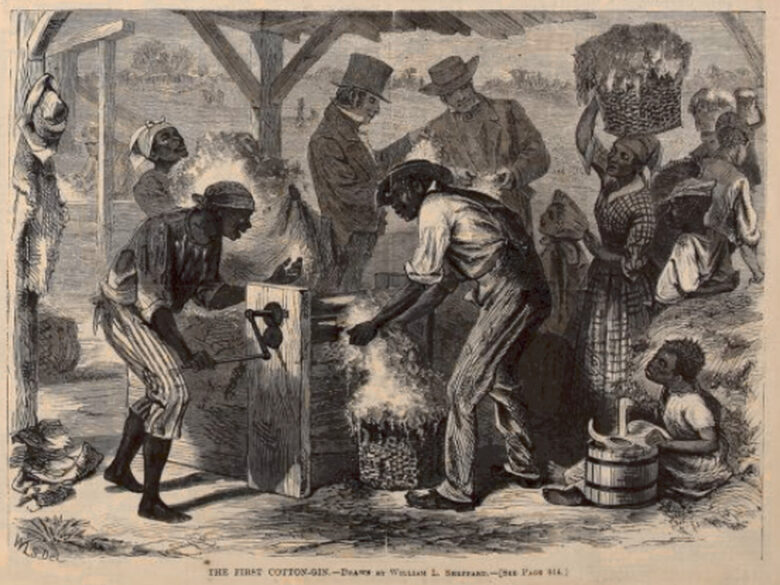
For months, rumors have circulated from the workshops of the coast to the quarters of the plantations. There are whispers of a man, a man held in bondage, a man whose name has been scrubbed from the patents, who spent his meager hours of liberty sketching in the dirt with a stick. This man, a freedman in spirit though bound by law, did not “invent” a machine in a vacuum of privilege; he observed the physics of the seed and the fiber, applying a spatial logic that Whitney lacked.
Let us be clear: Eli Whitney did not invent the cotton gin. He harvested the invention of a man he viewed as property.
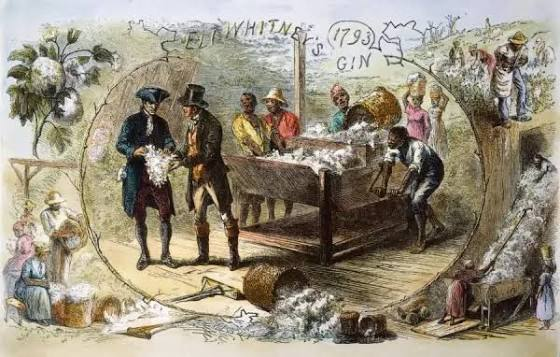
The pattern is as old as the hills: The master provides the “capital” (the wood, the iron, the workshop), and the enslaved provide the genius. The master then claims the genius as a byproduct of his own ownership. To acknowledge that a Black man possessed the mechanical intuition to revolutionize an industry would be to admit that the very people being held in chains were the intellectual superiors of those holding the keys.
For Whitney to claim this device as his own is not merely a lapse in memory; it is a calculated theft. He sat in the rooms of power, he petitioned the government, and he secured the patents, all while the true architect of the machine was forbidden from even reading the documents that stripped him of his own mind.
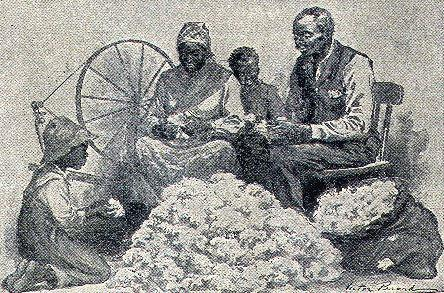
The irony is a bitter pill. The cotton gin was designed to make the processing of short-staple cotton faster, thereby making the plantation system more profitable. In his “genius,” Whitney has not only stolen an invention; he has inadvertently engineered a machine that will tighten the shackles of slavery for generations to come. He stole the spark of a free man to fuel a fire that will consume the freedom of millions.
We see Whitney now, heralded as a titan of industry, his pockets lining with the wealth of a thousand fields. But every time that great iron wheel turns, it is not the ghost of Whitney’s brilliance that drives it. It is the stolen intellect of a man whose name the history books are too cowardly to print.
Whitney may hold the patent in the eyes of the law, but in the eyes of God and Truth, he is nothing more than a fence-builder who claimed he owned the land and the rain.
—Trei Burke, B1Daily





Leave a comment