—Michael Lyles, B1Daily
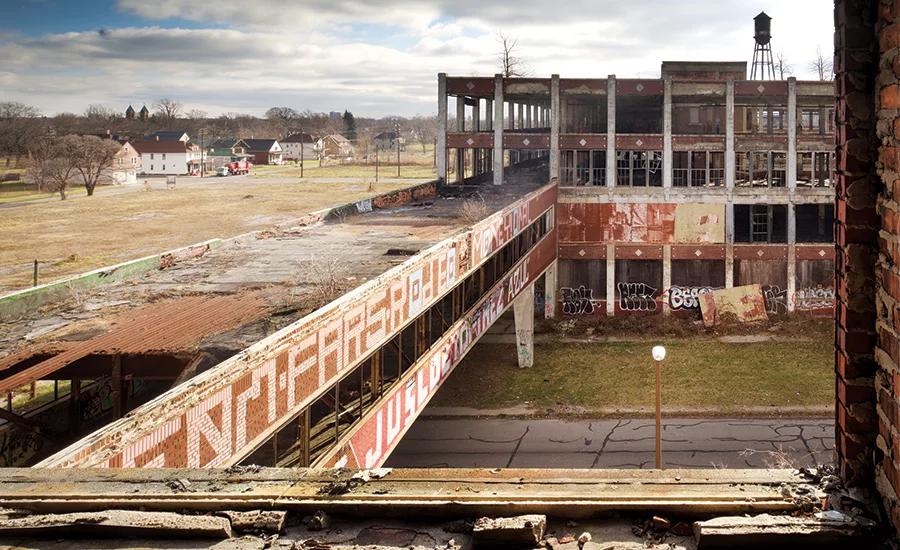
Detroit’s economic collapse is often told as a story of deindustrialization, suburban flight, and corporate restructuring. But beneath the headlines about bankruptcy and abandoned factories lies a deeper narrative: the transformation of one of America’s most important Black middle-class strongholds into a cautionary tale about industrial dependency, racial inequality, and uneven recovery.
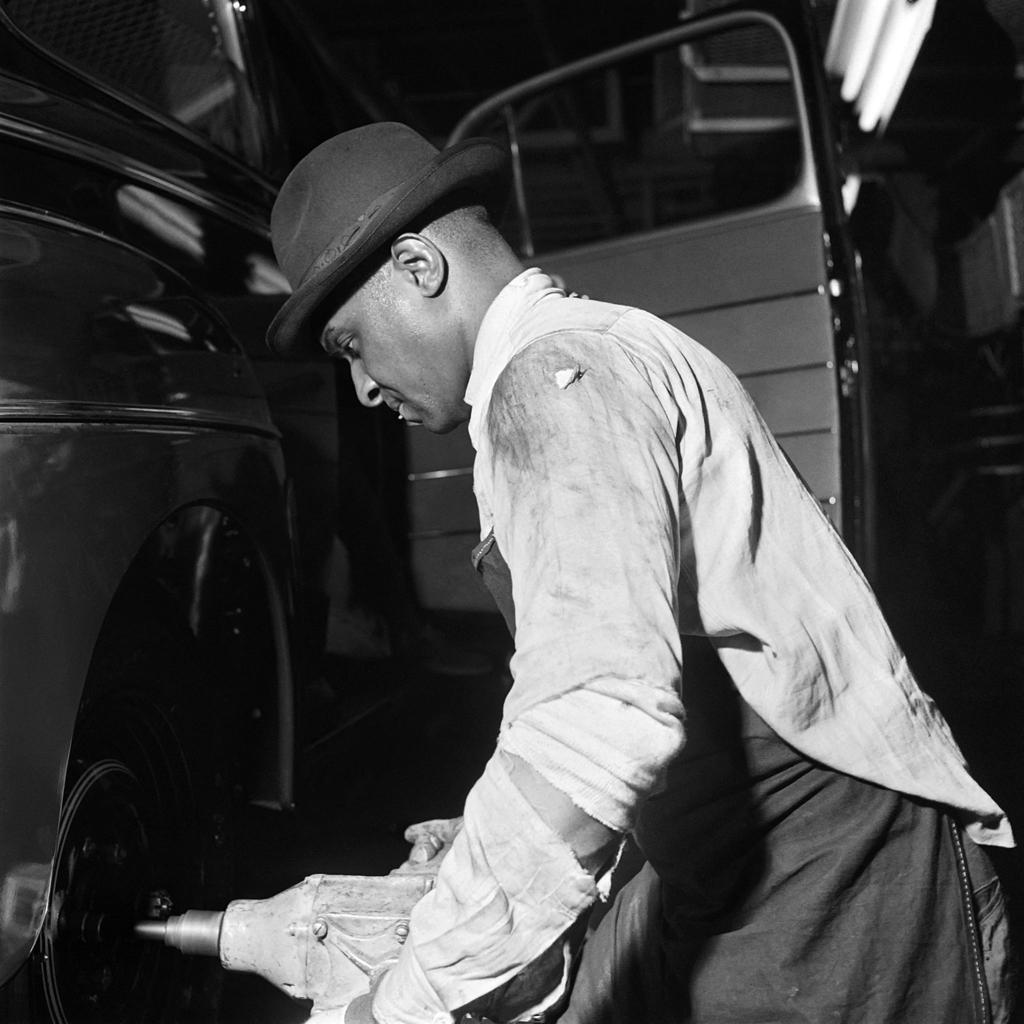
At its peak in the mid-20th century, Detroit symbolized upward mobility for Black Americans. The automobile industry offered relatively stable, unionized employment that did not require advanced degrees but still provided wages capable of supporting homeownership, family stability, and intergenerational wealth. For many Black families migrating from the South during the Great Migration, Detroit was not just a destination—it was an economic promise.
That promise began to unravel over several decades.
The first major force was industrial restructuring. Beginning in the 1970s and accelerating through the 1980s and 1990s, automation and global competition reshaped the auto industry. Manufacturing jobs that once required large labor forces were increasingly replaced by machines or relocated to lower-cost regions, both domestically and abroad. As production became more efficient, employment became less abundant.
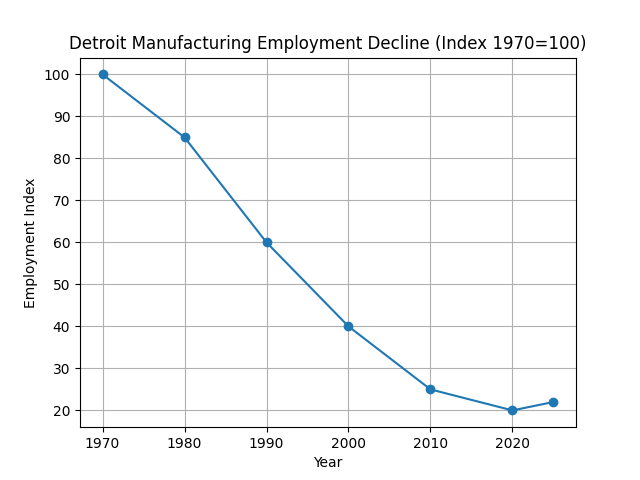
Detroit, heavily dependent on the auto sector, absorbed a disproportionate share of the shock. When factories closed or downsized, entire neighborhoods lost their economic foundation. The impact was especially acute in Black communities that had been integrated into industrial labor markets during the postwar boom.
The second force was suburbanization. As middle-class residents, including many white workers, moved to surrounding suburbs, Detroit’s tax base eroded. This migration was driven by a combination of housing policy, highway expansion, and changing urban demographics. The result was a city left with fewer resources to maintain infrastructure, schools, and public services, even as its population needs remained high.
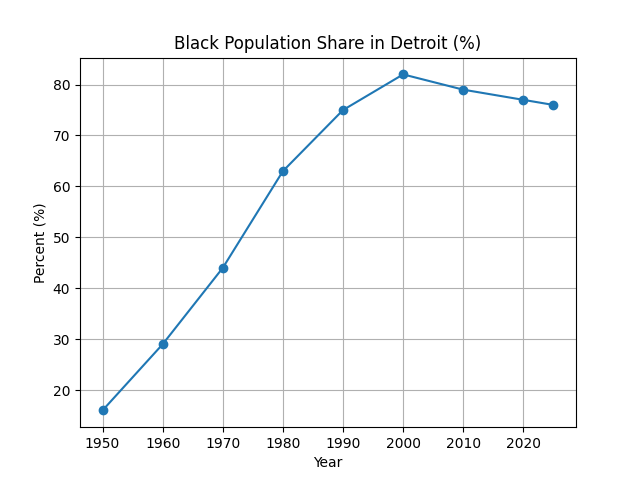
For Black Detroiters, this meant living in a city with shrinking fiscal capacity and rising social demands. Public institutions became stretched, and economic opportunities narrowed further as businesses followed consumers and capital into suburban markets.
The third factor was municipal fiscal strain. Detroit’s tax revenue declined while pension obligations, infrastructure costs, and service demands remained high. Over time, this imbalance culminated in the city’s 2013 bankruptcy filing, the largest municipal bankruptcy in U.S. history at the time. Although restructuring helped stabilize finances, it also involved difficult decisions regarding pensions, public assets, and municipal operations.
But economic decline is not only measured in budgets and employment statistics. It is also reflected in social mobility.
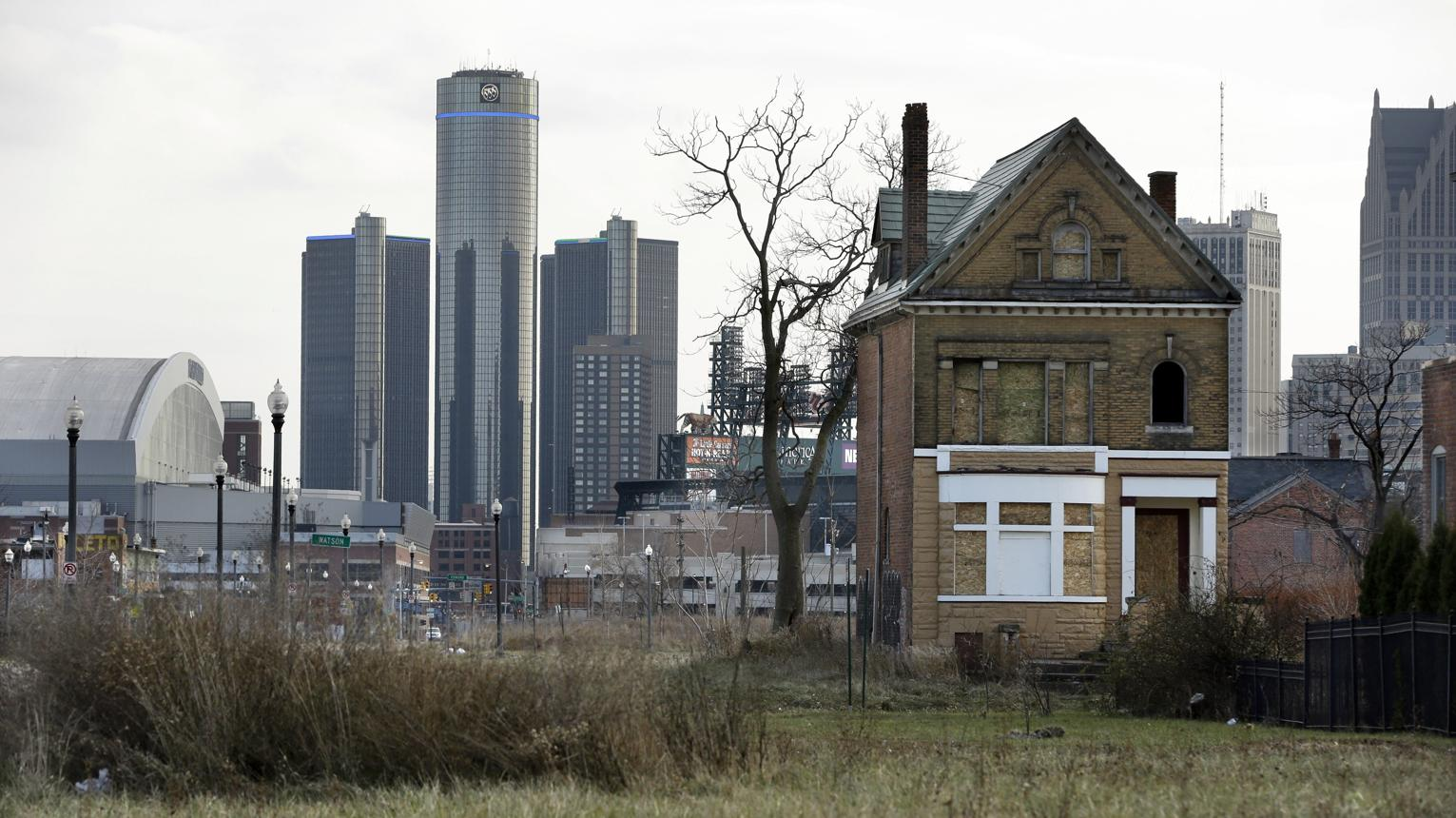
For Black America, Detroit’s trajectory represented both opportunity and vulnerability. The city had once been a rare example of large-scale Black middle-class formation driven by industrial labor. Stable union jobs created a pathway that did not depend on elite education or professional credentials. As those jobs disappeared, that pathway weakened.
This shift had long-term consequences. Household wealth accumulation slowed. Homeownership rates declined. Neighborhood disinvestment increased. And the gap between regions with strong post-industrial diversification and those dependent on manufacturing widened.
Yet Detroit’s story is not only one of collapse. It is also one of uneven reinvention.
In recent years, parts of Detroit have experienced economic revival driven by technology firms, real estate investment, and targeted redevelopment. Downtown and Midtown have seen new commercial activity, rising property values, and infrastructure investment. However, this growth has been geographically uneven, raising concerns about whether recovery is reaching long-standing Black neighborhoods outside core redevelopment zones.
This dual reality has created what economists often describe as a “two-Detroit” problem: a revitalized economic center alongside communities that continue to face high poverty rates, limited transportation access, and weaker employment opportunities.
The auto industry itself, while no longer the labor-intensive giant it once was, still plays a symbolic and practical role in the region. Modern factories are more automated and require fewer workers, but they remain important anchors of regional employment. The difference is that today’s manufacturing economy produces fewer entry-level opportunities for large-scale upward mobility.
For policymakers, Detroit raises difficult questions about the future of Black economic mobility in post-industrial America. If industrial jobs were once a key driver of the Black middle class, what replaces them in a digital and automated economy? Service-sector growth has not fully compensated in wages or stability. Technology jobs remain unevenly accessible. And regional inequality continues to shape opportunity.
Some economists argue that Detroit’s experience demonstrates the need for more diversified economic planning in cities heavily dependent on single industries. Others point to education, workforce training, and infrastructure investment as critical tools for long-term recovery. Still others emphasize that without addressing structural inequality in capital investment and labor markets, redevelopment risks reinforcing existing disparities.
What remains clear is that Detroit is more than a local case study. It is a national economic reference point.
The decline of Detroit was not simply the failure of one city. It was the restructuring of an entire economic model that once connected industrial labor to middle-class stability for millions of Americans, including a significant share of Black workers.
Understanding that shift is essential to understanding not only Detroit’s past, but the future of economic opportunity in Black America.
—Michael Lyles, B1Daily






Leave a comment