—Matt Gwinta, B1Daily
When Zimbabwe gained independence in 1980, ZANU-PF presented itself as the party that liberated the nation from colonial rule. Decades later, the same organization has become the center of a different debate: whether a liberation movement has transformed into a political machine unwilling to surrender power.
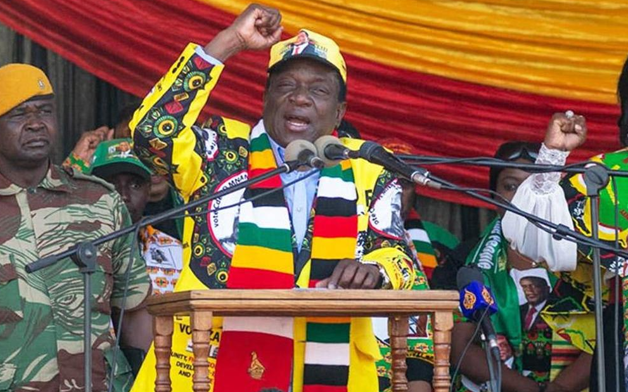
The latest controversy surrounding President Emmerson Mnangagwa’s government has intensified accusations that Zimbabwe is no longer functioning as a genuine democracy but instead resembles a one-party authoritarian state.
The warning signs are familiar: extending presidential terms, changing election rules, weakening opposition forces, and using state institutions to protect the ruling party.
In July 2026, ZANU-PF officials reportedly began pushing beyond the previously discussed “2030 agenda,” calling for Mnangagwa to remain party leader and potentially president until 2037. This came shortly after constitutional changes that extended presidential terms and delayed elections.
Changing the Rules Instead of Accepting the Verdict of Voters
A defining feature of democratic governments is that leaders understand one simple rule:
The people choose the government, and the government eventually leaves.
Critics argue that ZANU-PF is attempting to rewrite that rule.
Instead of allowing voters to decide Zimbabwe’s next leadership through competitive elections, the ruling party has pursued constitutional amendments that critics say reduce democratic accountability. Human Rights Watch reported that changes approved in 2026 extended presidential terms and replaced direct presidential elections with a parliamentary selection process.
Supporters of the changes argue they provide stability and continuity.
Opponents see something very different: a government changing the rules of the game because it fears losing control.
This is a common pattern in authoritarian systems. Elections may still exist, but the political environment is designed so that the ruling party remains nearly impossible to remove.
The Signs of a Dictatorship Are Not Only About Elections
A dictatorship is not defined only by whether a country holds elections.
Many authoritarian governments around the world hold elections.
The deeper questions are:
- Can citizens freely criticize leaders?
- Can opposition parties compete fairly?
- Can journalists investigate corruption?
- Can courts act independently?
- Can voters realistically replace those in power?
Zimbabwe has faced serious criticism on all these fronts.
Freedom House describes Zimbabwe as “Not Free,” citing decades of ZANU-PF dominance, crackdowns against opposition groups, restrictions on media freedom, and government pressure against dissent.
Human Rights Watch has also reported continued repression against opposition figures, activists, journalists, and civil society groups, including arrests and restrictions on political activity.
From Mugabe to Mnangagwa: The System Survives the Leader
Many Zimbabweans hoped the removal of longtime ruler Robert Mugabe in 2017 would open a new democratic chapter.
Instead, critics argue that the structure of power remained largely unchanged.
Mnangagwa came to power after a military intervention removed Mugabe, and although he promised reform, critics say his government maintained many of the same political structures that defined the previous era.
The faces changed.
The system remained.
The security forces, political networks, and state institutions continued to be closely connected to ZANU-PF.
Political Opposition Under Pressure
A healthy democracy requires more than allowing opposition parties to exist.
Opposition groups must be able to organize, campaign, criticize the government, and compete without intimidation.
Zimbabwe’s opposition has repeatedly accused ZANU-PF of using state power to weaken challengers.
Human Rights Watch documented cases involving arrests, harassment, and restrictions against opposition supporters and civil society activists.
The result is a political environment where many citizens may technically have choices on paper, but fear and pressure limit those choices in practice.
The Dangerous Path of “Forever Governments”
History has shown that governments rarely announce:
“We are becoming a dictatorship.”
Instead, authoritarianism often arrives through smaller steps:
- A constitutional amendment here.
- A delayed election there.
- A weakened opposition.
- A controlled media environment.
- A leader who becomes impossible to challenge.
Each individual action may be defended as legal.
Together, they can transform a democracy into something much darker.
That is why critics describe ZANU-PF’s actions as democratic backsliding rather than normal political reform.
Zimbabwe’s Future Is Now on the Line
Zimbabwe stands at a crossroads.
The government argues that continuity is necessary for national development.
Critics argue that no country can build a better future by concentrating power indefinitely in one party and one leader.
A democracy is not measured by how long a leader can remain in office.
It is measured by whether citizens have the real power to replace that leader.
For many Zimbabweans, the question is no longer simply whether Mnangagwa stays until 2030 or 2037.
The larger question is:
Will Zimbabwe remain a democracy where leaders serve the people, or become another example of a government that learned how to hold elections while preventing real political change?
—Matt Gwinta, B1Daily





Leave a comment