—Josh Allen, B1Daily
A city can survive an earthquake.
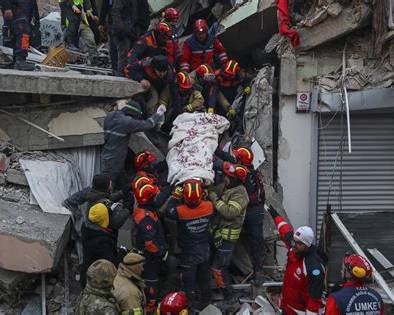
Modern civilization may have a harder time surviving everything that happens after one.
Electricity disappears and cell towers go silent. Water mains rupture beneath streets. Bridges become unusable. Hospitals switch to emergency generators. Fuel deliveries stop. Computer networks lose power. Fires erupt while damaged water systems leave firefighters struggling for pressure. Ports close, highways fracture and supply chains begin choking.
The earthquake may last two minutes.
The consequences can last years.
That is the seismic threat humanity should be discussing.
Recent destructive earthquakes have understandably created the impression that the planet itself is becoming dramatically more violent. But science requires an important correction: there is not compelling evidence that naturally occurring earthquakes worldwide are steadily becoming more frequent or more powerful.
Earthquake activity naturally fluctuates. Several large earthquakes occurring relatively close together can therefore create an alarming cluster without representing a fundamental change in Earth’s tectonic behavior. Scientists interviewed after a cluster of major earthquakes in 2026 similarly cautioned that earthquakes occurring thousands of miles apart weren’t necessarily connected.
But dismissing the danger because earthquakes themselves aren’t globally accelerating would be an enormous mistake.
The planet may not be changing. Civilization is.
And we are building increasingly complicated societies on top of ground that has never stopped moving.
The Earthquake Risk Multiplier
Human civilization has undergone an extraordinary transformation.
Megacities now contain tens of millions of people. Electricity grids stretch across enormous regions. Water systems depend upon pumps, treatment plants and buried pipelines. Telecommunications networks depend upon electricity and data centers. Hospitals depend upon communications, transportation, electricity, water, pharmaceuticals and highly specialized supply chains.
Each system increasingly depends upon another.
That interdependence creates efficiency during ordinary life.
During catastrophe, it can create a domino field.
Research into complex infrastructure networks has demonstrated why cascading failures deserve serious attention. Failure in one interconnected system can propagate into others, particularly when networks are poorly designed or insufficiently resilient.
An earthquake therefore shouldn’t be imagined merely as shaking buildings.
Imagine instead an earthquake striking a major metropolitan region and simultaneously damaging substations, highways, fiber-optic lines, pipelines, hospitals and water infrastructure.
Now the disaster begins feeding itself.
No electricity means telecommunications equipment eventually loses backup power.
Communication failures complicate emergency coordination.
Broken roads slow repair crews.
Damaged fuel infrastructure limits generators.
Water failures complicate firefighting.
Hospital generators require fuel.
Businesses cannot process payments.
Supermarkets cannot reliably refrigerate food.
Warehouses cannot receive replacement inventory.
A geological disaster becomes an infrastructure disaster.
Then an economic disaster.
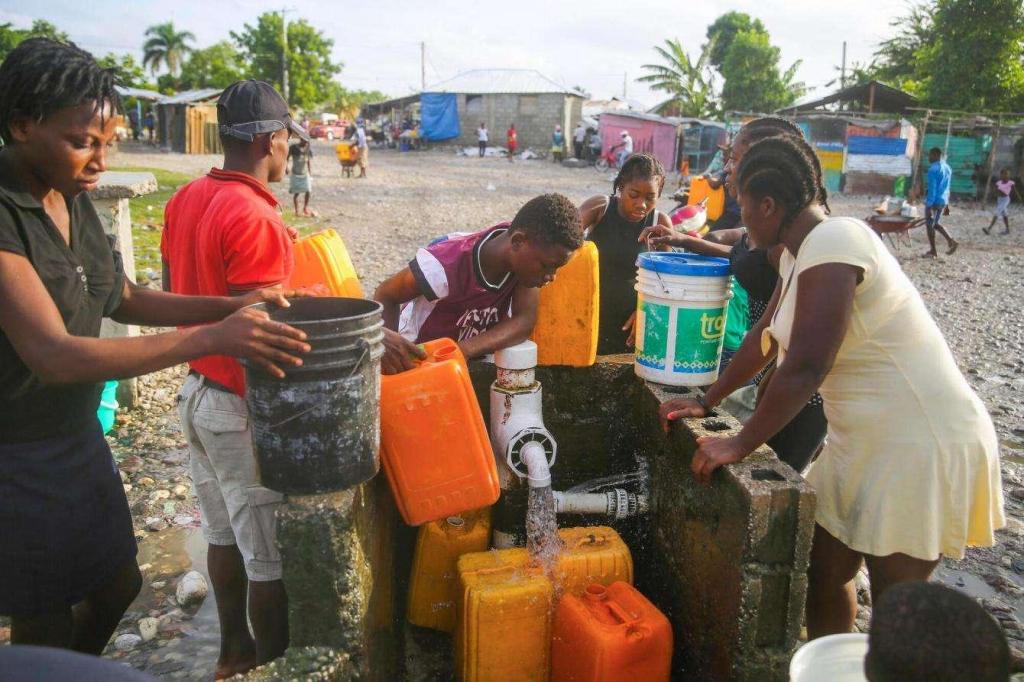
Then potentially a humanitarian one.
Magnitude Isn’t the Whole Story
The number attached to an earthquake can be deceptive.
A magnitude 7 earthquake isn’t automatically more catastrophic than every magnitude 6 earthquake. Depth, distance from populated areas, geology, building construction and preparedness can radically alter the consequences.
Recent analysis of destructive earthquakes has again emphasized that shallow earthquakes can be especially damaging and that weak construction dramatically increases casualties.
This explains one of earthquake science’s most important lessons:
Earthquakes don’t create disasters by themselves. Vulnerability does.
A powerful earthquake beneath an uninhabited region may become primarily a scientific event.
A somewhat smaller earthquake directly beneath a poorly prepared metropolis can become a national catastrophe.
That means humanity possesses considerable power over the final death toll.
We cannot prevent tectonic plates from moving.
We can prevent buildings from becoming tombs.
Humans Can Actually Cause Earthquakes
There is another part of the story that deserves far more public attention.
Although humanity cannot control natural plate tectonics, certain industrial activities can induce earthquakes.
The American experience provides compelling evidence.
Beginning around 2009, earthquake activity increased dramatically across portions of the central and eastern United States, particularly Oklahoma.
USGS research found strong evidence connecting much of that increased seismicity with deep wastewater injection associated with oil and gas activity. Researchers found that Oklahoma’s seismicity rates after 2009 exceeded anything previously observed there during the twentieth century.
Other research has examined connections between wastewater injection and earthquake sequences, including Oklahoma’s magnitude 5.7 earthquake sequence in 2011.
That doesn’t mean fracking or wastewater injection is somehow making earthquakes stronger worldwide.
It means something more precise and scientifically defensible:
Human beings are capable of altering seismic risk under certain geological conditions.
That should be treated as a warning flare.
Industries operating around known faults need rigorous geological monitoring, transparent seismic data and regulations capable of responding when industrial activity begins changing underground pressures.
We Cannot Predict the Exact Day
Perhaps the most frustrating feature of earthquake science is that researchers still cannot reliably announce:
“A magnitude 8.1 earthquake will strike this city next Tuesday at 3:17 p.m.”
Modern science simply cannot provide that kind of precise prediction.
But that doesn’t mean humanity is helpless.
Scientists can identify faults.
They can calculate probabilities.
They can map vulnerable soils.
They can measure ground deformation.
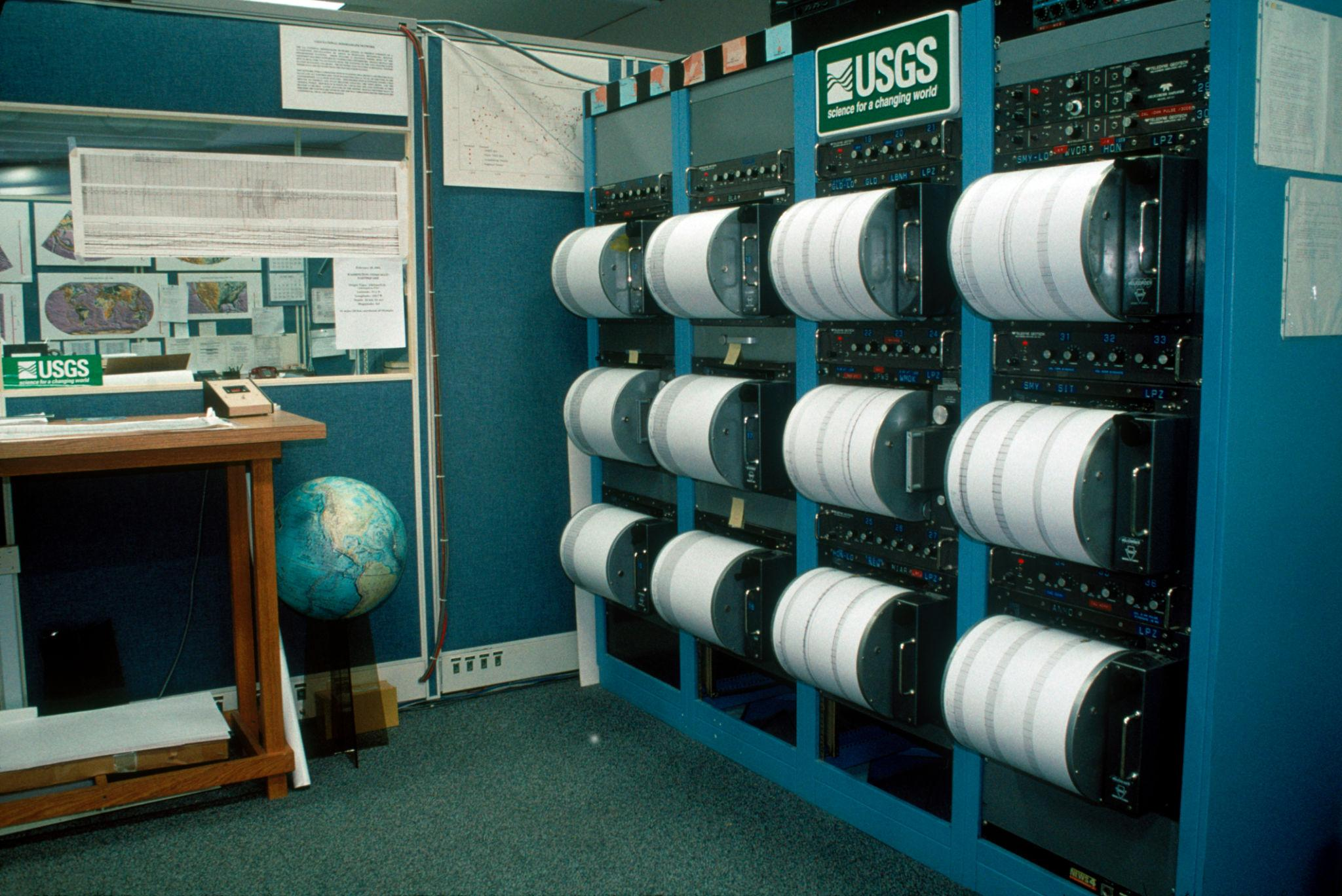
They can monitor earthquake sequences.
They can improve early-warning systems.
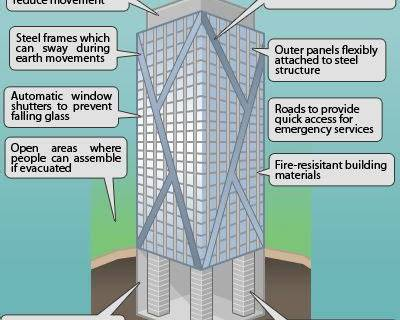
And engineers already know how to construct buildings capable of surviving violent shaking far better than poorly reinforced structures.
The challenge isn’t waiting for someone to invent an earthquake crystal ball.
The challenge is using the knowledge we already possess.
The Race Should Be for Earthquake-Resistant Civilization
Governments should begin treating seismic resilience as essential national infrastructure.
Major cities in earthquake zones need aggressive retrofitting programs for vulnerable buildings, bridges, schools and hospitals.
Electrical infrastructure needs redundancy.
Water systems need flexible joints, isolation valves and emergency reserves.
Hospitals need backup electricity that can operate for extended periods rather than merely surviving a short outage.
Communication networks need independent backup systems.
Ports require earthquake-resilient cranes, roads and fuel infrastructure.
Emergency agencies need satellite communications capable of functioning when terrestrial networks collapse.
And countries need emergency stockpiles positioned so that one destroyed highway or port doesn’t cut millions of people off from food, medicine and fuel.
Earthquake early-warning technology should also continue expanding.
Even several seconds of warning can allow automated systems to slow trains, stop elevators, shut industrial equipment and give people precious moments to protect themselves.
We cannot stop seismic waves.
We can make sure civilization doesn’t shatter when they arrive.
The Mega-City Problem
The twentieth century created cities on a scale earlier civilizations could barely imagine.
The twenty-first century is creating even larger ones.
That creates an uncomfortable mathematical reality.
Put more people, buildings, financial activity and infrastructure into earthquake-prone regions and the potential consequences of a rare catastrophic earthquake become enormous.
The central question therefore isn’t merely whether earthquakes are increasing.
It is whether exposure is increasing.
And in many places, it unquestionably is.
A major earthquake striking a modern economic hub could disrupt semiconductor production, shipping, energy distribution, manufacturing or international finance far beyond the immediate disaster zone.
The shaking might occur in one country.
The economic aftershock could travel around the planet.
Could an Earthquake End Modern Civilization?
One earthquake is extraordinarily unlikely to literally extinguish modern civilization worldwide.
That claim would go beyond the available scientific evidence.
But civilization doesn’t need to become extinct for an earthquake to produce a historic catastrophe.
A sufficiently destructive earthquake striking the wrong location could devastate a national economy, displace millions of people, destroy critical infrastructure and produce cascading shortages lasting months or years.
Multiple disasters occurring during an already unstable geopolitical or economic period could amplify those consequences further.
That is why seismic resilience deserves to be considered alongside climate resilience, pandemic preparedness, cybersecurity and national defense.
Civilization’s vulnerability doesn’t come from one threat.
It comes from systems becoming unable to absorb shocks.
The Clock We Cannot See
Earthquakes possess a terrifying advantage over most disasters.
They don’t announce themselves.
A hurricane can be tracked.
A drought develops over time.
Many disease outbreaks provide warning signs.
A major earthquake can transform an ordinary morning into a national emergency before anyone finishes breakfast.
That uncertainty should produce preparation, not panic.
Humanity does not need to “solve earthquakes.”
We need to solve our vulnerability to them.
The engineering exists.
The geological science exists.
Seismic monitoring exists.
Early-warning technology exists.
What remains dangerously inconsistent is the political willingness to spend money strengthening infrastructure before bodies are buried beneath it.
The ground beneath humanity will continue moving whether governments prepare or not.
Our task isn’t to command the Earth to remain still.
It is to build a civilization capable of standing when it doesn’t.
—Josh Allen, B1Daily





Leave a comment