—Barrington Williams, B1Daily
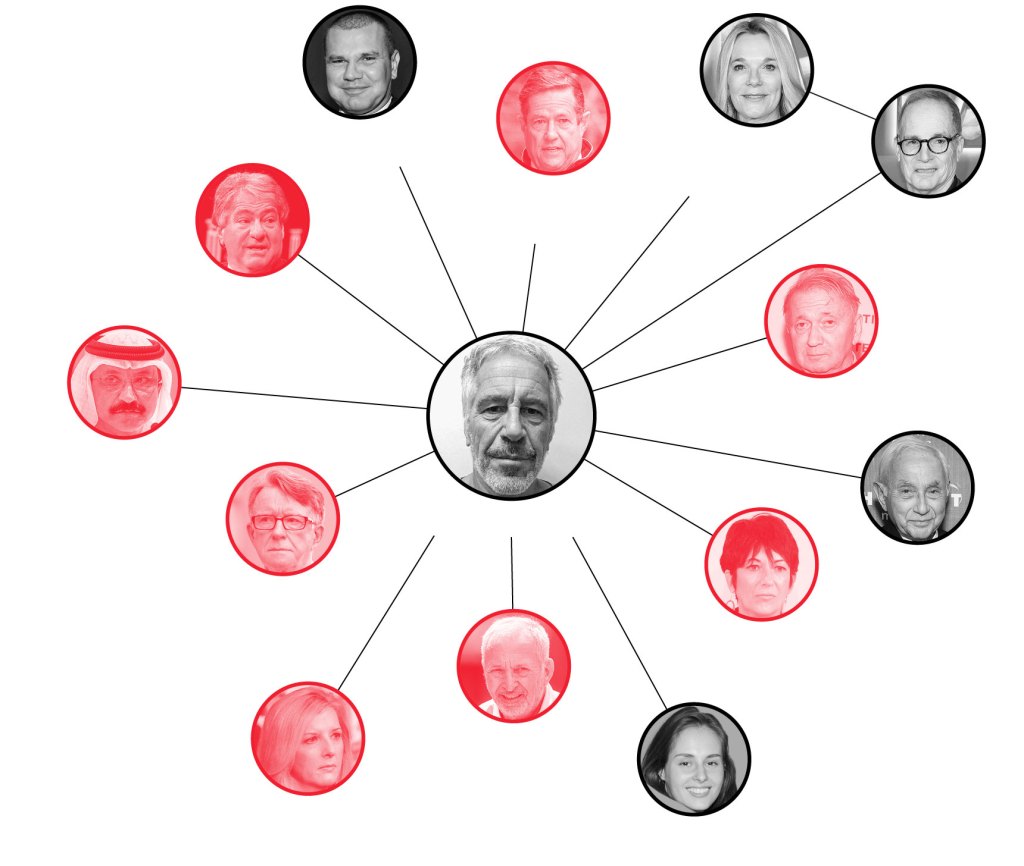
For decades, the American psyche has operated on a curated version of power. We are comfortable with the idea of the “corrupt politician” or the “greedy CEO,” provided those figures fit within a predictable, sterile box of systemic failure. But Jeffrey Epstein didn’t fit in a box. He existed as a bridge, a high-priced concierge of human misery who connected the stratosphere of global wealth to the gutter of sexual predation.
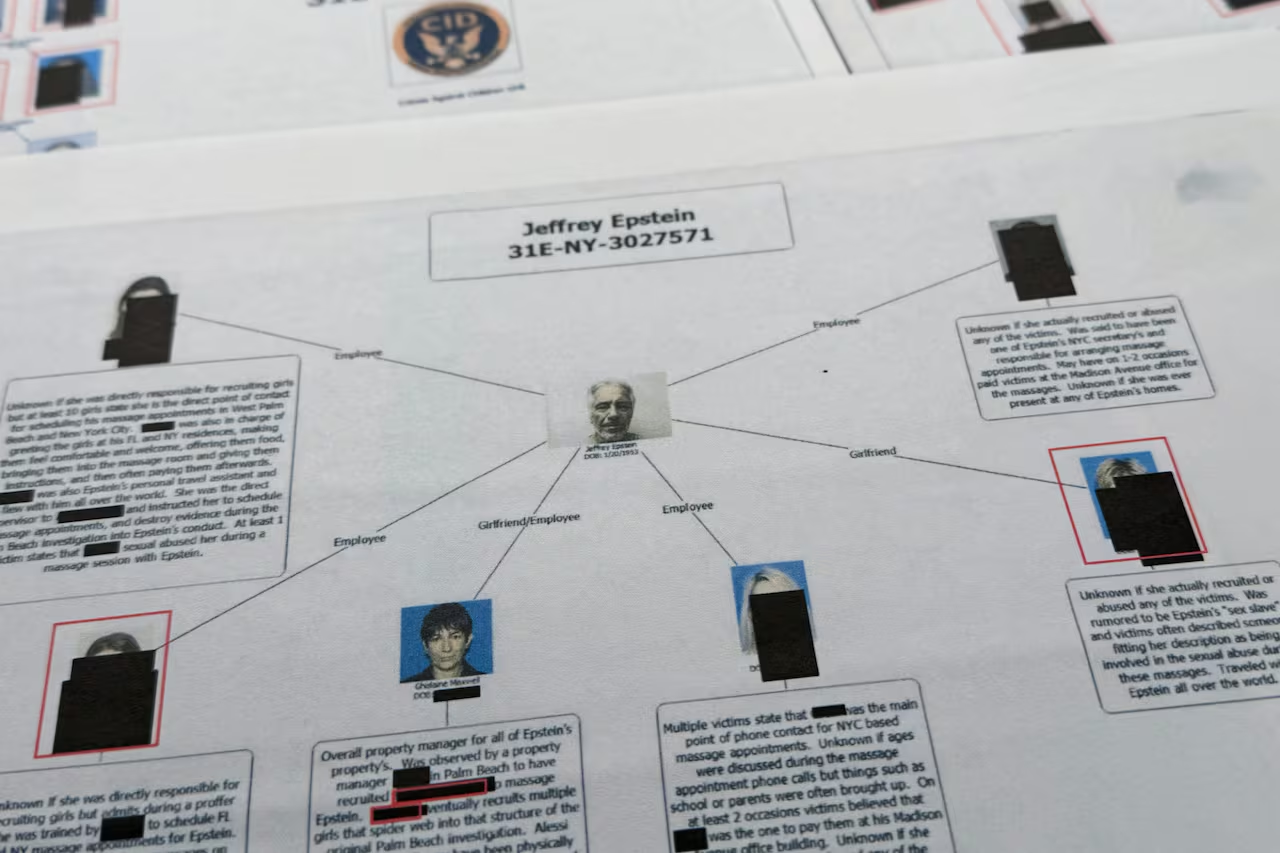
The tragedy of the Epstein saga is not merely the crimes committed, but the collective paralysis that follows. As a society, white America is fundamentally mentally and emotionally unequipped to confront the full scope of Epstein’s cohort because doing so would require an admission of a terrifying truth: that the pillars of their social, political, and financial stability were built on a foundation of predation.
There is a pervasive psychological mechanism at play here: the need to frame Epstein as a singular, anomalous predator, a “glitch” in the system rather than a feature of it. By painting Epstein as a lone wolf of eccentricity and evil, the public can avoid the vertigo that comes with acknowledging his “little black book.”
To truly investigate the cohorts, the presidents, the princes, the academics, and the white titans of industry would require a societal reckoning with the “Old Boys’ Network” in its most visceral form. For many, it is emotionally safer to believe that Epstein was a rogue agent than to accept that he was a facilitator for a culture of impunity. To admit the latter is to admit that the people we are told to admire, the architects of our laws and economy, operate on a moral plane that is entirely detached from the one the rest of us inhabit.
This psychological paralysis becomes even more glaring when viewed through the lens of racial dynamics. There is a stark, uncomfortable reality to be acknowledged: if Jeffrey Epstein had been a Black man, the narrative trajectory of his downfall would have been fundamentally different.
In a society conditioned by centuries of racialized policing and judicial bias, a Black man operating a sex-trafficking ring would not have been treated as a complex enigma or a “mysterious billionaire.” He would have been framed as a representative of a perceived social pathology.
More importantly, the focus would not have stopped at the man; it would have aggressively sought out his associates. In the American legal and media landscape, the “company he kept” is often used as a weapon to further criminalize Black networks. Had Epstein been Black, the white-dominated media and legal apparatus would have had no hesitation in highlighting his cohorts, not out of a desire for justice, but as a way to map out and dismantle the influence of a Black power structure.
The hesitation we see now the reluctance to name names, the “protective” silence surrounding the elite, is a luxury afforded only to those who share the skin tone of the power structure. When the predator is a mirror of the establishment, the establishment protects itself. When the predator is an “other,” the establishment uses the opportunity to perform a public exorcism of the “deviant.”
The inability to confront Epstein’s cohorts is not a failure of evidence, but a failure of will. It is a collective emotional refusal to acknowledge that the “high society” we are taught to aspire to is often a veneer for profound depravity.
As long as white America views Epstein as an isolated curiosity rather than a symptom of a systemic rot, the cycle continues. We are not mentally ready to face the cohort because we are not yet ready to let go of the illusion that our leaders are virtuous. Until the focus shifts from the man to the network, the “little black book” remains a ghost story, one that white America is too afraid to finish reading.
—Barrington Williams, B1Daily




Leave a comment