
—Sylvester Loving, B1Daily
Britain has spent years treating Caribbean reparations as a political conversation it can acknowledge, sympathize with and ultimately decline.
Jamaica is now trying something considerably harder to dismiss.
The Jamaican government has formally filed a historic petition seeking to have the Judicial Committee of the Privy Council consider fundamental legal questions surrounding Britain’s role in the enslavement of Africans in Jamaica. The petition asks whether the forced transportation and enslavement of Africans was lawful under English law, whether it constituted crimes against humanity for which Britain bears responsibility, and whether Britain has an obligation to provide a remedy.

This is not yet a lawsuit ordering Britain to write Jamaica a check. In fact, Jamaican Culture Minister Olivia Grange has explicitly clarified that the petition contains no monetary demand.
But politically and historically, Jamaica has just moved the reparations argument onto very different terrain.
Britain Can No Longer Pretend This Is Merely About Apologies
Britain’s involvement in Jamaican slavery wasn’t peripheral.
Jamaica spent centuries under British colonial rule, with enslaved Africans providing the labor behind an enormously profitable plantation economy. Britain abolished its slave trade in 1807 and slavery in most of its colonies through legislation enacted in 1833, with emancipation taking effect in 1834.

Jamaica did not achieve independence until 1962.
The reparations movement argues that independence didn’t magically erase the economic consequences of what preceded it.
Grange argues that colonial exploitation left Jamaica with persistent deficits involving infrastructure, education, health, poverty and economic development. That causal argument will certainly be contested, but it is central to Jamaica’s case.
Britain’s response has essentially been: slavery was abhorrent, but historical acts must be judged according to the law that existed when they occurred.
Jamaica is now challenging that defense at its foundation.
Its petition asks whether slavery as practiced in Jamaica was actually lawful under English common law in the first place.
That is a much more interesting question than whether a modern British government feels morally responsible for something that happened centuries ago.
The Zong Massacre Hangs Over This Case
Jamaica deliberately filed the petition around the anniversary of one of the ugliest episodes in the history of the Atlantic slave trade.
In 1781, the British slave ship Zong carried hundreds of enslaved Africans toward Jamaica.
Its crew ultimately threw 132 enslaved men, women and children overboard, calculating that insurance compensation for supposedly lost “property” could be more profitable than delivering weakened captives for sale.
Think about the obscenity embedded inside that history.
Human beings were murdered.
The resulting British legal dispute centered on insurance.
That history helps explain why Jamaica isn’t satisfied with Britain merely acknowledging that slavery was terrible.
The Jamaican position is essentially asking Britain to confront whether the legal machinery of empire itself facilitated atrocities and whether today’s institutions inherit any responsibility for repairing their consequences.
Britain Has a Serious Legal Counterargument
The moral horror of slavery doesn’t automatically answer the legal question.
Critics of Jamaica’s approach argue that international law generally does not impose contemporary legal standards retroactively on conduct that wasn’t prohibited under international law at the time.
Former UK Supreme Court justice Lord Sumption, for example, has argued that Jamaica faces a weak legal case because slavery remained lawful in Britain’s overseas colonies until Parliament abolished it and because modern international prohibitions cannot simply be projected backward centuries.
The British government has made a similar argument.
When the United Nations considered reparations-related measures earlier this year, Britain’s representative argued that there is no legal obligation to provide reparations for historical conduct that did not violate international law as it existed at the time.
Jamaica is effectively asking:
Was it actually lawful even then?
That is precisely why referring the questions to judges could matter.
Reparations Are Becoming an International Movement
Jamaica isn’t acting alone.
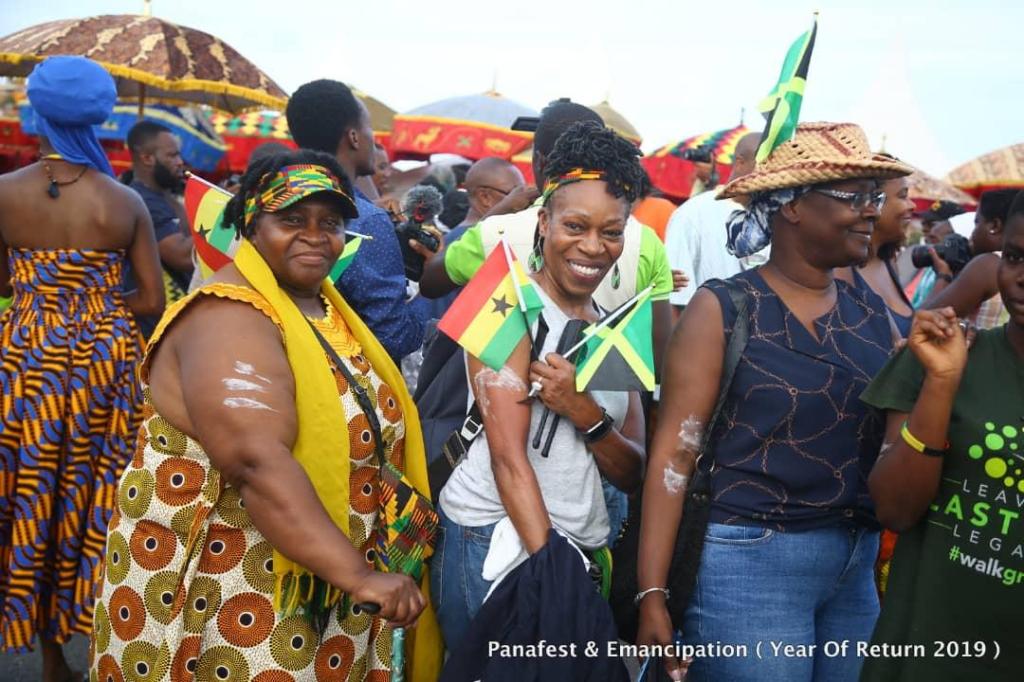
The Caribbean Community has endorsed the petition, and Ghanaian President John Dramani Mahama has also expressed support.
CARICOM has pursued reparatory justice for years, but Jamaica’s maneuver represents an effort to move the campaign from diplomatic pressure into legal analysis.
That could matter far beyond Jamaica.
If a court or authoritative legal body eventually recognized some form of responsibility, other former colonies would immediately study whether similar reasoning could apply to their histories.
Even an unsuccessful petition could produce something politically valuable: a formal examination of arguments that European governments have largely preferred to keep within the realm of historical debate.
Reparations Don’t Have to Mean Mailing Everyone a Check
This debate also repeatedly gets trapped by the assumption that “reparations” necessarily means calculating a gigantic number and demanding Britain transfer that amount tomorrow.
Jamaica’s current petition doesn’t request a monetary amount at all.
Reparatory policies could theoretically involve debt relief, development financing, educational programs, healthcare investment, infrastructure, cultural restitution, direct compensation or combinations of those approaches.
CARICOM’s broader reparations campaign has historically contemplated multiple forms of repair rather than a single cash payment.
That doesn’t make deciding responsibility or calculating appropriate remedies easy.
It does make the debate considerably more sophisticated than “How big should Britain’s check be?”
The Monarchy Now Faces an Awkward Question
There is another layer to Jamaica’s maneuver.
King Charles III remains Jamaica’s head of state.
At the same time, Jamaica has been moving toward becoming a republic and removing the British monarch from that position.
Charles has acknowledged the suffering associated with slavery and has spoken about confronting its continuing legacy, but he has stopped short of endorsing reparations.
Jamaica is now effectively using one of the remaining constitutional mechanisms inherited from empire to ask Britain’s legal establishment to examine the consequences of empire.
There is a certain historical electricity to that.
And constitutional scholar Craig Prescott told the Associated Press that even rejection could strengthen the argument for Jamaica severing its remaining constitutional connection with Britain.
Britain May Eventually Have to Choose Between Sympathy and Responsibility
For years, British governments have been able to occupy relatively comfortable rhetorical territory.
Slavery was horrible.
The past cannot be changed.
Modern Britain regrets the suffering.
Let’s build a better future.
Jamaica is now asking the question that makes that formulation uncomfortable:
If a country acknowledges that an enormous historical injustice occurred and accepts that consequences remain, does acknowledgment create any obligation to repair those consequences?
Britain says the legal answer is essentially no.
Jamaica wants that proposition examined.
And that may be the most important aspect of this petition.
Jamaica isn’t demanding that history be rewritten.
It is demanding that the institutions descended from the empire finally answer what, if anything, is owed when the profits of history and the wounds of history survive long after slavery itself has ended.
—Sylvester Loving, B1Daily


Leave a Reply