—Barrington Williams, B1Daily
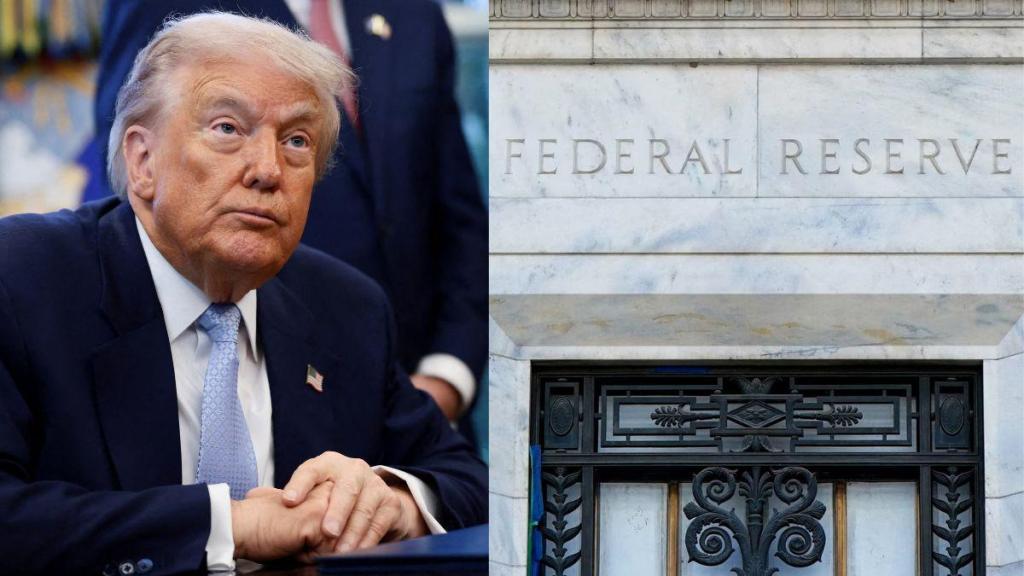
President Donald Trump’s long-running feud with the Federal Reserve is no longer simply an argument about whether interest rates should be higher or lower. It has evolved into a much larger dispute over presidential power, the legal independence of the nation’s central bank, and just how much control any president should have over the officials who manage U.S. monetary policy.
That constitutional question moved to center stage through Trump’s attempt to remove Federal Reserve Governor Lisa Cook. In June, the Supreme Court kept Cook in office while litigation continued and concluded that Federal Reserve governors cannot simply be removed by a president because of disagreements over monetary policy. The Court emphasized the country’s long history of independent central banking and the Federal Reserve Act’s protection allowing governors to be removed only “for cause.”
The decision was significant because it distinguished the Federal Reserve from many other independent federal agencies at a moment when the Supreme Court has otherwise expanded presidential removal authority. But it did not settle every question. Courts are still confronting what legally qualifies as “cause” for removing a Fed governor and what procedural protections must accompany such an attempt.
Trump Wants Lower Rates
The political conflict surrounding the Fed is much simpler than the constitutional one.
Trump has repeatedly demanded substantially lower interest rates. Most recently, following a stronger-than-expected August jobs report, Trump again pressured the central bank to cut rates and threatened trade restrictions against countries with which the United States runs deficits if rates were not lowered.
The Federal Reserve, however, is supposed to make monetary-policy decisions based on economic conditions rather than the political objectives of the White House.
That distinction matters because interest rates are enormously powerful.
Lower rates can reduce borrowing costs for mortgages, automobiles and businesses and can stimulate investment and economic activity. But keeping rates too low when inflation remains elevated can also contribute to additional inflationary pressure.
Higher rates work in the opposite direction. They can restrain inflation by cooling borrowing and demand, but they also make credit more expensive and can slow economic growth.
The institution making that decision therefore possesses extraordinary influence over the economy.
And that is precisely why the fight over who controls it matters.
The Lisa Cook Case Changed the Battlefield
Trump attempted to remove Cook in 2025 following allegations involving mortgage documents. Cook denied wrongdoing and challenged her removal in court.
The dispute eventually reached the Supreme Court.
In its June 2026 decision, the Court noted that Cook was the first Federal Reserve governor a president had attempted to fire in the institution’s 111-year history. The majority also recognized a historical tradition of insulating American central banking from direct political interference.
Cook remains a governor while the underlying litigation continues.
Trump’s administration has since renewed its effort. The White House informed Cook in August that it was again considering removing her over alleged false statements involving mortgage agreements. Cook’s attorney responded that the allegations were unproven and did not constitute legally sufficient “cause” under the Federal Reserve Act.
That means the next stage could help determine something considerably larger than Cook’s employment.
What exactly does “for cause” mean?
If presidents receive broad discretion to define cause, statutory protection for Fed governors could become substantially weaker. If courts impose a demanding standard, Federal Reserve officials would remain considerably more insulated from presidential pressure.
The Constitution Doesn’t Mention the Federal Reserve
There is another wrinkle: the Federal Reserve didn’t exist when the Constitution was written.
Congress created the modern Federal Reserve System in 1913.
The constitutional dispute therefore revolves around competing principles.
Article II gives the president executive authority and responsibility for executing federal law. Modern Supreme Court decisions have generally strengthened presidential authority to remove officials exercising executive power.
Congress, however, deliberately structured the Federal Reserve differently. Governors serve long terms, and federal law restricts presidential removal.
The Supreme Court’s Cook decision treated that structure as constitutionally significant, pointing to the historical independence of American central banking institutions and stating that monetary policy should not be subjected to political interference.
That creates an unusual constitutional creature: an institution created by Congress, staffed partly through presidential appointments, exercising enormous governmental power, yet deliberately protected from everyday presidential control.
There Is a Reason Presidents Want Lower Rates
Presidential frustration with the Federal Reserve isn’t unique to Trump.
Interest rates affect economic conditions voters experience directly.
Mortgage payments, credit cards, business loans and auto financing can all become more expensive when rates rise. Governments themselves also face higher borrowing costs.
Politically, therefore, presidents have obvious incentives to prefer favorable economic conditions.
But those incentives also explain the argument for Federal Reserve independence.
A president approaching an election could benefit politically from cheaper credit and faster short-term economic growth even if monetary stimulus eventually produces greater inflation.
Central-bank independence is designed, in part, to separate those short-term political incentives from monetary decisions.
That does not make Federal Reserve officials immune from criticism. Congress created the institution and can change the laws governing it, while Fed leaders regularly testify before lawmakers.
Independence means something narrower: monetary policy isn’t supposed to change simply because the president wants it changed.
Kevin Warsh Now Faces the Same Pressure
The situation has acquired another twist under current Federal Reserve Chair Kevin Warsh, whom Trump appointed to succeed Jerome Powell.
Warsh recently indicated that additional rate increases could become necessary if inflation does not continue moving toward the Fed’s 2 percent target. The Federal Open Market Committee has maintained its benchmark rate at 3.50% to 3.75% since December, and its next meeting is scheduled for September 15-16.
That places a Trump-appointed chairman in the same institutional dilemma that confronted his predecessor.
Trump wants substantially lower borrowing costs.
The central bank may conclude economic conditions require the opposite.
Warsh therefore faces a test not simply of monetary policy, but of whether the Fed under his leadership can demonstrate that its decisions remain independent of the president who appointed him.
This Fight Goes Beyond Trump
The most consequential part of the controversy isn’t whether Trump gets the interest-rate cuts he wants this year.
It’s the precedent.
Any authority established for one president generally remains available to future presidents.
A Democratic president confronting high unemployment could pressure the Fed to slash rates. A Republican president confronting inflation could demand increases. Another president could threaten governors who refuse to cooperate.
If presidents eventually gain broad authority to remove Federal Reserve governors, the institution could gradually begin operating more like a traditional executive agency.
If the courts continue treating the Fed as an exceptional institution protected from ordinary presidential removal authority, its unusual independence could become one of the clearest remaining limits on the modern presidency.
The Supreme Court has already provided part of the answer. It concluded that the Federal Reserve occupies a special position and that its governors cannot simply be dismissed over policy disagreements.
But the boundary hasn’t been completely drawn.
Trump’s campaign for lower rates, the continuing Cook litigation and Warsh’s looming interest-rate decisions are now colliding around the same fundamental question:
Does the Federal Reserve ultimately answer to the president, or does its independence place monetary policy beyond direct White House control?
The answer won’t merely determine who wins Trump’s current confrontation with the central bank. It could determine how much power every future president possesses over the institution controlling the price of money in the world’s largest economy.
—Barrington Williams, B1Daily






Leave a Reply