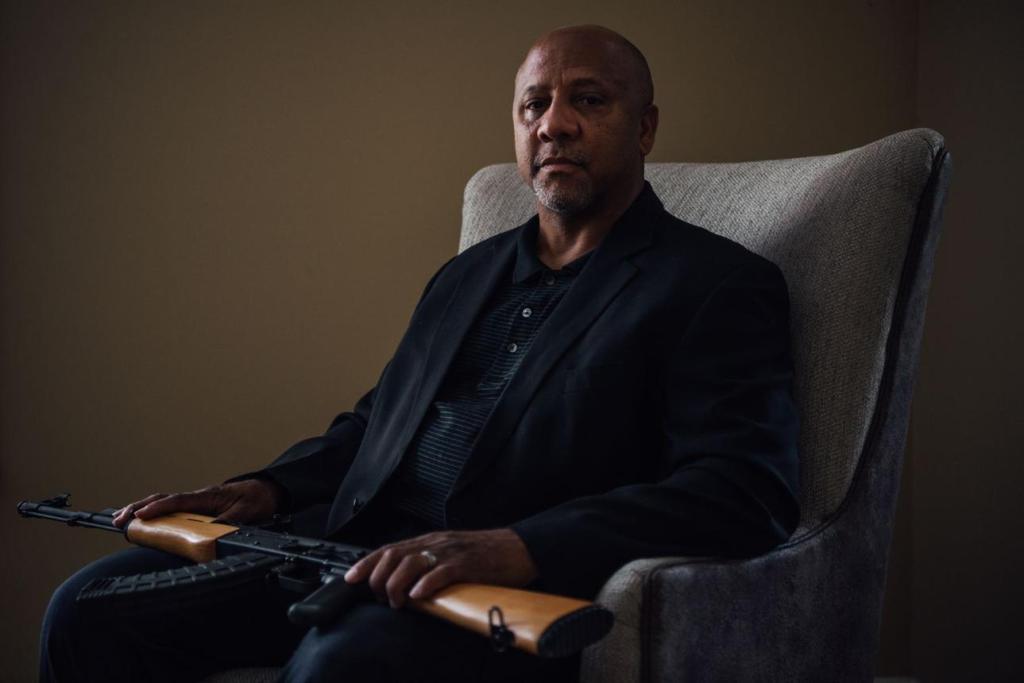
—Terrence Dorner, B1Daily
Black Americans have spent centuries fighting for citizenship, voting rights, property rights and equal protection under the law. Yet one constitutional right still produces an unusual amount of discomfort when Black people openly embrace it: the right to keep and bear arms.
Philip Smith, founder and national president of the National African American Gun Association (NAAGA), has spent years arguing that Black Americans should become more comfortable with lawful firearm ownership, training and self-defense. NAAGA says its goal is to introduce African Americans to firearms for protection while providing firearms education and training.

Smith’s broader argument becomes considerably more provocative when he describes threats facing Black Americans through the concept of a “soft genocide.” That phrase should be understood as Smith’s characterization, not as a formally established finding that Black Americans are currently experiencing genocide.
But underneath the provocative terminology is a question worth confronting: Should Black Americans place greater importance on their ability to protect themselves?
Black Gun Ownership Has a History
Black firearm ownership did not begin with modern gun organizations.
For Black Americans, the history of firearms is intertwinedined with the history of freedom itself.
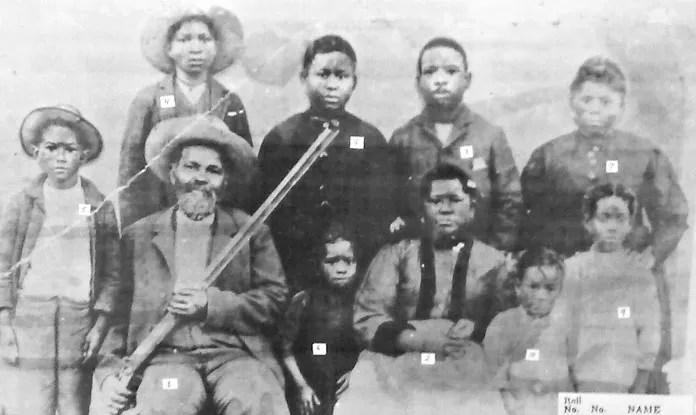
Enslaved people were routinely denied access to weapons. After emancipation, armed Black citizens sometimes defended themselves against racial terrorism during periods when government authorities were unable or unwilling to protect them.
That history continued into the civil-rights era, when armed self-defense existed alongside the better-known philosophy of nonviolent protest.

NAAGA places that history at the center of its identity. The organization describes Black firearm history as a legacy involving freedom fighters and individual courage, while Smith has argued that understanding Black history and understanding the Second Amendment should go together.
That historical perspective complicates the idea that firearm ownership belongs exclusively to white conservatives or rural America.
The Second Amendment does not contain a racial membership requirement.
Smith’s Warning Is About Vulnerability
Smith has repeatedly connected firearm ownership with the ability of Black Americans to protect themselves.
In a 2021 NAAGA essay, he argued that gun ownership has been one of the most consequential issues in Black American history and pointed to slavery, lynching, racial terrorism and the destruction of Black Wall Street as examples of circumstances in which Black communities were unable to adequately defend themselves.
Smith has also written that firearm ownership without understanding the law can be dangerous. He urges Black gun owners to understand state laws governing carrying, ammunition and self-defense rather than merely purchasing weapons.
That distinction is essential.
Prioritizing firearms should not mean romanticizing violence.
It should mean lawful ownership, serious training, secure storage, knowledge of the law, conflict avoidance and responsible self-defense.
A firearm without judgment can create another danger rather than eliminating one.
What Does “Soft Genocide” Mean?
Smith’s use of “soft genocide” presents the most controversial element of this discussion.
The phrase can easily be misunderstood if presented without attribution or explanation. Genocide has a specific meaning in international law, and describing contemporary conditions facing Black Americans as genocide is not an established legal conclusion.
Smith’s argument is better understood as a warning about cumulative vulnerability: Black communities experiencing violence, economic instability, political hostility and other pressures while simultaneously being discouraged, in his view, from exercising the means of armed self-defense available to other Americans.
People can disagree strongly with that framing.
But disagreement with the terminology does not eliminate the underlying debate about self-protection.
Black Americans have legitimate reasons to discuss what personal security looks like when police cannot be everywhere and when Black Americans themselves can become victims of violent crime.
The Answer Cannot Simply Be “More Guns”
There is also an uncomfortable reality that any responsible pro-gun argument has to acknowledge.
Firearms are capable of protecting lives, but they are also capable of destroying them.
A gun in an untrained person’s hands does not magically create safety. A firearm stored carelessly around children creates another risk. Introducing a weapon into an emotional confrontation can transform an argument into a funeral.
Research cited in discussions of rising Black firearm ownership has also raised concerns that greater access to guns can correlate with increased risks of violent death. Those concerns cannot simply be waved away because they complicate a pro-Second Amendment argument.
That is precisely why training should be treated as seriously as ownership.
NAAGA itself emphasizes education. Its official site promotes firearms training, marksmanship and defensive skills alongside firearm ownership.
Responsible Black gun culture should therefore reject the idea that buying a firearm is the end of the process.
It is the beginning.
Knowledge Is Part of Self-Defense
Knowing how to shoot is only one piece of responsible firearm ownership.
A gun owner should understand when deadly force is legally justified and, equally importantly, when it isn’t.
Smith has specifically warned Black firearm owners about this issue, arguing that ignorance of state firearm laws can result in arrest, imprisonment or other devastating consequences even when someone believes they are acting legally.
For Black Americans, that legal knowledge can be particularly important.
Someone who purchases a firearm for protection but doesn’t understand transportation rules, concealed-carry requirements or self-defense law may create serious legal exposure for themselves.
The objective should therefore be broader than armed Black America.
It should be an educated, disciplined and legally informed Black gun-owning community.
Firearm Ownership Shouldn’t Belong to One Political Tribe
Perhaps the most interesting contribution organizations such as NAAGA make to America’s gun debate is disrupting its usual political imagery.
American gun culture is frequently portrayed as overwhelmingly white, rural and conservative.
Black gun ownership refuses to fit comfortably inside that box.
A Black American can support voting rights, oppose racial discrimination, demand police accountability and still believe strongly in the Second Amendment.
Those positions are not inherently contradictory.
Smith founded NAAGA in 2015 specifically to expose more Black Americans to firearm ownership, education and self-defense. The organization now describes itself as the largest Black firearms organization in the United States.
Its existence demonstrates that America’s debate over guns is broader than the traditional NRA-versus-gun-control binary.
Self-Defense Is a Right, Responsibility Is the Price
Black Americans should be able to discuss firearm ownership without being automatically treated as criminals, extremists or political props.
History provides plenty of reasons for Black communities to take personal security seriously.
But the strongest version of that argument isn’t simply “buy guns.”
It is:
Learn the law.
Seek professional training.
Practice safe handling.
Store firearms securely.
Understand de-escalation.
Know the enormous legal and moral consequences of pulling a trigger.
And recognize lawful self-defense as a constitutional right available to Black Americans just as it is available to every other American.
Smith’s “soft genocide” terminology will undoubtedly remain controversial. It should be debated rather than presented as an uncontested description of reality.
But the larger question NAAGA raises deserves serious consideration.
Black Americans fought extraordinarily hard to obtain constitutional rights that were once denied to them.
The Second Amendment is one of those rights. Whether an individual chooses to exercise it is personal. Knowing how to exercise it safely, responsibly and lawfully should never be considered something Black Americans are supposed to fear.
—Terrence Dorner, B1Daily




Leave a Reply