—Barrington Williams, B1Daily
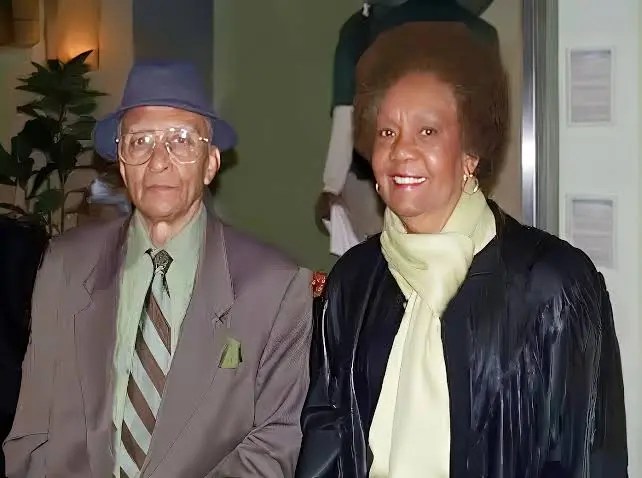
Neely Fuller Jr. never became the household name that Malcolm X, James Baldwin or W.E.B. Du Bois became. Yet within a particular current of Black intellectual thought, Fuller developed one of the most uncompromising frameworks for examining racism in modern America.
Born in 1929, Fuller devoted much of his intellectual life to studying what he called “Racism (White Supremacy)”. His central work, The United-Independent Compensatory Code/System/Concept, was developed over decades and appeared in published editions including a 1984 textbook/workbook. Fuller described the project not merely as political commentary, but as a practical system for thought, speech and action aimed at replacing racism with justice.
Racism as a System, Not Simply an Attitude
Fuller’s intellectual fire came from the scale of his argument.
He rejected the idea that racism could adequately be understood as individual prejudice, offensive language or isolated discrimination. His framework treated white supremacy as an interconnected system affecting virtually every dimension of human activity.
Fuller organized that analysis around nine areas of activity: economics, education, entertainment, labor, law, politics, religion, sex and war/counter-war.
That framework encouraged readers to ask a different question. Instead of merely asking whether an individual person held racist attitudes, Fuller asked people to examine how power operated across institutions and relationships.
One of his best-known formulations captured the uncompromising character of his worldview:
“If you do not understand White Supremacy (Racism) … everything else that you understand, will only confuse you.”
For Fuller, racism wasn’t one political issue among many. He regarded it as a fundamental obstacle to justice.
The Compensatory Code
But Fuller wasn’t interested solely in diagnosing the disease. He wanted a prescription.
His Compensatory Code attempted to provide victims of racism with principles governing how they could think, speak and act in ways intended to produce justice. His work repeatedly emphasized logic, careful definitions, questioning assumptions and evaluating whether one’s behavior actually produced constructive results.
That made Fuller somewhat unusual among prominent Black thinkers.
He wasn’t primarily offering a political party, nationalist organization, religious movement or electoral strategy. He was trying to construct something closer to an operating system for counter-racist behavior.
Even language itself became part of the project. His 2010 Compensatory Counter-Racist Codified Word Guide sought to clarify terminology that Fuller believed had become confusing or misleading under racism.
You didn’t merely oppose racism in Fuller’s universe. You studied how it functioned, examined your own behavior and attempted to replace incorrect action with what he considered justice-producing action.
The Intellectual Bridge to Frances Cress Welsing
Fuller’s influence becomes particularly significant when examining Frances Cress Welsing.
Welsing, whose The Isis Papers became an influential and controversial work in Black intellectual circles, acknowledged Fuller’s importance to her thinking. Academic discussion of Welsing’s work notes that she credited Fuller with helping conceptualize racism as a global system of organized behavior operating throughout major areas of human activity. Her own theories subsequently developed in directions distinct from Fuller’s framework.
That connection matters historically.
Ideas do not always travel through universities and prestigious journals. Sometimes they move through lectures, independently published books, conversations, community institutions and thinkers influencing other thinkers.
Fuller occupied that world.
A Radical Legacy Outside the Mainstream
Fuller’s theories are sweeping, and many of his propositions about race and human relationships are contestable rather than established social-scientific facts. His importance to Black intellectual history therefore doesn’t require accepting every conclusion he reached.
What makes him historically interesting is the architecture of his thought.
Fuller attempted to create an internally organized theory explaining racism, power, language, behavior and justice. Rather than simply documenting discrimination, he wanted readers to develop methods for recognizing and counteracting it.
His work also remained strikingly independent. The United-Independent Compensatory Code/System/Concept was self-published, with bibliographic records documenting its 1984 revised edition in Washington, D.C. That placed Fuller outside much of the traditional machinery that decides which intellectuals receive academic prestige and mainstream exposure.
Yet his ideas survived.
They circulated through Black bookstores, lectures, radio conversations and later the internet. His influence on Welsing alone gave his framework another pathway into subsequent Black political and cultural discussions.
Fuller died in 2025 at age 95, according to the African American Literature Book Club. He left behind something far more ambitious than a collection of observations about race.
He tried to construct a code.
Whether readers embrace, reject or interrogate his conclusions, Neely Fuller Jr. belongs in the history of independent Black thought precisely because he insisted that confronting racism required more than outrage. It required study, definitions, strategy and a relentless examination of how power functions in everyday life.
—Barrington Williams, B1Daily





Leave a comment