—Sylvester Loving, B1Daily
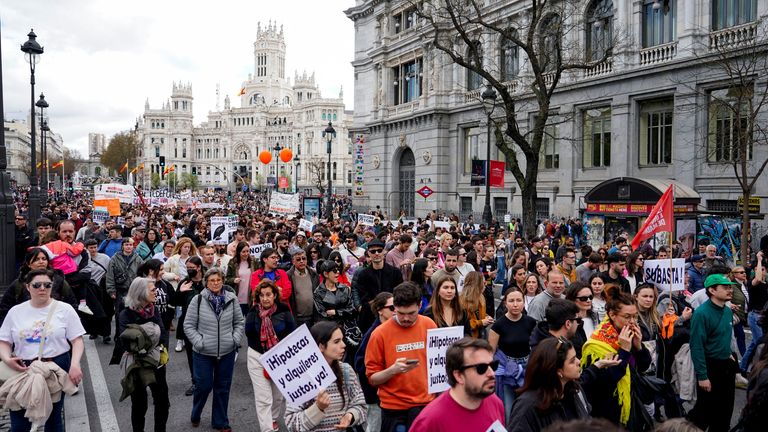
Spain’s housing crisis has found a face: Maricarmen Abascal, an 87-year-old disabled woman carried from the Madrid apartment where she had lived for more than 70 years. Days later, tens of thousands of people poured into Madrid’s streets, rattling keys, marching through the capital and demanding stronger protections for renters.
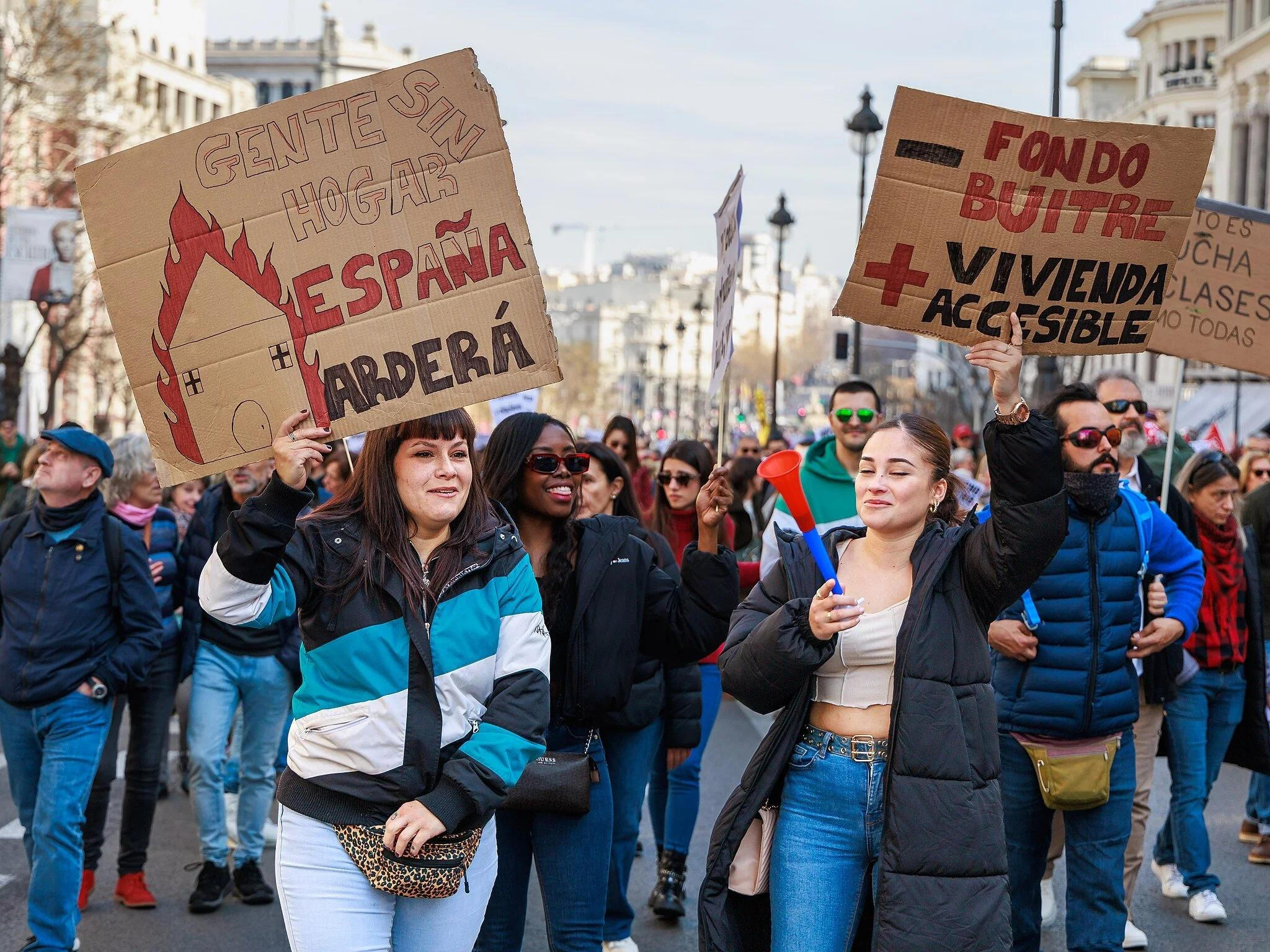
The September 26 demonstration was enormous, although estimates vary sharply. Madrid government authorities estimated roughly 25,000 participants, while organizers claimed hundreds of thousands. The protest eventually returned to Puerta del Sol, where some demonstrators set up tents, deliberately evoking memories of Spain’s 2011 15-M indignados movement.
One Eviction Lit the Fuse
Maricarmen’s case transformed an abstract housing debate into something painfully tangible.
After the building containing her apartment was acquired by a developer, she was offered the opportunity to purchase her home for €247,000. According to reporting by The Guardian, her monthly rent was then raised from about €500 to €1,650, exceeding her €1,350 pension. Hundreds of activists attempted to prevent the eviction, and police used tear gas and baton charges while clearing a path for officials carrying out the court order.
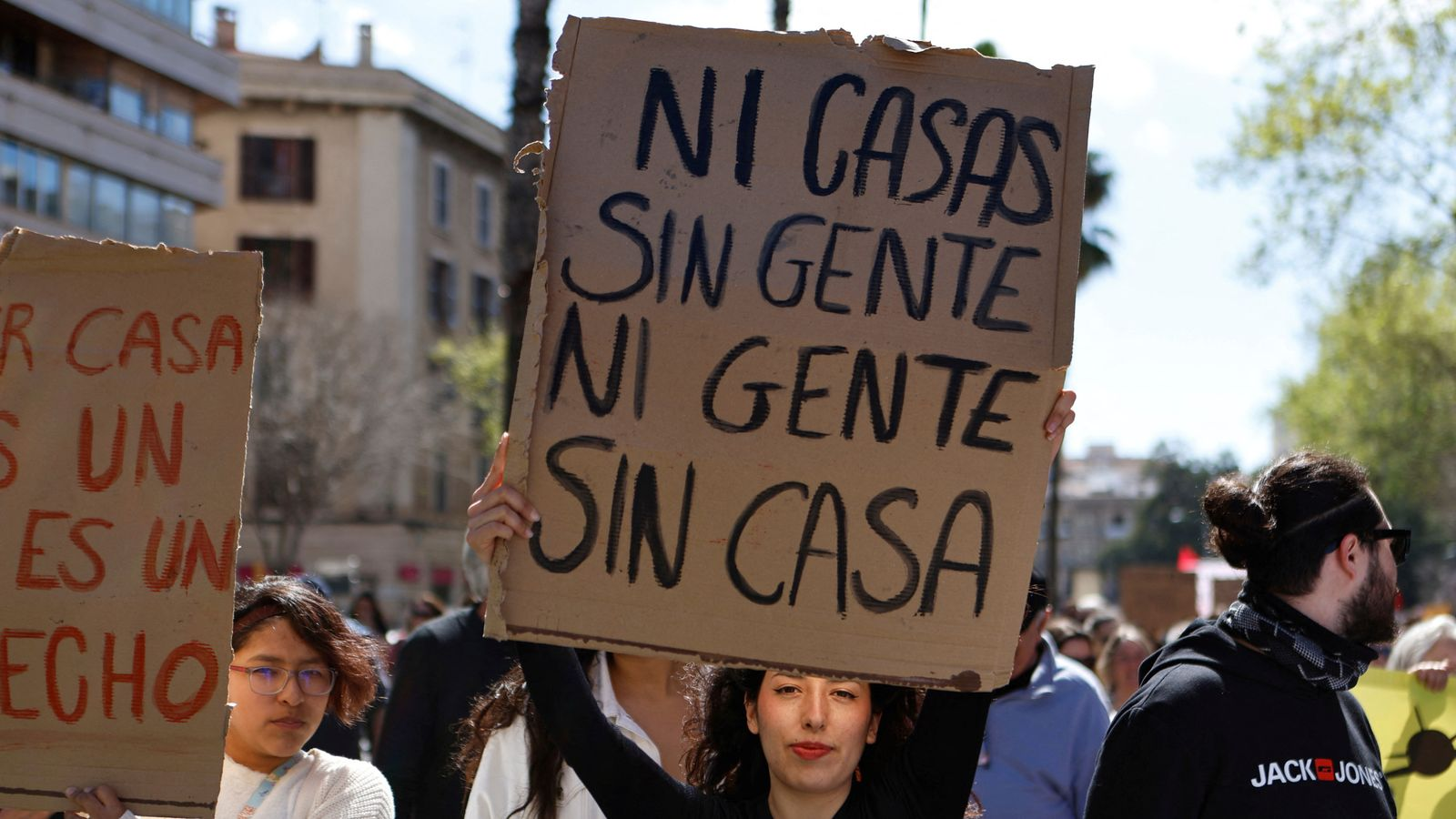
The images spread rapidly, and the anger didn’t remain confined to Madrid. Tenant unions and housing organizations subsequently organized demonstrations across numerous Spanish cities. RTVE reported actions in 16 cities, with protesters targeting evictions, speculative investment funds and the broader affordability crisis.
This Is Bigger Than One Landlord
The protesters’ demands go far beyond Maricarmen.
Housing activists are calling for stronger tenant protections, restrictions on evictions when alternative housing is unavailable, regulation of vacation rentals, rent controls and measures targeting large investment funds. Madrid’s tenants union has also pushed proposals including indefinite rental contracts and rent freezes.
The political argument, however, is more complicated than the slogans.
Spain needs affordable housing, but policymakers disagree over how to produce it. Tenant organizations emphasize rent regulation, eviction protections and restraints on speculative ownership. Other approaches emphasize increasing housing construction and supply. The resulting battle is ultimately about something much larger: Should housing primarily function as an investment asset, or should public policy give greater priority to its role as a basic necessity?
Puerta del Sol Is Sending a Warning
That question helps explain why protesters camping in Puerta del Sol matters.
Spain has seen housing demonstrations before. But an elderly woman being removed from the home she occupied for most of her life created an unusually powerful symbol. Maricarmen herself said she wanted what happened to her to encourage people to fight so that others would not experience the same thing.
And the movement is already pointing toward Spain’s political establishment. Demonstrators criticized Madrid regional president Isabel Díaz Ayuso and Mayor José Luis Martínez-Almeida, while chants also targeted the national government of Prime Minister Pedro Sánchez.
That breadth of anger is significant.
When young workers cannot afford apartments, families fear displacement, elderly tenants face eviction and residents believe their neighborhoods are increasingly being treated as portfolios rather than communities, housing stops being merely another policy issue.
It becomes a political pressure cooker.
Spain’s protesters are effectively asking their government a brutally simple question:
If ordinary people can work, pay rent and live somewhere for decades yet still have no meaningful security in their homes, exactly whom is the housing system supposed to serve?
Spain now has to answer.
—Sylvester Loving, B1Daily






Leave a comment