—Michael Lyles, B1Daily
The next great labor fight may not begin on a factory floor. It could begin at a call center, behind a checkout counter, inside a warehouse or in the cab of a truck.
Automation and artificial intelligence are rapidly moving from Silicon Valley curiosities into ordinary workplaces. And for Black workers, the consequences deserve particular attention because Black Americans are heavily represented in several occupations where software, robotics, self-service technology and eventually autonomous vehicles could change how many workers employers need.
The New Automation Target: The Office
The old image of automation was a robotic arm welding a car. Generative AI has blown the doors off that definition.
Office and administrative support work includes customer service, data entry, billing, record keeping, reception and clerical work, many of which contain repetitive information-processing tasks that software can increasingly assist with or automate.
Black workers made up 14.9% of office and administrative support workers in 2025, compared with 12.7% of workers overall. The concentration becomes greater in certain occupations: Black workers represented 17.7% of customer service representatives, 20.2% of data-entry keyers, 26.9% of insurance claims and policy-processing clerks and 30.3% of reservation and transportation ticket agents and travel clerks.
Those numbers do not mean AI will eliminate all of these jobs. Exposure to automation is not the same thing as unemployment. Technology can automate individual tasks while workers remain employed doing more complex ones.
But there is already a warning light blinking on the dashboard. The Bureau of Labor Statistics projects employment across office and administrative support occupations to decline during 2025–2035, even though replacement needs will still generate roughly 1.7 million openings annually.
Transportation Could Be the Bigger Shock
Then there is transportation.
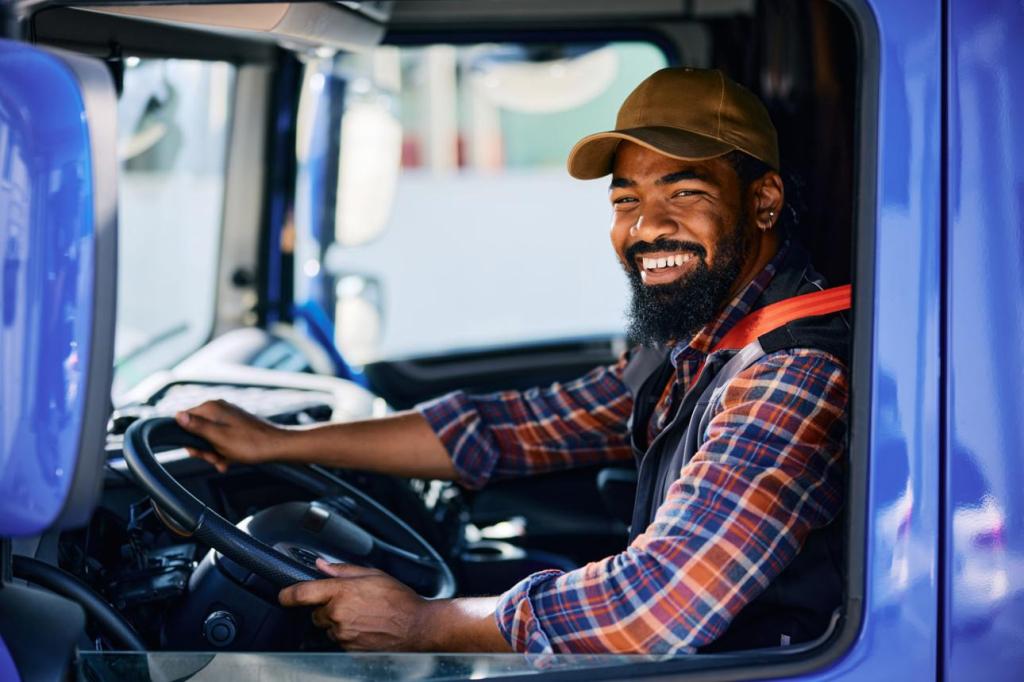
Black workers accounted for 20% of transportation and material-moving workers in 2025, substantially above their share of total employment. They represented 20.2% of driver/sales workers and truck drivers, 32.2% of transit and intercity bus drivers and 25.6% of taxi drivers.
Autonomous vehicles are nowhere near eliminating America’s drivers overnight. Technical limitations, regulation, infrastructure, insurance and public acceptance all stand between today’s autonomous systems and nationwide replacement.
But the racial stakes are difficult to ignore.
If autonomous trucking eventually reduces demand for human drivers, Black workers would be disproportionately present in one of the occupations experiencing the transition. That makes self-driving technology more than a transportation story. It is potentially a Black labor story.
Warehouses Are Another Front Line
Warehousing presents a similar puzzle.
Robotic picking systems, automated forklifts, computer vision and increasingly sophisticated logistics software are steadily changing distribution centers.
BLS data show Black workers represented 22% of industrial truck and tractor operators, 19.7% of hand freight and material movers, 20.2% of hand packers and packagers, and 19.4% of stockers and order fillers in 2025.
Automation doesn’t necessarily erase these occupations. Warehouses can become more productive and expand, creating different jobs even while machines absorb particular tasks. The real question is whether displaced workers have realistic pathways into the new positions being created.
That distinction matters enormously.
Cashiers Have Already Seen the Movie
Retail provides perhaps the clearest preview.
Self-checkout machines did not make cashiers disappear, but they changed the labor equation by allowing one employee to supervise multiple checkout stations.
Black Americans represented 17.2% of cashiers in 2025, according to BLS.
Now imagine that process spreading throughout the economy: AI answering routine customer-service questions, software processing paperwork, robots moving warehouse inventory and autonomous systems handling portions of transportation.
No single technology has to eliminate an occupation for the bargaining power of workers to change.
This Is Where Automation Becomes Political
Brookings noted in 2026 that AI exposure is increasingly relevant to political debates because highly exposed workers are geographically concentrated and could become sources of economic anxiety as workplace adoption accelerates.
For Black America, that raises questions extending well beyond whether AI is impressive.
Who owns the machines? Who receives the productivity gains? Who gets retrained? Who gets displaced? And who gets access to the higher-paying technical, managerial and entrepreneurial jobs created around automation?
Those questions invite competing policy responses. Governments could emphasize retraining, apprenticeships and portable benefits. Policymakers could strengthen adjustment assistance for displaced workers. Unions could negotiate over how workplace AI is introduced. Governments could also encourage Black entrepreneurship and technical education so Black Americans participate in building and owning automation businesses rather than interacting with the technology only as employees.
Each approach carries costs and tradeoffs.
Black Workers Cannot Be an Afterthought
America has experienced technological disruption before. Mechanization transformed agriculture. Industrial robots changed manufacturing. Computers reorganized the office. The internet demolished some industries while creating entirely new ones.
AI and advanced automation could follow the same complicated pattern.
The danger isn’t simply that machines are coming for Black jobs. That framing is too crude. The greater issue is that Black workers are significantly represented in several occupations whose tasks are increasingly susceptible to technological change, while the economic benefits of that change may flow somewhere entirely different.
That makes automation a political question about ownership, bargaining power, education and economic mobility.
The robot isn’t voting.
The worker whose job changes because of it is.
—Michael Lyles, B1Daily





Leave a comment