—Travis Luyindama, B1Daily
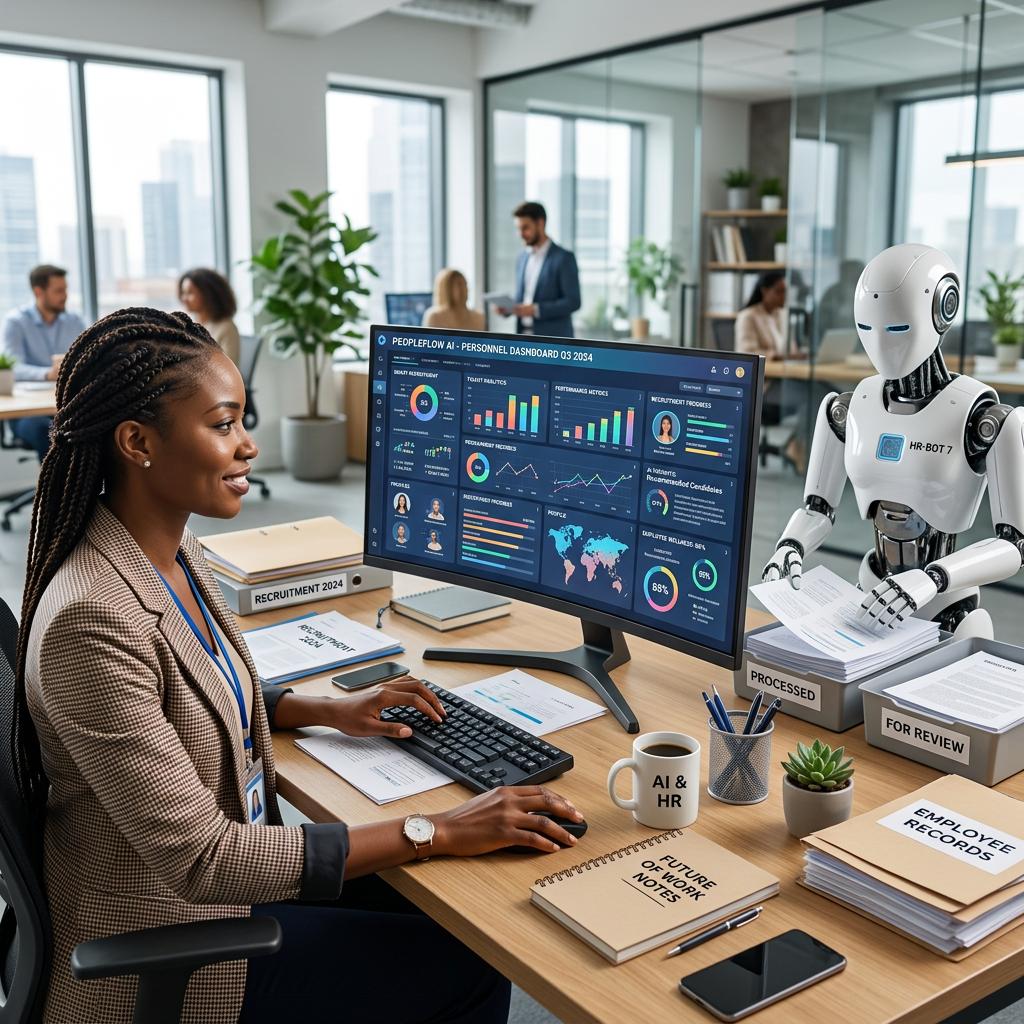
Human resources may be approaching its automation moment.
Advanced AI agents are rapidly moving beyond simple chatbots and into the kind of multi-step administrative work that fills much of an HR department’s day. That doesn’t mean every HR professional is about to disappear, but it does mean companies may eventually need far fewer people to perform the same workload.
Consider the tasks involved.
AI systems can already help draft job descriptions, screen and rank résumés, summarize applications, schedule interviews, generate interview questions, prepare onboarding materials, answer routine employee questions, draft performance-review documents, analyze employee surveys, organize training materials and produce reports from workforce data.
More advanced agentic systems can go further by working across multiple software tools and completing sequences of tasks instead of simply generating text. An AI agent could theoretically receive a request to recruit for a position, prepare the posting, sort applicants according to predefined criteria, coordinate interview availability and prepare candidate summaries for a human decision-maker.
That is a substantial chunk of traditional HR administration.
The Biggest Threat Isn’t Zero HR Workers
The more realistic disruption may be HR compression.
A company that once required 20 HR employees might discover that a smaller team equipped with AI agents can process the same volume of paperwork, employee inquiries and recruiting administration.
The remaining professionals would increasingly concentrate on work requiring human judgment: workplace conflicts, sensitive investigations, labor relations, organizational strategy, complex terminations and final hiring decisions.
And there are good reasons to keep humans involved. Automated employment decisions can reproduce discrimination embedded in historical data, misunderstand unusual candidates or make consequential decisions that employers cannot simply shrug off as “the algorithm did it.”
But that doesn’t protect every HR task.
The dividing line may increasingly become simple: Does this task require human judgment, or does it merely require someone to process information?
AI is becoming extremely good at the second category.
HR Could Become the Ironic Victim of Automation
There is a certain corporate irony here.
For years, HR departments have helped companies manage technological restructuring, layoffs and changing workforce requirements.
Now AI may restructure HR itself.
Recruiters, HR coordinators, administrative assistants and other process-heavy positions could face the greatest pressure as increasingly capable agents absorb repetitive workflows.
HR executives and specialists dealing with complicated human problems are harder to replace. But the administrative pyramid beneath them could become considerably thinner.
The future HR department may therefore look less like a bustling office and more like a handful of experienced professionals supervising an army of tireless digital clerks.
And unlike their human counterparts, those clerks don’t need onboarding.
—Travis Luyindama, B1Daily





Leave a comment