—Barrington Williams, B1Daily
Washington loves organized constituencies.
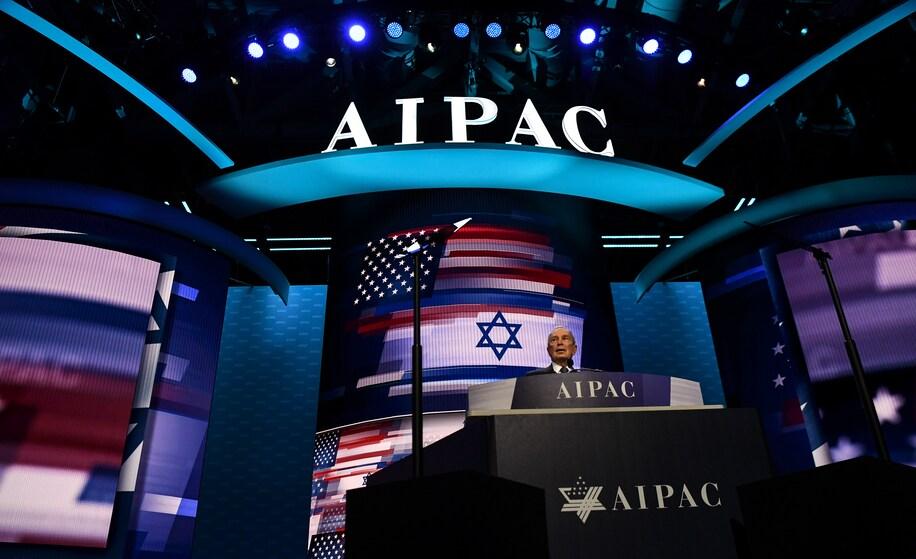
It understands corporations. It understands unions. It understands gun-rights organizations. It understands environmental organizations. And it certainly understands AIPAC.
What Washington understands considerably less is a constituency that delivers millions of votes and then spends the next four years arguing about whether politicians appreciate it enough.
That should make Black Americans uncomfortable.
Whatever anyone thinks about AIPAC’s positions on Israel, Palestinians, the Middle East or American foreign policy, there is an obvious political lesson sitting directly in front of Black America:
Political power isn’t built by begging a party to love you. It is built by organizing politicians around your interests.
AIPAC’s model is remarkably straightforward. It advocates for a defined set of policies concerning the U.S.-Israel relationship. It works with Republicans. It works with Democrats. Its political operation supports candidates from both parties who agree with its priorities.
That’s not political romance.
That’s political business.
And Black America could learn something from it.
AIPAC Doesn’t Need Washington to Love It
One of the strangest habits in Black American politics is treating political parties almost like extended families.
Are Democrats loyal to us?
Do Republicans respect us?
Which party is racist?
Which politician really cares about Black people?
Those questions may matter emotionally and historically, but Washington ultimately operates through votes, legislation, lobbying, coalitions, campaign contributions and organized pressure.
AIPAC doesn’t need every Democrat to become a Republican.
It doesn’t need every Republican to become a Democrat.
Its stated objective is maintaining bipartisan support for the U.S.-Israel relationship.
That distinction is enormous.
Imagine a powerful Black American political organization operating under the same basic principle.
Not:
“We are Democrats.”
Not:
“We are Republicans.”
But:
“These are our interests. Who wants our support?”
Suddenly politicians would have to compete.
Black America Needs an Agenda, Not a Political Marriage
A serious Freedmen lobbying organization could walk into congressional offices carrying an actual legislative agenda.
Federal reparations.
Black homeownership.
Heirs’ property protection.
Black farmer protections.
HBCU funding.
Small-business capitalization.
Federal contracting opportunities.
Infrastructure investment in historically Black neighborhoods.
Voting-rights enforcement.
Criminal-justice reforms alongside serious protection for Black victims of violent crime.
Historical preservation.
Black maternal-health disparities.
Protection against employment discrimination.
Programs designed to close the enormous racial wealth gap created through generations of slavery and government-sanctioned discrimination.
And then comes the revolutionary part:
Ask both parties what they’re willing to support.
If a Republican supports three major Freedmen priorities, work with that Republican on those issues.
If a Democrat supports eight, work with that Democrat.
If either party expects Black political support while refusing to deliver anything concrete, politely show them the door.
No permanent friends.
No permanent enemies.
Permanent interests.
Put Some Money Behind the Agenda
Here is where the conversation becomes uncomfortable.
Politics costs money.
Americans frequently complain about campaign spending, lobbying and wealthy donors. There are legitimate reasons to worry about money’s influence over democracy.
But complaining about the system does not make the system disappear.
Campaigns need organizers.
Organizations need lawyers.
Researchers need salaries.
Lobbyists need offices.
Advertising costs money.
Polling costs money.
Candidate recruitment costs money.
Litigation costs money.
Political infrastructure costs money.
AIPAC’s political operation openly encourages supporters to contribute to Democratic and Republican congressional candidates who support its priorities.
Black America should study that machinery.
Imagine hundreds of thousands of Black Americans contributing $10, $20 or $50 monthly to organizations dedicated specifically to a carefully defined Freedmen legislative agenda.
Not another symbolic organization.
Not another conference where politicians deliver speeches and everybody goes home.
A political machine.
Policy researchers writing legislation.
Lobbyists walking congressional hallways.
Lawyers challenging discriminatory policies.
Local organizers attending town halls.
Political analysts tracking every congressional vote affecting Freedmen interests.
Donors supporting candidates willing to put those interests into legislation.
That’s infrastructure.
Stop Giving Politicians Wholesale Support for Retail Promises
This is perhaps the harshest lesson.
Black voters frequently hear enormous promises during presidential elections.
Protect democracy.
Fight racism.
Create opportunity.
Support Black businesses.
Protect civil rights.
Wonderful.
Now put a bill number next to it.
How much money?
Which agency?
What eligibility requirements?
When does it begin?
Who qualifies?
Which congressional committee handles it?
Which senators support it?
Which representatives oppose it?
What happens if they don’t deliver?
A sophisticated political constituency doesn’t survive on adjectives.
It demands nouns, numbers and legislation.
Imagine A Freedmen Scorecard
A powerful Black lobbying apparatus could track lawmakers based on individual policy positions without reducing politics to party loyalty.
Did the member support studying or implementing reparations?
Did the member support stronger enforcement against housing discrimination?
Did the member support HBCU appropriations?
Did the member support protections for Black farmers?
Did the member support legislation addressing heirs’ property?
Did the member support enforcement of voting-rights protections?
Did the member support investment in historically disadvantaged communities?
Did the member meet with Freedmen organizations?
Did the member introduce legislation?
Did the member merely tweet?
That information could be published before every election.
Black voters could then make their own decisions based on documented records rather than campaign branding.
Suddenly the conversation changes.
A politician couldn’t simply appear at a Black church three weeks before Election Day and expect applause.
The congregation could already know the voting record.
Imagine Lobbying Republicans AND Democrats
This might be the most controversial lesson of all.
Black political organizations should be willing to lobby Republicans.
Yes, Republicans.
And Democrats.
And independents.
Everybody.
Lobbying someone doesn’t mean agreeing with everything they believe.
Politics isn’t marriage.
If a conservative Republican from Texas becomes willing to sponsor legislation protecting Black-owned farmland, take the meeting.
If a progressive Democrat from New York supports lineage-based reparations legislation, take the meeting.
If a libertarian Republican supports removing regulatory barriers preventing Black entrepreneurs from accessing certain industries, take the meeting.
If a moderate Democrat supports expanding down-payment assistance in historically redlined communities, take the meeting.
Build coalitions issue by issue.
That is how political interests can survive changes in government.
If your entire agenda depends upon one party controlling the White House and Congress simultaneously, your agenda becomes extraordinarily fragile.
Bipartisan support creates durability.
AIPAC understands this extremely well.
Black America should too.
This Isn’t About Copying AIPAC’s Foreign Policy
This distinction matters.
Black Americans do not need to adopt AIPAC’s positions on Israel.
They don’t need to support its candidates.
They don’t need to agree with its lobbying campaigns.
And critics of AIPAC have raised serious objections about its campaign spending, influence in congressional races and positions regarding Israel and Palestinians.
Those debates should continue.
But disagreeing with an organization’s agenda doesn’t prevent studying its organizational strategy.
You can oppose someone’s destination while admitting they built an impressive engine.
The lesson isn’t become AIPAC.
The lesson is:
Build durable political infrastructure around clearly defined interests.
Black America Is Not Politically Small
There is another reason the comparison should sting.
Black Americans aren’t some microscopic constituency.
There are tens of millions of Black Americans.
Black voters can determine margins in presidential battlegrounds, Senate races, gubernatorial contests, mayoral elections and congressional primaries.
Black consumers represent enormous purchasing power.
Black professionals occupy every major industry.
Black churches possess nationwide organizational networks.
Black fraternities and sororities maintain chapters across America.
HBCUs produce generations of professionals.
Black-owned media can reach millions.
The raw materials already exist.
What’s missing is coordination around a sufficiently specific agenda.
Black America has organizations.
Black America has money.
Black America has voters.
Black America has institutions.
Black America has lawyers.
Black America has professors.
Black America has business owners.
Black America has elected officials.
What it has rarely possessed at national scale is a disciplined, well-financed political organization whose central message to both parties is:
Our support is negotiable. Our interests are not.
Imagine One Million People Giving $10
The mathematics of political organization can become startling very quickly.
One million supporters contributing $10 per month would generate:
$10 million every month.
That’s $120 million annually.
That doesn’t require billionaires.
It requires organization.
Even a fraction of that amount could finance serious policy research, litigation, lobbying, voter education and political organizing.
And money isn’t the only resource.
Members could call congressional offices.
Attend town halls.
Write legislators.
Meet representatives in their districts.
Submit public comments on federal regulations.
Track legislation.
Volunteer.
Register voters.
Support litigation.
Recruit candidates.
Political power compounds when money and organization reinforce each other.
The Goal Shouldn’t Be Black Democrats or Black Republicans
The ultimate objective shouldn’t be transforming Black America into a Republican constituency.
Nor should it be preserving Black America permanently as a Democratic constituency.
The objective should be something considerably more powerful:
Turn both parties into customers competing for Black political support.
That requires accepting something American politics rarely tells voters.
Politicians are not your friends.
They’re representatives.
Their job isn’t to love you.
Their job is to represent interests sufficiently organized to demand representation.
AIPAC has built its political identity around that reality. Its own materials explicitly emphasize supporting pro-Israel Democrats and Republicans and opposing candidates from either party who reject its priorities.
That’s a transactional political model.
Black America should at least study it.
From Constituency to Institution
The greatest political transformation for Black Americans may not come from finding the perfect presidential candidate.
It may come from building institutions powerful enough that candidates have to find us.
Imagine presidential candidates visiting a Freedmen policy conference not merely to deliver speeches but to answer detailed questions about legislation.
Imagine congressional candidates competing for endorsements based on measurable commitments.
Imagine Democratic leaders knowing Black support cannot simply be assumed.
Imagine Republican leaders knowing Black support cannot simply be acquired through criticism of Democrats.
Imagine both parties knowing there is a well-funded organization keeping receipts.
That changes the relationship.
Black Americans stop being treated merely as a demographic category.
They become an organized political constituency with institutional memory.
And institutional memory is terrifying to politicians because politicians survive on voters forgetting.
Washington Doesn’t Reward Loyalty. It Rewards Leverage.
Perhaps that is the most uncomfortable lesson.
Black Americans have spent enormous political energy debating which party deserves their loyalty.
Maybe that’s the wrong question.
The better question is:
Which politicians are willing to advance our interests?
AIPAC’s political model offers one answer to how a constituency can operate: define the mission, organize supporters, lobby lawmakers, participate in elections, invest resources and maintain relationships across party lines.
Black America doesn’t need AIPAC’s ideology.
It doesn’t need AIPAC’s foreign policy.
It doesn’t need to imitate every tactic or defend every political expenditure associated with the organization.
But it might want to borrow one brutally effective principle:
Stop asking political parties to become your permanent home. Make them compete for your business.
Because Washington hears speeches every day.
It hears outrage every hour.
But organized voters, organized money and organized legislative demands?
—Barrington Williams, B1Daily




Leave a comment