—Sylvester Loving, B1Daily
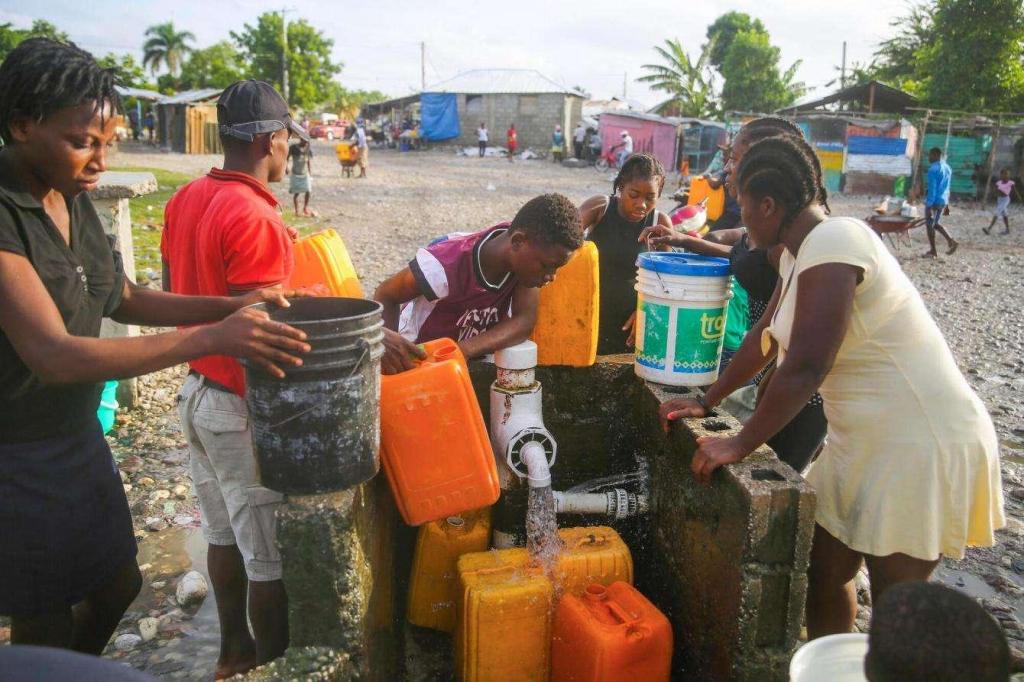
PORT-AU-PRINCE, Haiti. Haiti’s political and security collapse has produced plenty of international headlines. Yet underneath the gunfire and government instability sits a quieter emergency: millions of Haitians still cannot reliably obtain safe drinking water.
The numbers require an important distinction. It would be inaccurate to say a majority of Haitians lack any improved water source. UNICEF says roughly 26 percent lack improved water sources, rising to 41 percent in rural areas. But the standard becomes much tougher when asking whether families have reliable access to genuinely safe drinking water. UNICEF estimated in its 2025 humanitarian appeal that about 35 percent of Haiti’s population lacked access to safe drinking water, while 3.8 million people required humanitarian assistance to obtain it. UNICEF Global
And water is only half the emergency. UNICEF reports that seven in ten Haitians lack access to improved sanitation, creating precisely the conditions in which contaminated water can become deadly. UNICEF Global
Violence Is Turning Water Into a Luxury
Haiti’s armed groups haven’t merely destabilized politics. Their territorial control has disrupted the machinery required to keep a modern city alive.
Water trucks must navigate dangerous roads. Displaced families crowd into temporary settlements. Pumps, treatment facilities and sanitation infrastructure can become inaccessible or stop functioning altogether.
UNICEF reported in 2025 that more than one million displaced Haitians were living in precarious conditions where safe water, healthcare and adequate food could be difficult to obtain. Some water-truck drivers were risking kidnapping or death simply to deliver water to displacement sites. UNICEF Global
The consequences can be lethal.
Cholera has repeatedly exploited Haiti’s inadequate water and sanitation systems. UNICEF reported more than 87,000 suspected cholera cases since the outbreak that began in October 2022 in its 2025 humanitarian appeal. UNICEF Global
Even in 2026, UNICEF reported communities where untreated water and difficult access to healthcare were allowing cholera to continue spreading. UNICEF Global
Haiti Cannot Rebuild Without Water
International discussions about Haiti frequently revolve around security missions, elections, gangs and political leadership.
Those issues matter.
But rebuilding a country also requires considerably less glamorous things: pipes, pumps, wells, treatment plants, sewage systems, functioning utilities and trained workers capable of maintaining them.
A Haitian child should not have to depend upon a humanitarian water truck to perform one of the most ordinary acts imaginable: turning on a tap and drinking.
Haiti’s crisis will not truly be over when the gunfire quiets.
It will be over when ordinary Haitians can open a faucet without wondering whether anything safe will come out.
—Sylvester Loving, B1Daily



Leave a comment