—Kerry Hill, B1Daily
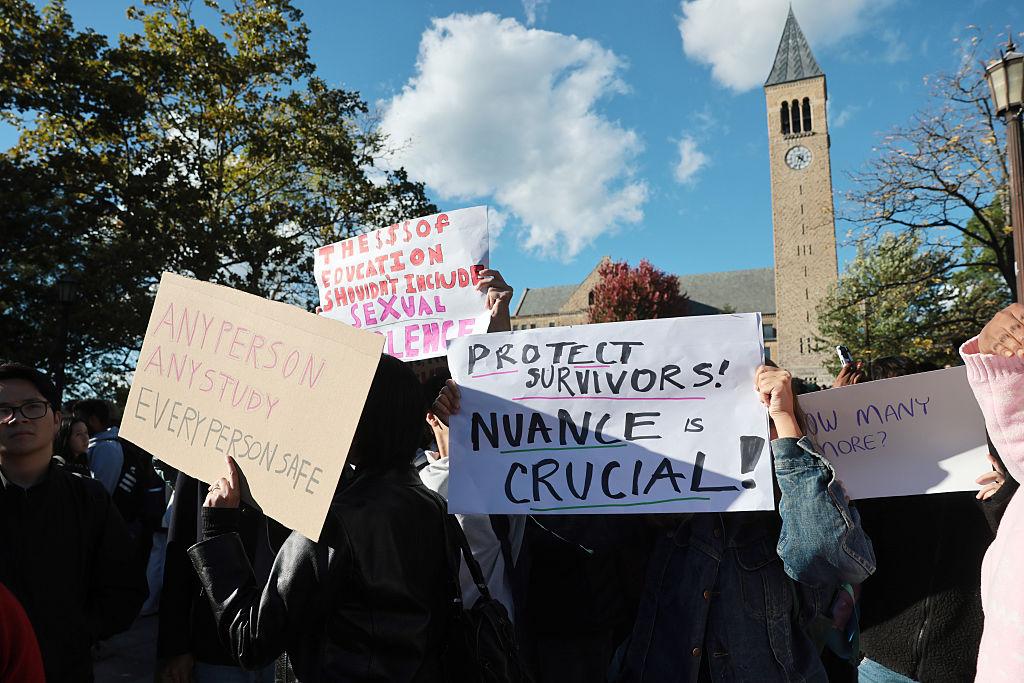
That headline is deliberately uncomfortable. So is the case now engulfing one of America’s most prestigious universities.
Nobody should declare the seven men accused in the so-called Cornell Seven case to be rapists before criminal guilt has been established. All seven have denied wrongdoing, no criminal convictions have occurred, and a newly appointed special prosecutor is investigating the allegations. Due process matters precisely when accusations are this serious.
But Cornell University faces a different question.
Did the institution do enough when a student reported an alleged sexual assault involving members of a fraternity, or did its bureaucracy effectively shield accused students from the full scrutiny the allegations demanded?
The facts now emerging make that question impossible to dismiss.
Cornell Knew This Was Serious
Jane Doe alleges that she was sexually assaulted in October 2024 after becoming intoxicated and being pressured to consume ketamine at Cornell’s Chi Phi fraternity house. Her lawsuit accuses seven then-fraternity members and Cornell itself of wrongdoing connected to the incident and its aftermath.
Cornell did not simply ignore the complaint.
Its internal Title IX process was extensive. Court records indicate the university conducted more than 50 interviews involving 32 witnesses, followed by lengthy disciplinary proceedings. Cornell says the process ultimately produced serious sanctions, including two expulsions and two suspensions of at least two semesters, while two students were found not responsible for sexual misconduct. The Chi Phi chapter was shut down and barred from campus.
Those facts complicate any simplistic accusation that Cornell merely buried the complaint.
But they don’t end the controversy.
The Police Investigation Raises the Harder Questions
The most disturbing questions concern what happened between Cornell’s internal process and the criminal justice system.
Tompkins County District Attorney Matthew Van Houten initially declined to prosecute. But after additional materials became public, he said he had never seen the transcript of Doe’s police interview in which she unequivocally described what happened to her as rape.
Cornell says its police department provided prosecutors with Doe’s sworn statement and a screenshot of Snapchat messages related to the incident.
That leaves an enormous question hanging in the air:
How did the prosecutor apparently not receive the complete picture?
New York Gov. Kathy Hochul has publicly criticized both Cornell police and the local prosecutor’s handling of the matter. She questioned why critical information was omitted from the sworn statement and why prosecutors did not directly interview Doe or review the full interview transcript. Hochul subsequently appointed Attorney General Letitia James as special prosecutor.
That isn’t Twitter speculation.
That’s the governor of New York saying institutions with responsibilities toward an alleged victim failed her.
A University Disciplinary Hearing Isn’t a Criminal Investigation
Here’s where Cornell’s defense becomes uncomfortable.
The university can point toward its massive internal investigation.
Dozens of interviews.
Thousands of pages.
Hearings.
Suspensions.
Expulsions.
But Cornell isn’t a courthouse.
Its disciplinary process determines whether university policies were violated. It cannot substitute for police and prosecutors properly investigating whether New York criminal law was violated.
If Cornell possessed significant evidence related to a possible felony, the crucial question isn’t merely whether administrators reviewed it.
The question is whether law enforcement received everything necessary to conduct an independent investigation.
Cornell has now agreed to an external review of its handling of the case, while university President Michael Kotlikoff has said the allegations raise “heartbreaking and troubling issues.”
Good.
Because Cornell shouldn’t get to grade its own homework here.
But Don’t Turn Accusations Into Convictions
Public anger can create its own injustice.
Some of the accused have reportedly been doxxed, publicly confronted and subjected to threats. Attorneys representing defendants argue that the evidence needs to be tested fairly and that their clients are entitled to due process.
They’re right about that principle.
Being accused of rape doesn’t make somebody legally guilty of rape.
A civil lawsuit isn’t a criminal conviction.
A university disciplinary finding isn’t a criminal conviction.
And public outrage isn’t evidence.
The special prosecutor must therefore investigate in both directions: pursue evidence supporting the allegations and examine evidence contradicting them.
Justice isn’t supposed to arrive at the destination before examining the road.
So, Is Cornell Protecting Rapists?
That hasn’t been established.
And phrasing it as an established fact would outrun the evidence.
But has Cornell’s handling of this case created legitimate questions about whether its institutional processes adequately protected a student reporting sexual assault and properly communicated crucial information to criminal authorities?
Absolutely.
That’s why an independent review is warranted.
That’s why a special prosecutor is now involved.
And that’s why Cornell’s reputation shouldn’t be the priority.
If crimes occurred, the people responsible should face the justice system.
If they didn’t, the accused deserve to have that established through a fair process.
And if university officials or police mishandled crucial evidence, that failure deserves its own accountability regardless of what ultimately happens to the seven accused men.
Cornell doesn’t need protection from uncomfortable questions.
Its students do.
—Kerry Hill, B1Daily



Leave a comment