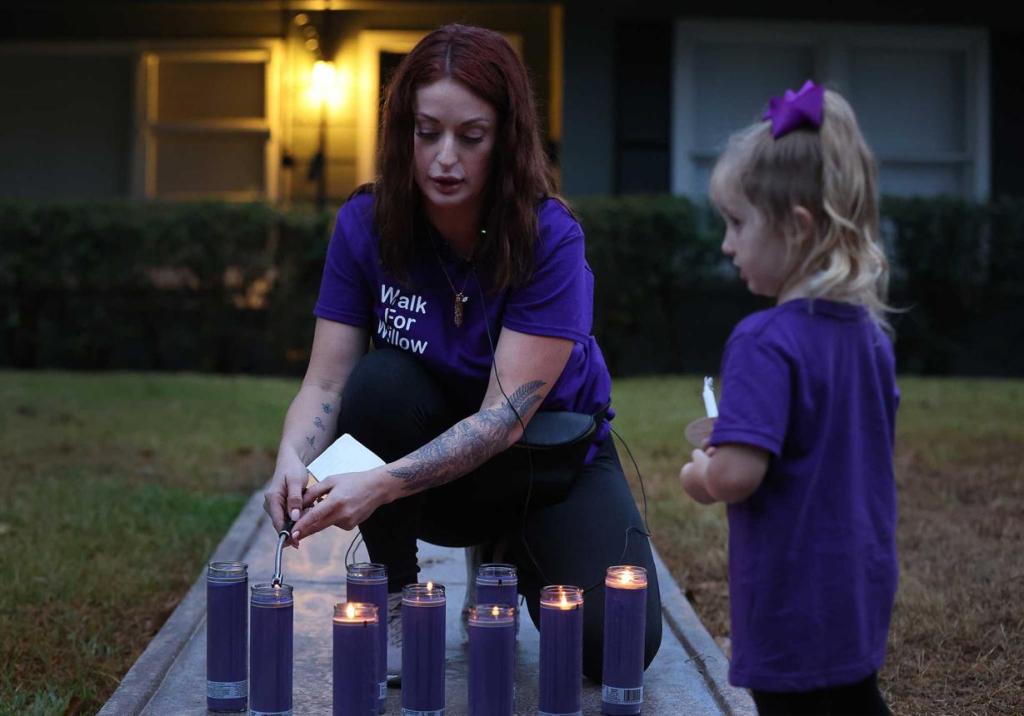
—Kerry Hill, B1Daily
Something disturbing has been appearing in the news lately.
In South Carolina, two toddlers were found dead in September, with authorities saying they died from starvation and dehydration while in their mother’s care. Their mother has been charged with two counts of homicide by child abuse. In Houston, police recently said a mother apparently shot and killed her 4-year-old daughter before killing herself. And in Australia, authorities recently charged another mother with murdering one young child and attempting to murder two others. These are separate cases with separate circumstances, and the accused are entitled to due process.
But after the extraordinarily public Lindsay Clancy case, it’s worth asking an uncomfortable question:
Are we becoming reluctant to talk plainly about mothers who kill their children?
First, Don’t Invent an Epidemic
There is a giant statistical caution sign here.
Several horrifying cases appearing close together in the news do not establish that women killing their children is suddenly increasing nationally. A 2026 study examining 3,974 reported U.S. filicide incidents from 1999 through 2023 confirms that parents killing children is a persistent phenomenon with important differences involving offender sex, victim age and circumstances, but it does not support declaring a new female-perpetrated filicide epidemic based on a cluster of headlines.
And men remain central to any serious discussion of family annihilation. Just this summer, three fathers allegedly killed their families in three separate cases within two days.
So this isn’t an argument that women have suddenly become America’s primary family killers.
It’s an argument about how differently society sometimes processes the cases in which women are responsible.
Enter the Lindsay Clancy Effect
Clancy strangled her three children, 5-year-old Cora, 3-year-old Dawson and 8-month-old Callan, in January 2023. Her 2026 trial wasn’t principally about whether she caused their deaths. It centered on whether severe mental illness, including the defense’s claim of postpartum psychosis, meant she was not criminally responsible.
The jury deadlocked.
Eleven jurors reportedly favored finding Clancy not criminally responsible, while one wanted a murder conviction. Her defense subsequently sought an investigation into that holdout juror, and a judge has now rejected the defense’s separate request to enter a not-guilty finding after the mistrial.
The Clancy case exposed something larger than one courtroom.
When a mother kills her children, public discussion can rapidly migrate from what happened to the children toward what happened to the mother.
Was she depressed?
Was she psychotic?
Was she overwhelmed?
Did the healthcare system fail her?
Those can be legitimate questions. Postpartum psychosis is real, severe mental illness can radically affect criminal responsibility, and the law has long recognized that some defendants genuinely cannot appreciate the nature or wrongfulness of their actions.
But here’s the uncomfortable part:
Understanding an offender should never require making the victims disappear.
Mental Illness Can Explain Without Becoming a Universal Excuse
Every maternal filicide should not automatically be shoved into the same psychiatric box.
Some offenders may be psychotic.
Some may be suicidal.
Some cases involve neglect.
Others involve custody disputes, domestic violence, substance abuse, anger or circumstances completely unrelated to postpartum illness.
That is why each case needs evidence rather than a predetermined cultural script.
Mental illness should be investigated whenever evidence supports it. But neither motherhood nor mental illness should become a magical phrase that ends the inquiry before it begins.
Children deserve the same rigorous investigation regardless of whether the person accused of killing them is their father, mother, stranger or babysitter.
Imagine the Gender Reversed
This is where the conversation gets radioactive.
When fathers annihilate families, headlines and public commentary frequently reach immediately for words such as monster, murderer and evil.
When mothers kill children, the language can become noticeably more therapeutic.
Tragedy.
Breakdown.
She needed help.
The system failed her.
Sometimes those descriptions may be medically and legally justified.
But society should at least examine whether empathy is being distributed consistently.
A man suffering from severe psychosis deserves the same consideration of his mental state as a woman suffering from severe psychosis.
A woman who knowingly commits murder deserves the same moral seriousness as a man who knowingly commits murder.
Equality cannot mean identical treatment only when identical treatment feels comfortable.
The Children Cannot Become Supporting Characters
Perhaps the most troubling feature of sensational family-murder cases is how quickly the children themselves disappear from the story.
Cora.
Dawson.
Callan.
Vivian.
Harlow.
Emory.
Their names should matter.
Because once public debate becomes exclusively about whether a mother deserves sympathy, whether postpartum illness was responsible or whether prosecutors are being too aggressive, dead children risk becoming scenery in somebody else’s psychological drama.
That is backwards.
We can demand better maternal mental healthcare.
We can recognize postpartum psychosis.
We can insist upon humane treatment of mentally ill defendants.
We can protect due process.
And we can simultaneously say:
When children are killed, society owes them an uncompromising search for the truth.
Talk About It Without Turning It Into a Gender War
There is no need to transform these tragedies into ammunition against women.
Nor should anyone manufacture a crime wave unsupported by national evidence.
But refusing to discuss maternal violence because the subject is uncomfortable doesn’t protect women.
It certainly doesn’t protect children.
The lesson of the Lindsay Clancy case shouldn’t be that every mother who kills is secretly a monster.
It shouldn’t be that every mother who kills is automatically a victim either.
The lesson should be simpler:
Investigate the act. Investigate the mental state. Apply the same legal standards. Remember the victims. Follow the evidence wherever it goes.
Compassion and accountability aren’t enemies.
And dead children should never become the price society pays for pretending they are.
—Kerry Hill, B1Daily




Leave a comment