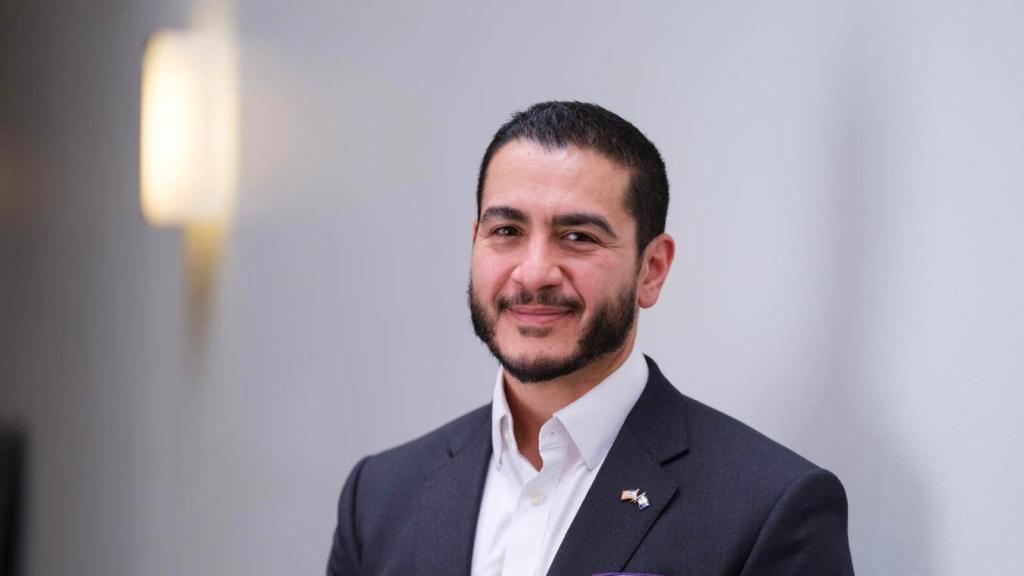
—Barrington Williams, B1Daily
Michigan Democratic Senate candidate Dr. Abdul El-Sayed has made racial justice and coalition-building central themes of his campaign. But a disturbing confrontation involving a Black Detroit woman and allegations of anti-Black racism has raised an important question about what political solidarity means when communities experience conflict.

On September 12, a Black woman was involved in a traffic collision on Detroit’s west side. What followed, according to the woman and her attorneys, was a frightening confrontation involving men of Arab descent, racial slurs, intimidation, and threats.
Video footage captured a man shouting racial insults. The woman’s attorneys have demanded a deeper investigation and potential hate-crime charges. Prosecutors charged the other driver with two misdemeanors related to leaving the accident scene, while declining a separate warrant request against a man because of insufficient evidence.
The allegations deserve a thorough investigation. They also raise broader questions about how Michigan’s political leaders address anti-Black discrimination, including when the alleged perpetrators belong to communities that have themselves experienced prejudice.
The Political Challenge Facing El-Sayed
El-Sayed, who is of Egyptian descent, has emphasized cooperation between Michigan’s Black and Arab American communities. Following his Democratic primary victory, he acknowledged that mistrust among Black voters was legitimate and argued for building a broader political coalition.
His campaign has also introduced the THRIVE agenda, a collection of proposals addressing housing, infrastructure, economic opportunity, and other priorities affecting Black Michigan residents.
Those commitments are relevant to evaluating his record. So is his willingness to address specific incidents of racial intimidation.
I could not verify a public statement from El-Sayed specifically addressing the September 12 confrontation. That does not establish that he has ignored the incident or refused to condemn it. Nevertheless, a public response would give residents a clearer understanding of his position.
A candidate seeking to represent all Michigan residents should be prepared to condemn anti-Black racism explicitly, regardless of the background of those accused.
Solidarity Cannot Be a One-Way Street
Detroit’s Black residents have longstanding concerns about discrimination, public safety, and political representation. Some have also expressed frustration about their relationships with Arab American communities.
Those concerns should be taken seriously without assigning collective responsibility to Arab Americans for the actions of particular individuals.
The distinction is essential. Condemning alleged racial harassment does not require condemning an entire ethnic community. Nor should legitimate concerns about anti-Black racism be dismissed simply because the accused individuals belong to another minority group.
El-Sayed’s challenge is to demonstrate that his message of solidarity extends to these difficult circumstances, not merely to issues where agreement comes easily.
What Accountability Would Look Like
A meaningful response from Michigan’s political leadership would acknowledge the woman’s reported experience, support an impartial investigation, condemn the documented racial language, and insist that any criminal charges be supported by evidence.
It would also recognize that building trust between Black and Arab American communities requires more than election-season appearances and promises of unity.
Political representation is ultimately measured through policies, public statements, constituent services, and the willingness to confront uncomfortable problems.
The Detroit incident presents El-Sayed with an opportunity to demonstrate that his commitment to racial justice includes confronting anti-Black prejudice wherever it occurs.
Michigan voters deserve a clear explanation of how he would approach these conflicts as a United States senator, alongside an examination of his broader record and proposals.
—Barrington Williams, B1Daily




Leave a Reply