—Terrence Dorner, B1Daily
Minnesota has a gang problem, and a growing number of law enforcement officials are sounding the alarm about violence involving Somali American youth.
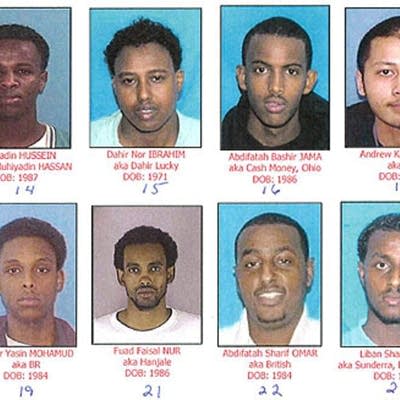
For years, the Twin Cities have confronted criminal organizations operating in neighborhoods across Minneapolis and St. Paul. Among them are groups such as the Somali Outlaws, a street gang historically associated with shootings, narcotics, and violent rivalries.
Now, authorities say a new generation of loosely organized groups is creating another public safety challenge, one driven less by traditional drug trafficking and territorial disputes and more by social media feuds that escalate into gunfire.
According to an October 15 investigation by Minnesota Public Radio, Ramsey County Sheriff Bob Fletcher estimates that approximately 300 Somali American youths are affiliated with 13 gangs operating in the region.
Those estimates have not been independently verified, and federal officials caution that gang membership is difficult to measure accurately.
Nevertheless, recent shootings have raised serious questions about how effectively Minnesota authorities are addressing the problem.
The issue is not whether Minnesota should acknowledge gang violence involving Somali American offenders. It is whether officials can confront the violence without unfairly criminalizing an entire ethnic community.
The Somali Outlaws: A History of Violence in Minneapolis
The Somali Outlaws emerged during the 2000s as one of several gangs associated with Somali American youth in the Minneapolis-St. Paul metropolitan area.
Historically, the group maintained a presence around the Karmel Mall area of south Minneapolis and developed a violent rivalry with the 1627 Boys, another gang associated with the Cedar-Riverside neighborhood.
The rivalry was serious enough to appear in Minnesota Supreme Court proceedings.
Court records describing the 2019 gang landscape identified the Somali Outlaws and 1627 Boys as rival organizations associated with murders, attempted murders, and narcotics offenses.
Investigators described a pattern in which shootings could trigger rapid retaliation, creating dangerous cycles of violence.
The Somali Outlaws also suffered internal losses. Mustafa Ali, identified in historical reporting as a leader of the organization, was fatally shot in October 2019.
These events illustrate that Somali American gang activity is not an entirely new phenomenon in Minnesota.
However, historical accounts of the Somali Outlaws should not be confused with proof that the organization remains active today in its former structure.
Thirteen Gangs and Hundreds of Alleged Members
Minnesota’s current gang landscape appears considerably different from the organized street gangs of previous decades.
Sheriff Fletcher estimates that between 1,000 and 2,000 individuals are associated with gangs across the Twin Cities, including approximately 300 Somali Americans.
He has connected those Somali American youths to 13 separate groups.
But FBI Minneapolis Special Agent in Charge Christopher Dotson has cautioned that gang affiliations change frequently, making precise membership figures unreliable.
That uncertainty matters.
Police intelligence, suspected gang affiliation, and criminal convictions are not interchangeable.
Nevertheless, officials say the violence associated with these groups warrants serious attention.
Recent shootings in Edina, Bloomington, and Eden Prairie have demonstrated that the problem is not confined to Minneapolis neighborhoods traditionally associated with gang activity.
Suburban communities are increasingly confronting the consequences of disputes that can move rapidly across municipal boundaries.
Social Media Is Becoming the New Gang Battlefield
Perhaps the most alarming development is how little provocation some of these shootings reportedly require.
According to Minnesota Bureau of Criminal Apprehension Superintendent Drew Evans, today’s gangs are increasingly decentralized.
Instead of operating under rigid hierarchies, members form smaller groups and cliques.
And unlike traditional gangs, many are not primarily fighting over drug markets or territorial control.
They’re fighting over online insults, personal disputes, and social media arguments.
Bloomington Police Chief Booker Hodges described the situation with remarkable clarity:
“They’re out here simply shooting each other based on social media beef.”
That should concern every Minnesota resident.
A disagreement that once might have ended in an argument can now escalate into a shooting, sometimes involving firearms modified with illegal machine-gun conversion devices.
These devices, commonly called switches, can allow a semiautomatic firearm to discharge automatically, increasing the danger to intended targets and innocent bystanders alike.
When young men begin treating firearms as acceptable responses to online humiliation, the consequences extend far beyond the individuals involved.
Somali Communities Are Also Paying the Price
One critical detail often disappears from political arguments about Somali gangs: many victims are Somali Americans themselves.
Police say much of the recent violence involves disputes between young men from the same broader community.
That means Somali families are also burying loved ones, worrying about their children’s safety, and demanding protection from armed offenders.
Minnesota has more than 80,000 residents of Somali descent. Even accepting Fletcher’s estimate of 300 alleged gang members, those individuals represent less than half of one percent of that population.
Community leaders, including Imam Hassan Jama of the Al-Hikma Islamic Center, have publicly emphasized their efforts to combat youth violence.
Their involvement matters because effective gang prevention requires cooperation between law enforcement, families, schools, and community organizations.
Acknowledging Somali gang activity is not anti-Somali. Blaming an entire population for the actions of a small number of alleged offenders, however, is neither accurate nor useful.
Minnesota Needs Enforcement, Not Political Theater
Minnesota authorities have already recognized the need for greater cooperation.
More than 40 law enforcement agencies recently discussed regional coordination against gang violence. Although officials decided against establishing an entirely new task force, existing units are expected to expand information-sharing and enforcement efforts.
That approach deserves scrutiny.
When shootings cross municipal boundaries, police departments cannot afford fragmented investigations or competing intelligence systems.
Authorities should prioritize identifying repeat violent offenders, investigating illegal firearm modifications, disrupting retaliatory shootings, and ensuring that credible threats receive immediate attention.
Prevention programs should also target young people at risk of becoming involved in violent groups.
And prosecutors must distinguish between actual criminal conduct and mere association with suspected gang members.
The objective should be straightforward: remove dangerous offenders from the streets while protecting the constitutional rights of innocent residents.
Gang Violence Cannot Become Minnesota’s New Normal
Minnesota’s violent crime levels remain substantially below the peaks recorded during the 1990s. That is important context, and claims that the entire state is experiencing unprecedented gang violence would be misleading.
But declining overall crime does not make individual shootings acceptable.
Residents should not have to worry about stray bullets striking their homes because armed young men are settling online arguments.
Nor should families have to accept retaliatory violence as an unavoidable feature of neighborhood life.
The Somali Outlaws and other historically documented gangs demonstrate that Minnesota has confronted this problem before. The emergence of newer, decentralized groups shows that the threat has evolved rather than disappeared.
Minnesota’s political leaders must confront the problem without exaggeration, denial, or ethnic scapegoating.
The public deserves accurate information, effective policing, meaningful prosecution of violent crimes, and serious investment in preventing the next generation from entering gang life.
Because whether a gang member is Somali, Black American, white, or any other ethnicity, the standard should remain the same.
Violent criminals must be held accountable, and innocent communities deserve to live without fear.
—Terrence Dorner, B1Daily



Leave a Reply