—Barrington Williams, B1Daily
America likes to tell its racial history as a story of progress. Slavery ended, Jim Crow collapsed, segregation became illegal, and the federal government finally recognized Black Americans as equal citizens under the law.
But removing explicitly racist legislation did not automatically dismantle the economic and political structures those laws created.
Today, policies governing housing, education, taxation, and criminal justice frequently operate without mentioning race. Yet some continue to produce outcomes shaped by generations of legally enforced racial inequality.
That raises a deeply uncomfortable question: Did America dismantle white supremacy, or did it eliminate the racial language while leaving much of the underlying inequality intact?
Racist Laws Disappeared. Their Economic Consequences Did Not.
For much of American history, government institutions openly discriminated against Black citizens.
Slavery denied millions of people ownership of their labor. Jim Crow restricted political participation, education, employment, and public accommodations. Discriminatory housing policies prevented countless Black families from purchasing property in neighborhoods where values would eventually appreciate.
The Civil Rights Act of 1964 and Fair Housing Act of 1968 represented monumental legal victories.
But neither law redistributed the wealth accumulated through generations of unequal access to property and opportunity.
Consider two families living in 1960.
One White family owns a suburban home purchased with favorable financing. A Black family with comparable earnings has been excluded from the same neighborhood through discriminatory lending or restrictive housing practices.
Sixty years later, both families may possess equal legal rights to purchase property.
But the first family may also possess decades of accumulated equity, inherited assets, and financial security.
The second family must compete in a housing market without those historical advantages.
Equal rules applied to unequal starting positions do not necessarily produce equal opportunities.
Race-Neutral Policies Can Preserve Unequal Outcomes
Modern laws rarely announce that their purpose is to benefit White Americans.
Instead, policies are commonly justified through considerations such as property values, neighborhood character, fiscal responsibility, public safety, or academic qualifications.
Those goals are not inherently racist.
However, policies that appear neutral can preserve existing disparities when they operate within institutions shaped by historical discrimination.
Exclusionary zoning offers one example.
Wealthy communities can restrict apartments, duplexes, and smaller homes through minimum lot sizes and single-family zoning requirements.
Such regulations do not explicitly prohibit Black residents.
Nevertheless, they can make entry into high-opportunity neighborhoods prohibitively expensive for lower-wealth households.
Because historical discrimination contributed to racial wealth disparities, these restrictions can have racially unequal consequences without explicitly referencing race.
The distinction between discriminatory intent and discriminatory effect is important.
Not every policy producing unequal outcomes was designed to discriminate. But unequal effects still deserve investigation, particularly when they reinforce disadvantages created by earlier government action.
The Housing Market Is a Monument to Historical Inequality
Few institutions demonstrate the persistence of historical racial advantage more clearly than American housing.
During the twentieth century, federal mortgage programs, discriminatory lending, and racially restrictive housing practices helped determine which families could purchase homes and where.
Many White households gained access to appreciating suburban property while Black families faced exclusion.
Those differences became especially consequential as homeownership developed into a major source of American household wealth.
According to the Federal Reserve’s 2022 Survey of Consumer Finances, median White family wealth was approximately $285,000, compared with about $45,000 for Black families.
That disparity reflects numerous factors, including income differences, inheritance, homeownership, education, and labor-market conditions.
But the historical denial of property ownership remains an essential part of the explanation.
A government does not have to maintain racially discriminatory mortgage rules for the consequences of earlier discrimination to continue influencing the housing market.
Public Schools Still Reflect the Geography of Segregation
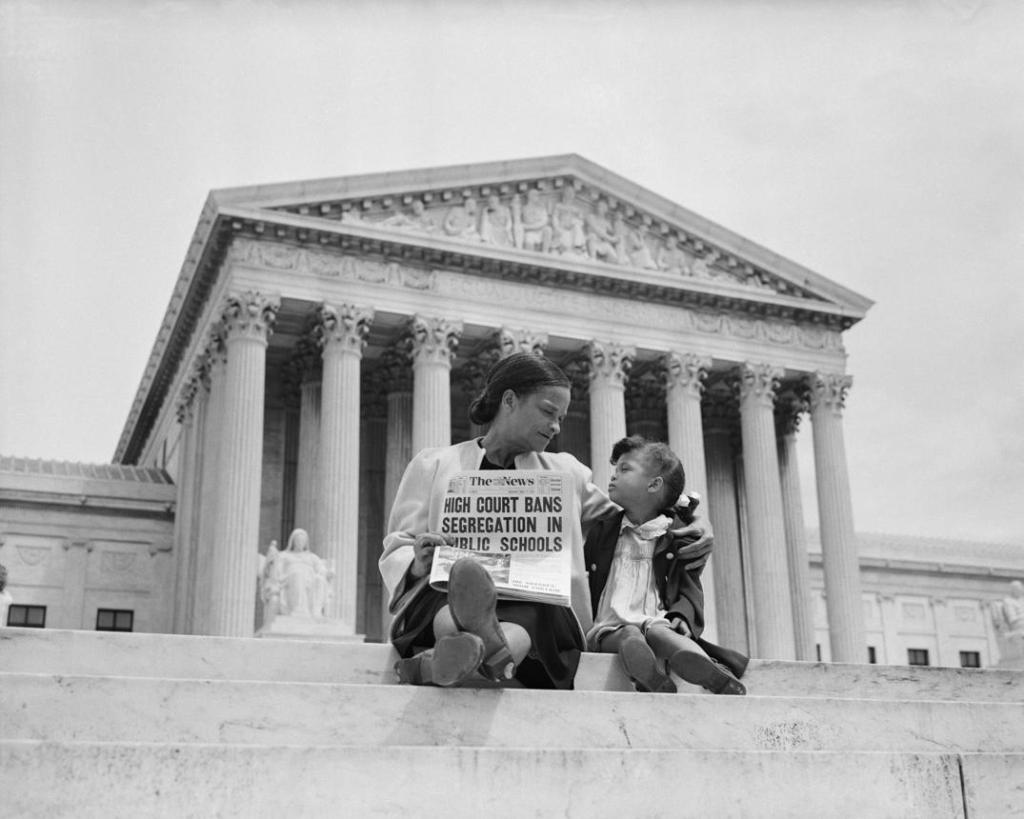
The Supreme Court declared racial segregation in public education unconstitutional in Brown v. Board of Education.
Yet many American schools remain divided along racial and economic lines.
Residential segregation, district boundaries, and unequal access to local resources continue shaping educational opportunities.
School funding systems vary considerably between states, and state and federal funding can reduce disparities. Nevertheless, neighborhood wealth and housing patterns still influence the resources available to students.
A child living in an affluent suburb may have access to educational opportunities unavailable to a child in a struggling neighborhood.
Neither child chose the economic circumstances surrounding their school.
But public policy can reproduce those differences when it fails to address the underlying inequalities.
America eliminated legally mandated racial segregation in schools.
It did not eliminate the residential and economic divisions that continue influencing where children receive their education.
The Supreme Court Has Narrowed Some Paths to Racial Remedies
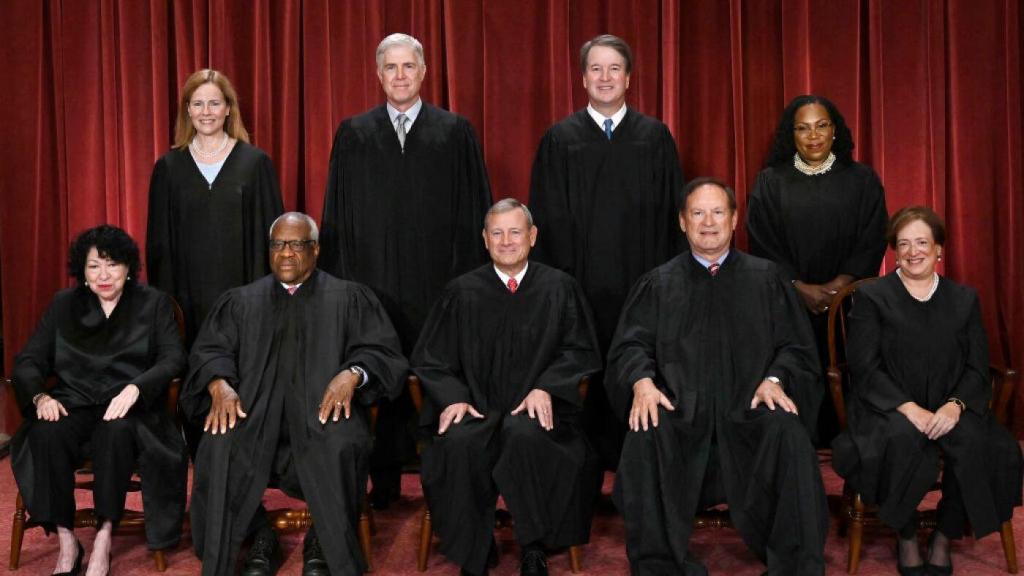
The debate over race-neutral government has also reached the Supreme Court.
In 2023, the Court sharply restricted race-conscious college admissions in Students for Fair Admissions v. Harvard.
Supporters argued that the decision reinforced the principle that individuals should not receive different treatment because of race.
Critics argued that eliminating race-conscious admissions could make it harder for universities to address longstanding educational disparities.
The disagreement reflects a larger constitutional conflict.
Should government focus primarily on ensuring that current rules treat individuals equally?
Or should it also consider the historical circumstances that produced unequal opportunities?
Both questions matter, but they can lead to different policy conclusions.
The legal abolition of racial discrimination does not automatically resolve the debate over how society should respond to its continuing consequences.
Black Americans Were Promised Equality, Not Economic Repair
For descendants of American slavery, the distinction between legal equality and economic restitution is particularly important.
Emancipation ended slavery, but formerly enslaved Americans generally did not receive the land or financial compensation necessary to establish economic independence.
Reconstruction briefly expanded Black political participation before racial violence and discriminatory laws undermined many of those gains.
The civil rights movement eventually dismantled much of the legal architecture of segregation.
But those victories did not provide comprehensive compensation for generations of forced labor, property exclusion, and government-supported discrimination.
That history helps explain why advocates of lineage-based reparations argue that race-neutral policies alone cannot adequately repair specific historical injuries.
Their argument is not simply that contemporary Black Americans experience unequal outcomes.
It is that identifiable government actions created economic losses whose consequences can extend across generations.
Did White Supremacy Disappear or Change Its Form?
The answer depends partly on what the term white supremacy means.
If it refers specifically to laws explicitly establishing White racial superiority, the United States dismantled much of that legal system through constitutional amendments, civil rights legislation, and judicial decisions.
If it also refers to institutional arrangements that preserve advantages created by racial domination, the question becomes considerably more complicated.
Some contemporary inequalities reflect the continuing consequences of discriminatory policies.
Others arise from broader economic conditions, geographic differences, institutional practices, or individual circumstances.
Determining whether a modern policy perpetuates historical racial inequality requires evidence rather than assuming that every unequal outcome proves discriminatory intent.
Nevertheless, refusing to examine those connections simply because today’s laws use race-neutral language would be equally unreasonable.
America Cannot Declare Victory While Ignoring the Consequences
The United States deserves recognition for dismantling major systems of legalized racial discrimination.
Those achievements were real, hard-fought, and historically significant.
But legal reform and economic repair are not identical.
A society can prohibit discrimination while leaving intact wealth disparities, housing patterns, and institutional advantages established when discrimination was lawful.
Meaningful progress requires examining those historical connections and developing policies that expand genuine opportunity.
That could include stronger fair-housing enforcement, affordable homeownership initiatives, improvements in educational access, and serious consideration of documented historical restitution claims.
America abolished many of the laws that openly enforced white supremacy. Whether it has dismantled the inequalities those laws created remains a much harder question.
A nation cannot erase the consequences of an unjust system simply by changing the language of its laws.
And racial equality cannot be measured solely by whether discrimination is still written into the legal code.
It must also be examined through the opportunities Americans actually possess.
—Barrington Williams, B1Daily




Leave a Reply