—Barrington Williams, B1Daily
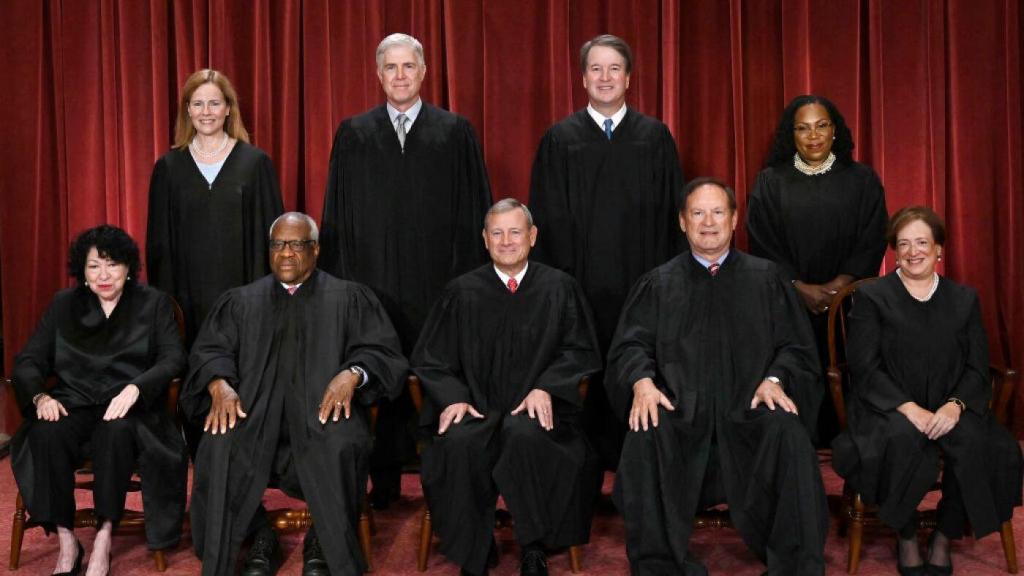
America elects 435 members of the House of Representatives, 100 senators, and one president. Yet nine individuals who never appear on a national ballot can fundamentally reshape the laws governing more than 340 million people.
Welcome to the modern Supreme Court, where constitutional interpretation increasingly resembles a second legislative process, except the lawmakers wear robes, serve lifetime appointments, and cannot be voted out.
The Supreme Court was designed to interpret the Constitution and resolve legal disputes, not function as an alternative Congress. But a series of consequential rulings has reignited an uncomfortable debate about whether America’s judiciary has accumulated more policymaking influence than the democratic system can reasonably tolerate.
When nine unelected justices can overturn decades of established law, who exactly holds them accountable?
Nine Justices, Enormous Political Power
The Supreme Court’s authority to invalidate unconstitutional government actions is an essential feature of American constitutional government.
Judicial review helps prevent elected officials from violating constitutional rights simply because they possess political majorities.
However, the Court’s decisions frequently extend far beyond the immediate parties involved.
In 2022, Dobbs v. Jackson Women’s Health Organization overturned nearly five decades of federal constitutional protection for abortion rights.
In 2023, Students for Fair Admissions v. Harvard sharply restricted race-conscious college admissions.
In 2024, Trump v. United States established broad criminal immunity protections for presidential official acts.
Each ruling dramatically changed the legal landscape without Congress passing a new statute.
Defenders argue that this is precisely what constitutional interpretation requires when previous legal decisions were incorrect.
Critics see something more troubling: an institution capable of making sweeping national policy changes without direct electoral accountability.
The Court Is Rewriting the Rules of Government
The Supreme Court’s growing influence is particularly visible in disputes involving federal agencies.
In 2024, the Court overturned the longstanding Chevron doctrine in Loper Bright Enterprises v. Raimondo.
For four decades, that doctrine had required courts in certain circumstances to defer to reasonable agency interpretations of ambiguous federal statutes.
The Court’s reversal transferred greater interpretive responsibility to federal judges.
Supporters celebrated the decision as a restoration of judicial independence and congressional authority.
Opponents warned that it would allow judges to second-guess specialized agencies responsible for environmental protection, public health, labor standards, and consumer safety.
The ruling did not eliminate federal regulatory authority, but it fundamentally changed how courts review agency interpretations.
That is an extraordinary amount of institutional influence for nine officials who never face reelection.
The 2026 Term Made the Problem Even Bigger
The Court’s 2025–2026 term demonstrated just how consequential judicial decisions have become.
In Trump v. Slaughter, the justices struck down longstanding protections limiting presidential removal of Federal Trade Commission commissioners, expanding presidential control over independent federal agencies.
The ruling effectively reversed a major constitutional precedent that had shaped the federal bureaucracy for approximately 90 years.
Meanwhile, in Louisiana v. Callais, the Court invalidated Louisiana’s congressional map containing an additional majority-Black district, concluding that the state’s use of race was not constitutionally justified under the circumstances.
The decision intensified concerns about the future of minority political representation.
Yet the Court also ruled against the Trump administration in major disputes.
It rejected the president’s use of emergency economic powers to impose sweeping tariffs and reaffirmed constitutional birthright citizenship in Trump v. Barbara.
These outcomes demonstrate that the Court is not simply an instrument of one political administration.
Its influence is broader and more complicated.
The Supreme Court increasingly determines the boundaries within which Congress, presidents, federal agencies, and state governments can operate.
Judicial Interpretation or Judicial Legislation?
The distinction between interpreting law and making law is central to the controversy.
Congress writes statutes through a democratic legislative process.
Courts interpret those statutes and determine whether government actions comply with the Constitution.
But constitutional language frequently contains broad principles requiring interpretation.
Terms involving equal protection, due process, freedom of speech, and executive authority can produce sharply different conclusions depending on a justice’s interpretive philosophy.
Originalists generally emphasize constitutional text and its historical meaning.
Other approaches place greater emphasis on precedent, institutional practice, or the application of constitutional principles to modern circumstances.
None of these approaches eliminates judicial discretion.
When justices disagree about the Constitution’s meaning, their interpretations can effectively determine national policy.
The danger arises when judicial decisions become substitutes for legislative compromise rather than safeguards against unconstitutional government action.
Black Americans Know the Court Can Be Both Protector and Obstacle
For Black Americans, the Supreme Court’s history offers powerful reasons both to defend judicial independence and to question unchecked judicial authority.
In 1857, Dred Scott v. Sandford denied federal citizenship to Black Americans and reinforced the constitutional protection of slavery.
In 1896, Plessy v. Ferguson upheld racial segregation under the doctrine of separate but equal.
Both decisions demonstrated how judicial authority could legitimize profound injustice.
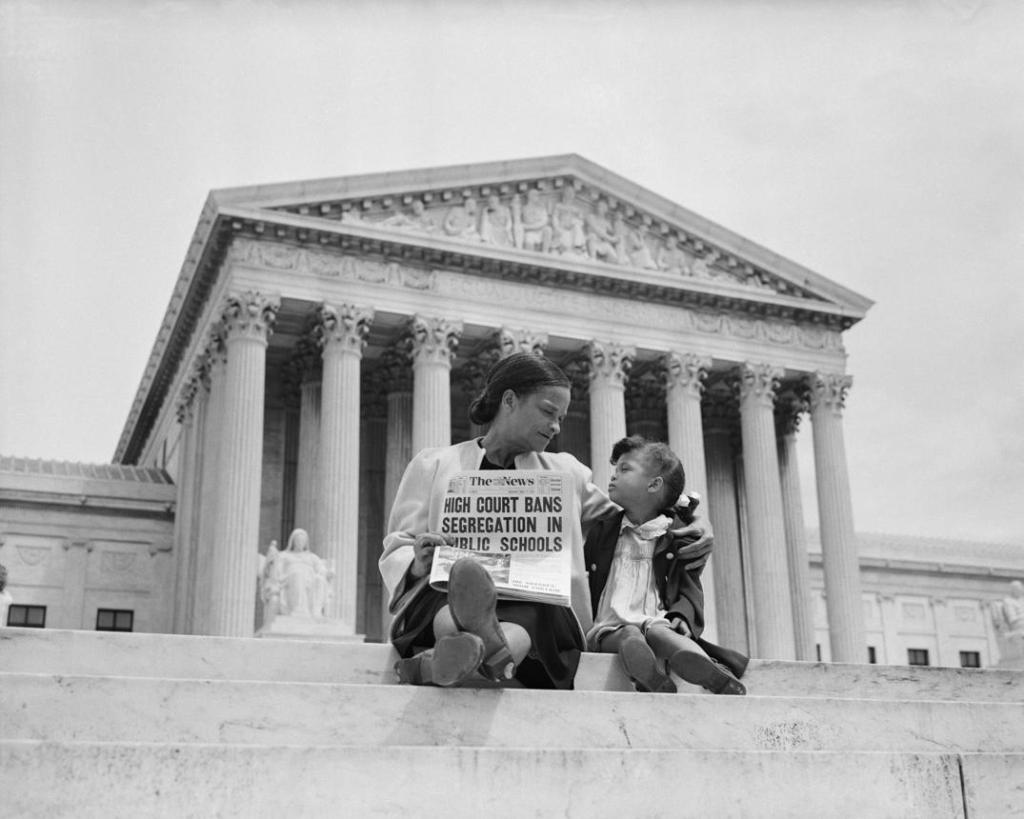
But in 1954, Brown v. Board of Education declared racial segregation in public schools unconstitutional.
That landmark ruling showed how judicial review could challenge discriminatory political systems when elected institutions failed to protect fundamental rights.
More recently, decisions involving voting rights and affirmative action have again placed the Court at the center of debates over racial equality.
The historical lesson is not that judicial power is inherently good or bad.
It is that enormous judicial power can either protect constitutional rights or entrench injustice, depending on how that power is exercised.
Lifetime Appointments Create a Democratic Accountability Problem
Supreme Court justices are nominated by presidents and confirmed by the Senate.
They therefore possess an indirect connection to elected government.
But once confirmed, they ordinarily serve for life unless they resign, retire, die, or are removed through impeachment.
Unlike presidents and legislators, they cannot be removed simply because voters disagree with their decisions.
Lifetime tenure was intended to protect judicial independence from political pressure.
That protection remains important.
However, longer judicial careers and increasingly contentious confirmation battles have intensified concerns about accountability.
A single presidential election can influence constitutional interpretation for several decades.
And because Supreme Court vacancies occur unpredictably, some presidents receive considerably more opportunities to shape the judiciary than others.
That raises questions about whether the current appointment system adequately reflects democratic legitimacy.
Congress Has Helped Create This Problem
The Supreme Court’s influence has also expanded because Congress frequently struggles to resolve major political disputes.
Legislative gridlock encourages presidents to rely on executive orders and administrative agencies.
Those actions generate lawsuits.
The lawsuits eventually reach federal courts, where judges must determine the boundaries of executive and legislative authority.
In effect, political questions that elected officials cannot resolve increasingly become constitutional disputes decided by judges.
This does not mean Congress can simply override constitutional rulings.
But lawmakers can clarify ambiguous statutes, legislate within constitutional boundaries, and use their existing oversight authority.
A more effective Congress would reduce the pressure on courts to become the final destination for every major national controversy.
Does America Need Supreme Court Reform?
Proposals for judicial reform have gained attention across the political spectrum.
Some advocates support 18-year active-service terms for Supreme Court justices, with regular appointments designed to reduce the political consequences of unexpected vacancies.
Others favor stronger judicial ethics requirements, clearer recusal standards, and greater transparency surrounding financial disclosures.
More controversial proposals involve expanding the number of justices or limiting aspects of the Court’s jurisdiction.
Each approach presents legal and institutional challenges.
Term limits would require careful constitutional design, and many proposals would likely require a constitutional amendment.
Court expansion could also encourage retaliatory changes whenever political control shifts.
Reform should therefore prioritize judicial accountability without destroying the independence necessary to protect constitutional rights.
Democracy Cannot Depend Entirely on Nine People
The Supreme Court is not literally a legislature.
It cannot freely enact statutes, appropriate federal money, or replace Congress’s constitutional responsibilities.
Nevertheless, its interpretations can determine whether laws survive, how federal agencies operate, and which constitutional protections governments must recognize.
That gives the institution extraordinary power over American political life.
The central question is whether the country’s existing system of checks and balances provides sufficient accountability for that influence.
A democracy cannot function properly if elected lawmakers increasingly surrender difficult decisions to judges while the public has almost no direct mechanism for holding those judges accountable.
America needs an independent Supreme Court.
But independence should not become synonymous with institutional immunity from scrutiny.
The Constitution created three branches of government, not an elected legislature operating beneath an untouchable council of nine.
And if the Supreme Court continues shaping national policy on this scale, Americans have every reason to demand a serious conversation about its power, transparency, and democratic legitimacy.
—Barrington Williams, B1Daily




Leave a Reply