—Barrington Williams, B1Daily
Black America has produced generations of political leaders, civil rights organizations, elected officials, and influential advocates. Yet despite decades of representation, many predominantly Black communities continue confronting familiar problems: inadequate schools, declining homeownership, concentrated poverty, struggling businesses, and persistent economic inequality.
That raises an uncomfortable question.
Has the Black political establishment become more concerned with maintaining its influence, fundraising operations, and political careers than delivering measurable improvements for the people it claims to represent?
It is a question that deserves serious examination, particularly when political loyalty is frequently demanded while accountability remains negotiable.
Representation Is Not the Same as Results
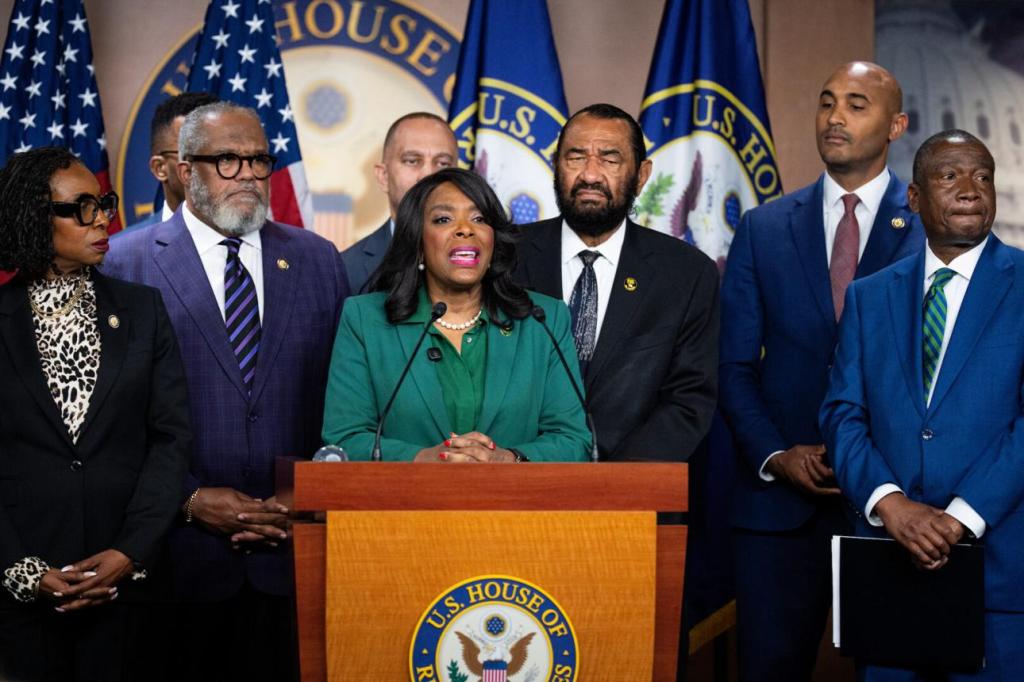
The Congressional Black Caucus, established in 1971, has become one of Washington’s most recognizable political institutions. Its members have advocated for civil rights protections, voting access, healthcare, and economic opportunities.
Those contributions should not be dismissed.
However, representation alone cannot substitute for measurable progress.
Black Americans continue experiencing substantial wealth disparities, and the racial homeownership gap remains stubbornly persistent. Many communities also face underfunded public services, limited access to capital, and deteriorating infrastructure.
Not every problem can be solved by an individual elected official, and some require cooperation across multiple levels of government.
Nevertheless, voters have every right to demand explanations when their representatives repeatedly campaign on the same problems without demonstrating meaningful progress toward solving them.
Winning elections should be the beginning of public service, not the ultimate measure of political success.
Have Civil Rights Organizations Become Too Comfortable?
Organizations such as the NAACP and National Urban League have played important roles in challenging discrimination and advancing civil rights.
But their historical achievements should not exempt their current leadership from scrutiny.
Large nonprofit organizations depend on fundraising, corporate partnerships, philanthropic contributions, and professional management structures.
Those relationships can provide resources for valuable community programs. They can also create questions about organizational independence, donor influence, and whether institutional survival sometimes takes priority over confronting powerful interests.
Black Americans should be able to examine how these organizations spend their money, evaluate their programs, and determine whether their priorities reflect the needs of ordinary communities.
How much funding reaches local neighborhoods? How much supports administrative operations? What measurable improvements have resulted from major initiatives?
These are legitimate questions, not attacks on civil rights.
An organization founded to challenge powerful institutions should be prepared to accept scrutiny of its own.
Political Loyalty Should Never Be a Blank Check
One of the most troubling features of modern Black politics is the expectation that voters should remain loyal to particular political parties or leaders regardless of performance.
Political parties often emphasize the importance of Black voter participation during election cycles.
Candidates visit churches, attend community events, promise economic investment, and highlight their commitment to racial equality.
But once elections conclude, constituents may struggle to secure meaningful engagement on the issues affecting their neighborhoods.
This creates a dangerous political arrangement in which voters are expected to provide consistent support while elected officials face limited pressure to produce results.
Black voters are not obligated to support Republicans, Democrats, or independent candidates automatically.
They are entitled to evaluate every politician according to policies, competence, integrity, and measurable outcomes.
Political loyalty should be earned through public service, not inherited through party affiliation or racial identity.
The Reparations Question Exposes a Deeper Divide
The debate surrounding reparations for descendants of American slavery illustrates another growing disagreement between grassroots activists and established political organizations.
Many Foundational Black American advocates argue that lineage-based reparations should receive greater attention from elected officials who claim to represent the interests of Black Americans.
Yet national political organizations frequently prioritize broader racial equity initiatives rather than developing specific compensation proposals for descendants of American slavery.
Supporters of those broader initiatives argue that discrimination affects Black communities in multiple ways and requires comprehensive solutions.
Freedmen advocates counter that general diversity programs cannot replace targeted remedies for the specific historical injuries of slavery and government-sanctioned discrimination.
The disagreement deserves substantive debate rather than political dismissal.
If elected officials oppose reparations, they should explain their reasoning. If they support reparations, voters should expect concrete legislative proposals rather than symbolic endorsements.
Black Communities Need Independent Political Accountability
The solution is not abandoning Black political institutions or pretending that representation has accomplished nothing.
It is demanding stronger accountability from those institutions.
Community organizations should regularly publish accessible financial reports, measurable program outcomes, and clear explanations of their policy priorities.
Elected officials should face consistent public scrutiny concerning housing, education, public safety, infrastructure, and economic development.
Local voters should also be encouraged to participate in primary elections, attend public meetings, organize independent advocacy groups, and challenge incumbents when necessary.
Most importantly, Black communities must resist the idea that criticizing a Black politician automatically constitutes an attack on Black political progress.
A politician’s racial identity does not guarantee effective leadership.
Neither does a prestigious civil rights title, a lengthy congressional career, or an impressive fundraising operation.
Black America Deserves Leadership, Not Political Royalty
The Black political establishment has produced meaningful achievements, but its institutions should never become untouchable.
Political organizations exist to serve communities. Communities do not exist to sustain political organizations.
If a representative has held office for twenty years while their district continues struggling, constituents deserve an honest accounting of what that representative has accomplished and what obstacles remain.
If a civil rights organization raises millions of dollars annually, supporters deserve transparent explanations of how those resources advance its mission.
And if political leaders demand unquestioning loyalty, voters should be willing to question whether those leaders have confused public service with personal entitlement.
Black America does not need more political celebrities. It needs accountable leadership capable of delivering tangible improvements in people’s lives.
The next generation of Black political leadership should be judged not by how frequently its members appear on television, how many prestigious committees they join, or how effectively they raise campaign contributions.
It should be judged by whether families can afford homes, children receive quality educations, businesses gain access to capital, and communities experience genuine economic progress.
Because the purpose of Black political power was never supposed to be creating permanent careers for a privileged few.
It was supposed to improve the lives of the many.
—Barrington Williams, B1Daily




Leave a Reply