—Terrence Dorner, B1Daily
The United States military is introducing a new generation of tactical respiratory protection for its elite Special Operations Forces, marking another advancement in battlefield survivability and individual soldier protection.
On October 9, 2026, the Pentagon and defense equipment manufacturer Avon Protection announced an agreement to equip American special operations personnel with the MITR Modular Integrated Tactical Respirator System, a lightweight protective platform designed for high-risk operational environments.
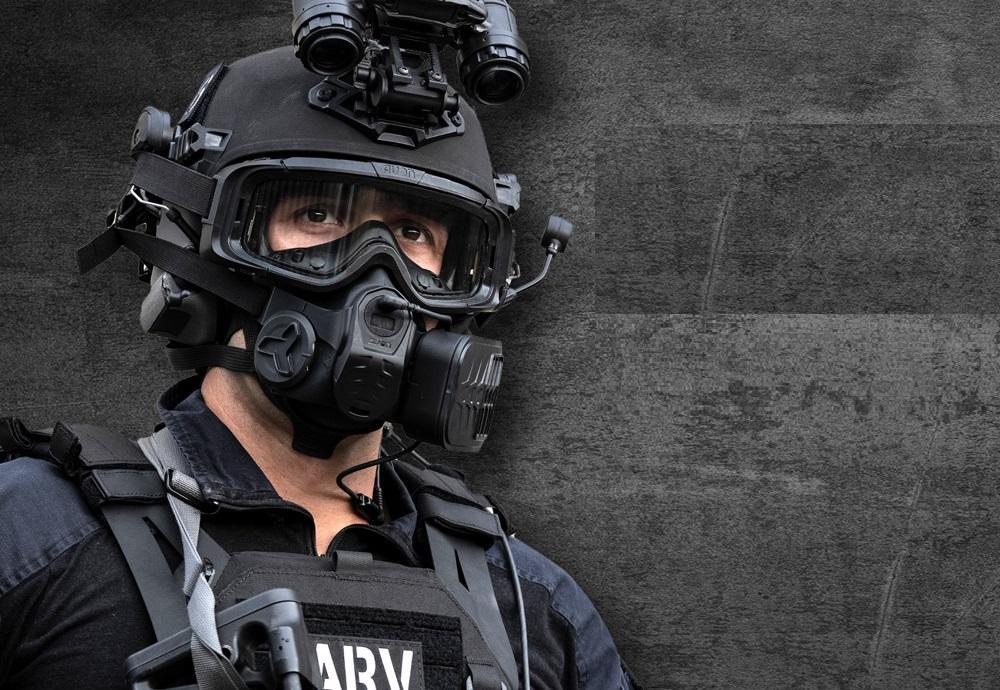
The system combines the MITR-M1 half-mask respirator with MITR-PG1 powered protective goggles, providing operators with adaptable protection against hazardous airborne particles and certain chemical threats.
Unlike conventional full-face respirators, the modular configuration allows personnel to deploy respiratory and eye protection separately or simultaneously, depending on operational requirements.
Built for Modern Battlefield Threats
Modern special operations missions expose military personnel to hazards extending far beyond conventional gunfire.
Urban combat environments, clandestine laboratories, industrial facilities, and contaminated buildings can contain dangerous airborne substances capable of causing immediate injury or long-term health complications.
The MITR system is designed to reduce exposure to threats including airborne lead particles, biological contaminants, pharmaceutical substances, and certain riot-control agents.
Its specialized filtration options include the MITR-PF particulate filter and MITR-RF riot filter, both providing P100-rated particulate filtration capable of removing more than 99.97% of airborne particles under specified testing conditions.
However, the system is not intended to replace full-face chemical, biological, radiological, and nuclear protective equipment in every threat environment.
The objective is straightforward: provide operators with additional protection without compromising mobility, weapon handling, or mission effectiveness.
Tactical Mobility Without Sacrificing Protection
One of the MITR system’s principal advantages is its compatibility with existing combat equipment.
The half-mask features a low-profile design that allows operators to maintain proper weapon alignment while using rifle optics.
It can also attach directly to combat helmets, allowing personnel to deploy respiratory protection without removing their headgear.
Meanwhile, the powered goggles incorporate an airflow system designed to prevent fogging and maintain visibility during physically demanding operations.
The goggles are also compatible with night-vision equipment, an essential requirement for special operations units conducting missions in darkness or restricted-visibility environments.
These capabilities are particularly important during close-quarters operations, where reduced visibility or interference with weapon sights can become serious tactical disadvantages.
Pentagon Confronts Long-Term Health Risks
The procurement comes amid increasing concern about occupational health hazards affecting American special operations personnel.
A November 2025 study examining cancer among Special Operations Forces reported an approximately 18% higher cancer risk among special operations personnel compared with other military populations.
Military personnel can encounter hazardous substances through weapons training, contaminated environments, combustion products, and operational deployments.
The introduction of improved respiratory protection reflects growing recognition that force protection must extend beyond preventing immediate battlefield casualties.
Protecting soldiers from cumulative exposure to dangerous substances is also essential to preserving long-term operational readiness.
American Special Operations Units Already Receiving Equipment
According to Avon Protection representatives, the MITR system has already reached certain American special operations units, with additional deliveries underway.
The United States joins Canada in adopting the equipment, demonstrating growing interest among allied militaries in modular respiratory protection.
The Pentagon has not publicly disclosed the total contract value or number of systems being acquired.
Nevertheless, the procurement represents a significant step toward integrating advanced respiratory equipment into special operations loadouts.
A New Standard for Individual Soldier Protection?
The MITR system highlights a broader transformation in modern military equipment development.
As operational environments become increasingly complex, military planners are placing greater emphasis on lightweight protective technologies that integrate with existing weapons, communications, and surveillance equipment.
Traditional protective masks remain essential for severe chemical threats, but modular systems offer additional flexibility for missions where full-face protection may be unnecessary or impractical.
Future adoption across conventional military formations remains uncertain.
However, equipment introduced through special operations programs has historically influenced broader military modernization efforts.
The Pentagon’s latest procurement sends a clear message: battlefield superiority is no longer measured exclusively by firepower and advanced weapons. It also depends on keeping the personnel operating those systems alive, healthy, and combat-effective.
For America’s elite special operations forces, the MITR system represents another tool for surviving the increasingly hazardous conditions of modern warfare.
—Terrence Dorner, B1Daily





Leave a Reply