—Barrington Williams, B1Daily
Michelle Obama became one of America’s most recognizable public figures through her advocacy for healthy eating, education, and community development. Yet her career before and during the White House years also reveals a less frequently discussed relationship with Chicago’s political institutions, corporate boards, and one of America’s largest retailers.
Her professional history raises questions about how political influence, corporate employment, and public service intersect, particularly when institutions claim to represent working-class communities.
A Lucrative Career at the University of Chicago Hospitals
Before entering the White House, Michelle Obama worked within Chicago’s political and institutional establishment. A Harvard-trained lawyer, she served in city government during Mayor Richard M. Daley’s administration before joining the University of Chicago and eventually its medical center.
In 2002, Obama became executive director for community affairs at the University of Chicago Hospitals. Three years later, she was promoted to vice president for community and external affairs.
Her reported annual compensation jumped from approximately $122,000 in 2004 to nearly $317,000 in 2005, the same year her husband entered the United States Senate.
The figure attracted considerable political attention. However, hospital officials maintained that her compensation reflected executive responsibilities and included one-time payments, while fact-checkers found no substantiated evidence that her promotion was a political payoff.
Her job involved managing relationships between the hospital and surrounding South Side neighborhoods, along with diversity initiatives, minority contracting, and community outreach.
Those responsibilities placed Obama between a powerful medical institution and predominantly Black communities that had longstanding concerns about access to healthcare.
Critics questioned whether such positions genuinely empowered residents or primarily helped large institutions manage public opposition. The hospital, meanwhile, credited Obama with expanding community participation and outreach programs.
Healthcare Access and Chicago’s Black Communities
The University of Chicago Medical Center occupied an unusual position in the city’s healthcare landscape.
Located near communities experiencing poverty and significant health disparities, the institution was simultaneously a prestigious medical center and a target of criticism over its treatment of uninsured and low-income patients.
The hospital’s Urban Health Initiative sought to redirect some patients with nonemergency medical needs toward neighborhood clinics rather than its emergency department.
Administrators described the initiative as an effort to connect residents with more appropriate primary care. Critics worried that the approach could discourage vulnerable patients from seeking treatment at the medical center.
The controversy drew congressional attention in 2008, when Republican Senator Charles Grassley requested information about the hospital’s charity-care policies, executive compensation, and relationships with political advisers.
Obama’s position became part of that scrutiny because she had worked on community outreach and the South Side Health Collaborative.
The episode illustrated a larger tension: institutions may invest heavily in community-relations departments while residents continue questioning whether those institutions are meeting their most urgent needs.
The Walmart Supplier Board Seat
Michelle Obama’s corporate connections extended beyond healthcare.
From 2005 until May 2007, she served on the board of TreeHouse Foods, a major food manufacturer that supplied products to Walmart.
In 2006, she received approximately $51,200 in board fees from the company.
Her position became politically awkward as Barack Obama criticized Walmart’s labor practices during his presidential campaign.
Walmart had faced longstanding criticism from unions over wages, employee benefits, and opposition to organized labor.
Michelle Obama resigned from the TreeHouse Foods board in May 2007. The company attributed her departure to increasing demands on her time and stated that she had no disagreement with its management.
The resignation removed a potential conflict between her corporate responsibilities and her husband’s political messaging, but the relationship would attract renewed attention several years later.
Walmart Returns Through the White House
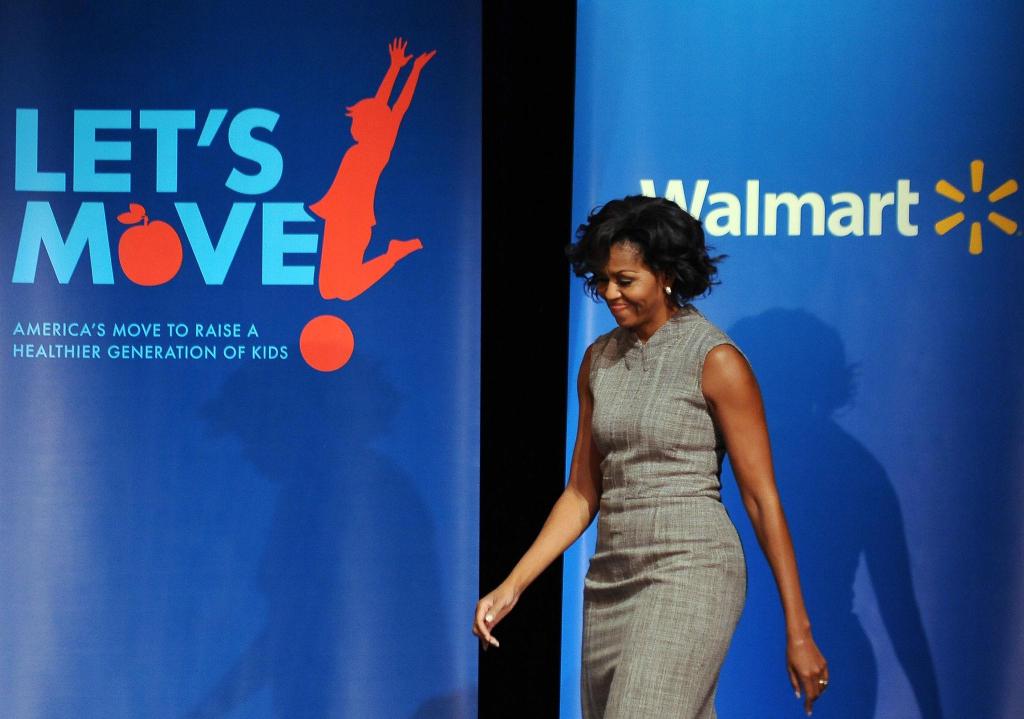
In January 2011, First Lady Michelle Obama publicly partnered with Walmart as part of her Let’s Move! campaign against childhood obesity.
The company announced plans to improve the nutritional content of its products, make healthier foods more affordable, and expand access to groceries in underserved communities.
From a public-health perspective, the initiative had an understandable objective. Walmart’s enormous retail footprint offered the possibility of influencing food prices and availability on a national scale.
But labor advocates saw a contradiction.
The same corporation criticized for resisting unionization was now receiving favorable publicity through an initiative championed by the White House.
Union leaders argued that the administration’s cooperation with Walmart risked overlooking the importance of wages, benefits, and working conditions in determining whether families could afford healthy food.
For critics, the dispute was not simply about vegetables and grocery shelves. It concerned whether corporate commitments to healthier products could substitute for improvements in how workers were treated.
Corporate Philanthropy and Political Influence
Michelle Obama’s career provides a case study in the complicated relationship between public advocacy and powerful institutions.
At the University of Chicago Medical Center, her responsibilities included improving relations between a major hospital and surrounding neighborhoods.
At TreeHouse Foods, she participated in corporate governance for a company with commercial ties to Walmart.
As First Lady, she later collaborated with Walmart on a national nutrition initiative despite continuing criticism of the retailer’s labor practices.
These connections are documented, but they do not independently establish corruption, improper compensation, or deliberate efforts to silence community complaints.
They do, however, raise legitimate questions about institutional accountability.
How should communities evaluate outreach programs when the organizations sponsoring them also face criticism over access and affordability? How should public officials balance partnerships that might deliver social benefits against the reputational advantages those partnerships provide to corporations?
And when corporate interests become closely associated with public-service campaigns, who determines whether the benefits to ordinary families outweigh the advantages gained by the participating businesses?
Michelle Obama’s record demonstrates that representation, corporate influence, and community advocacy can exist within the same political career.
Understanding that intersection requires examining not only the public message, but also the institutions, financial relationships, and policy outcomes behind it.
—Barrington Williams, B1Daily




Leave a Reply