—Michael Lyles, B1Daily
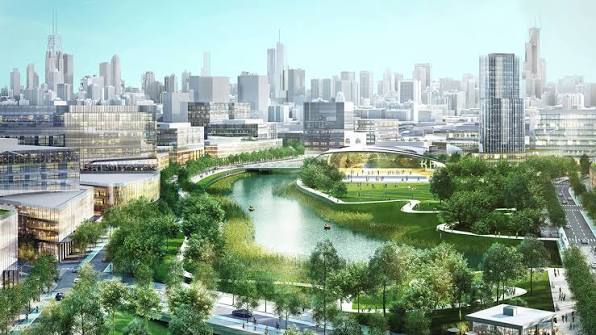
Chicago has become remarkably skilled at selling redevelopment as progress while leaving the people most vulnerable to displacement wondering where they fit in the finished picture. Lincoln Yards was supposed to remake a vast stretch of the North Branch riverfront into a gleaming new district. For Black Chicagoans watching investment concentrate in already prosperous areas while longtime neighborhoods struggle, it became something else: a symbol of a city willing to subsidize luxury-oriented growth without first settling who gets to remain.

The original $6 billion Lincoln Yards vision promised thousands of residences, offices and parks on former industrial land between Lincoln Park and Bucktown. It also came with a proposed public subsidy package worth as much as $1.3 billion. Critics warned that tax-increment financing for this affluent corridor would divert attention and resources from neighborhoods with far greater unmet needs. Chicago United for Equity argued that the project’s subsidy structure could deepen racial inequality and intensify displacement pressures.
Those warnings were not invented out of thin air. Nearby parts of Bucktown and Wicker Park had already experienced the replacement of Black and Latino residents amid rising property values. The broader city has lost tens of thousands of Black residents over recent decades. Housing costs, disinvestment, school closures and limited economic opportunity have all contributed to that exodus. It would be inaccurate to attribute those departures directly to a Lincoln Yards project that was barely built, but the proposed development belonged to a larger political economy that too often treats existing residents as an afterthought.
Now the original Lincoln Yards plan has collapsed, and the redevelopment has a new name: Foundry Park. The proposed $3 billion replacement, advanced in 2026, would bring more than 3,700 homes to part of the former site. Chicago’s Finance Committee backed a roughly $201.6 million TIF subsidy for infrastructure, far below the original package. Developers and city officials argue that the new streets, parks, riverfront improvements and housing will turn vacant industrial land into a productive neighborhood.
That argument deserves consideration. Building homes on underused land is not inherently displacement, and the new proposal includes affordable-housing obligations. But the fine print matters. Under the reported plan, the affordability requirement is 20%, with only a portion of those homes built on or near the site and the remainder addressed partly through a payment into the city’s housing fund. For a city where working-class families are being priced out, a headline affordability percentage should not end the discussion.
Consider the geography of public investment. A 2026 analysis highlighted research finding that billions in Chicago TIF subsidies have flowed into central, wealthier districts while South Side neighborhoods received substantially less. The issue is not that every dollar spent north of downtown is illegitimate. It is that a city with a history of segregation must explain why its development machinery so often appears most energetic where private capital already wants to go.
For Black Chicagoans, the demand should be measurable protection against displacement: deeply affordable units, stronger property-tax and tenant protections, anti-displacement funding for vulnerable neighborhoods, accessible homeownership opportunities and transparent accounting of who benefits from subsidies. City Hall should also publish evidence of whether residents who have been pushed out can realistically return to the neighborhoods transformed by public investment.
Lincoln Yards may have not single-handedly driven Black residents out of Chicago. Its mostly unrealized promise, however, exposed a dangerous governing instinct: celebrate the skyline first and ask about equity later. Foundry Park gives Chicago another chance to change that habit. If public money helps create the next fashionable riverfront address, the city must show how that investment also helps the Chicagoans who have spent generations watching prosperity move around them rather than toward them.
—Michael Lyles, B1Daily



Leave a Reply