—Barrington Williams, B1Daily
The old image of white supremacy was a man in a robe or a teenager posting slurs from a basement computer.
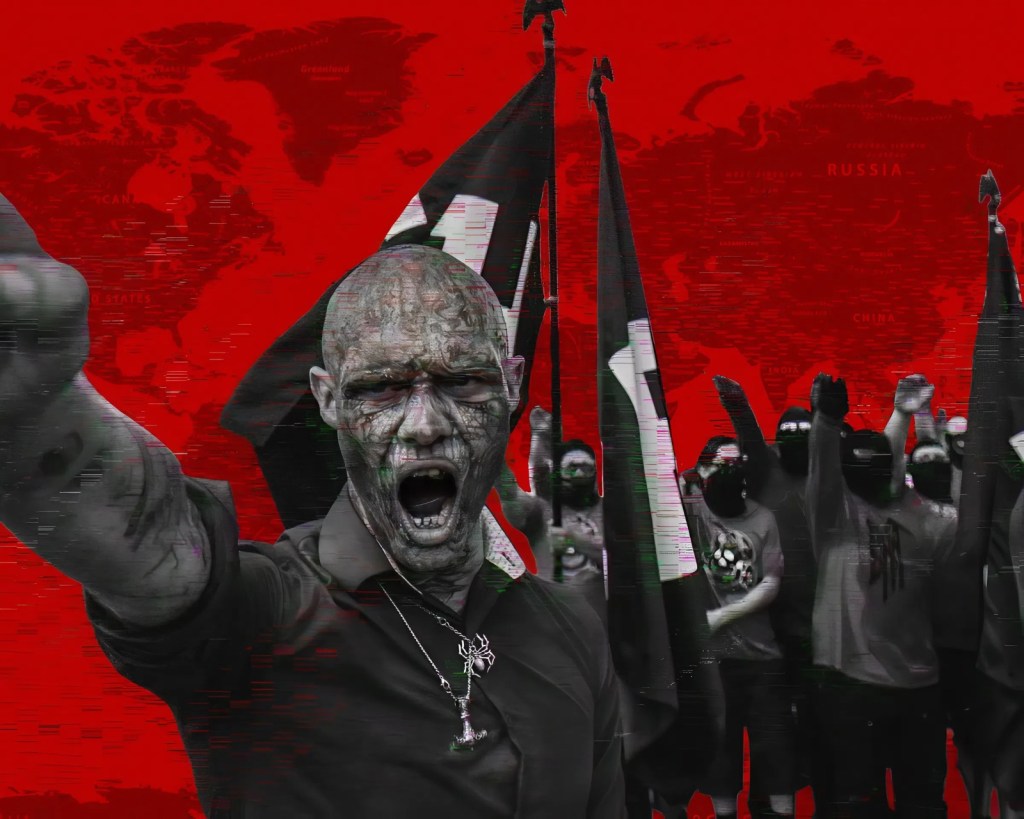
The new version wears compression shirts, trains in MMA gyms, posts workout clips on Telegram, and talks about “brotherhood,” “discipline,” and “fitness” while quietly building extremist networks across North America.
Researchers, journalists, and anti-extremism organizations are raising alarms about the rapid growth of so-called “active clubs” in Canada, decentralized white nationalist groups that blend combat sports, masculinity culture, and political radicalization into what experts describe as one of the fastest-growing extremist movements in the country.
These groups are not operating in isolation.
Recent reporting found that members of Canadian white nationalist organizations traveled into the United States to meet and train alongside American extremist groups connected to the broader “Active Club” movement founded by American neo-Nazi Robert Rundo, a former leader of the violent Rise Above Movement.
The movement’s formula is chillingly modern. Instead of leading with explicit Nazi imagery, many of these groups initially market themselves around self-improvement, hiking, boxing, martial arts, and male camaraderie. The ideological radicalization comes later, often through encrypted chats, propaganda channels, podcasts, and private events. Researchers call it “White Nationalism 3.0,” a decentralized model designed to avoid the visibility and collapse that consumed older hate groups.
CBC investigations into Canadian active clubs found members training inside public parks, martial arts gyms, and fitness facilities while posting carefully edited videos online that glamorize combat readiness and hyper-masculine identity. Experts interviewed in the investigation warned that many members explicitly discuss preparing for an eventual “race war.”
That phrase matters.
“Race war” rhetoric has long existed in neo-Nazi accelerationist ideology, the belief that social conflict and political instability should be intensified until democratic systems collapse entirely. Modern active clubs often avoid publicly calling for terrorism outright, but security experts warn that the culture surrounding these groups normalizes violence and pushes members toward increasingly militant thinking.
And increasingly, the movement is transnational.
Investigators say Canadian extremists have coordinated with American groups such as Patriot Front while attending combat tournaments and networking events south of the border. Analysts warn these gatherings function as more than just training sessions. They are relationship-building hubs where extremists exchange tactics, propaganda strategies, and recruitment methods.
The architecture resembles a franchise model for radicalization.
Small local cells train independently but share branding, ideology, aesthetics, and online ecosystems. Instead of rigid hierarchy, the movement thrives through loose coordination, making it harder for authorities to dismantle through traditional law enforcement methods.
Researchers say this evolution reflects lessons learned from earlier extremist crackdowns. Public rallies and openly Nazi organizations attracted surveillance and prosecutions. The newer strategy buries extremism beneath the language of fitness, nationalism, and “community defense.” Combat sports become recruitment funnels. Hiking trips become ideological screening grounds. Brotherhood becomes a delivery system for fascist politics.
The danger is not necessarily in massive numbers.
It is in the normalization of organized political violence culture among small groups of highly radicalized young men who increasingly view themselves as soldiers preparing for societal collapse. Intelligence agencies in both Canada and the United States have reportedly monitored the growth of these active clubs with increasing concern.
And unlike older extremist movements confined to fringe pamphlets and isolated compounds, these networks are fluent in modern internet culture. They recruit through memes, workout videos, livestreams, podcasts, and cinematic propaganda clips edited with the polish of commercial sports brands.
It is fascism redesigned for the algorithm age.
The border between Canada and the United States once functioned as a symbolic divide between political cultures. But the growth of these extremist fight clubs suggests white supremacist organizing now flows across that border almost seamlessly, connected through encrypted apps, social media ecosystems, and shared ideological mythology.
What emerges is not random hatred.
It is infrastructure.
—Barrington Williams, B1Daily




Leave a comment