—Sakya Mahar, B1Daily
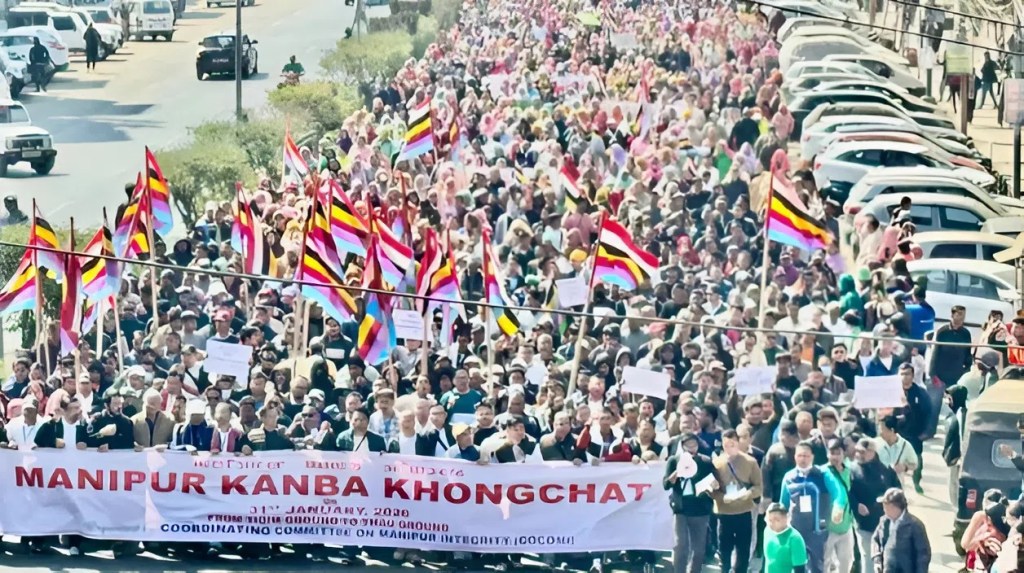
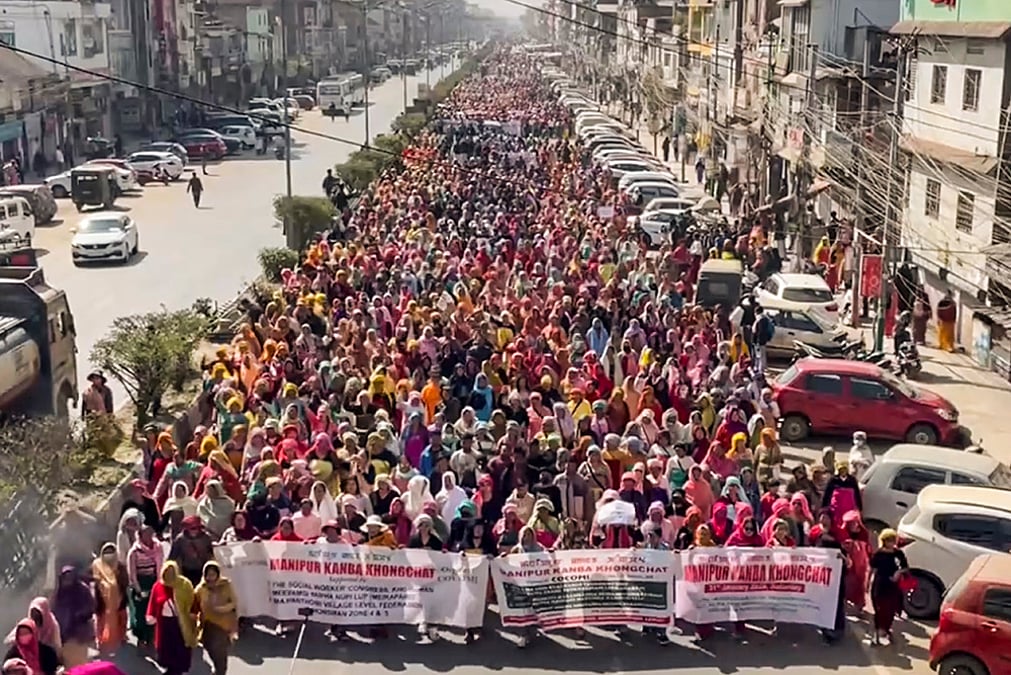
In one of the most significant public demonstrations in recent years, thousands of people—including a large number of internally displaced persons (IDPs)—took to the streets of Imphal to demand resettlement, peace, and unity amid an ongoing humanitarian and political crisis in Manipur. The march, known as the “Save Manipur” rally, was organised under the banner of the Coordinating Committee on Manipur’s Integrity (COCOMI) and saw participants from diverse communities coming together to send a powerful message to authorities.
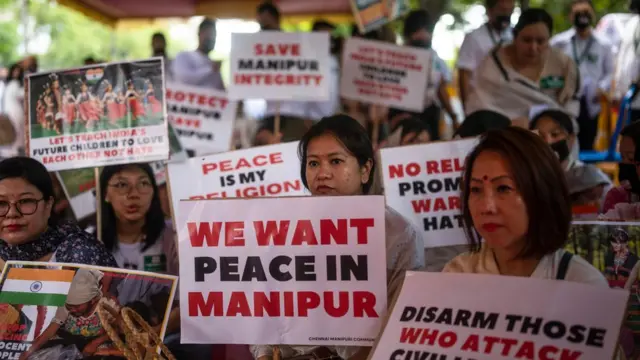
The protesters walked several kilometres through the state capital, carrying slogans such as “Stop proxy war,” “Long live Manipur,” and “Don’t disintegrate Manipur.” Beyond calls to protect territorial integrity, one of the most urgent demands from the crowd was the immediate and time‑bound resettlement of the tens of thousands of people still living in relief camps after years of ethnic violence that erupted in May 2023.
For many of those marching—particularly displaced families—the rally was not merely symbolic. It underscored the accumulated frustration of people who have endured prolonged displacement, deteriorating living conditions in camps, and uncertainty over their future. In separate protests earlier this year, IDPs have publicly criticised what they describe as “inhuman” camp conditions and called on authorities to provide clear rehabilitation plans rather than temporary shelter.
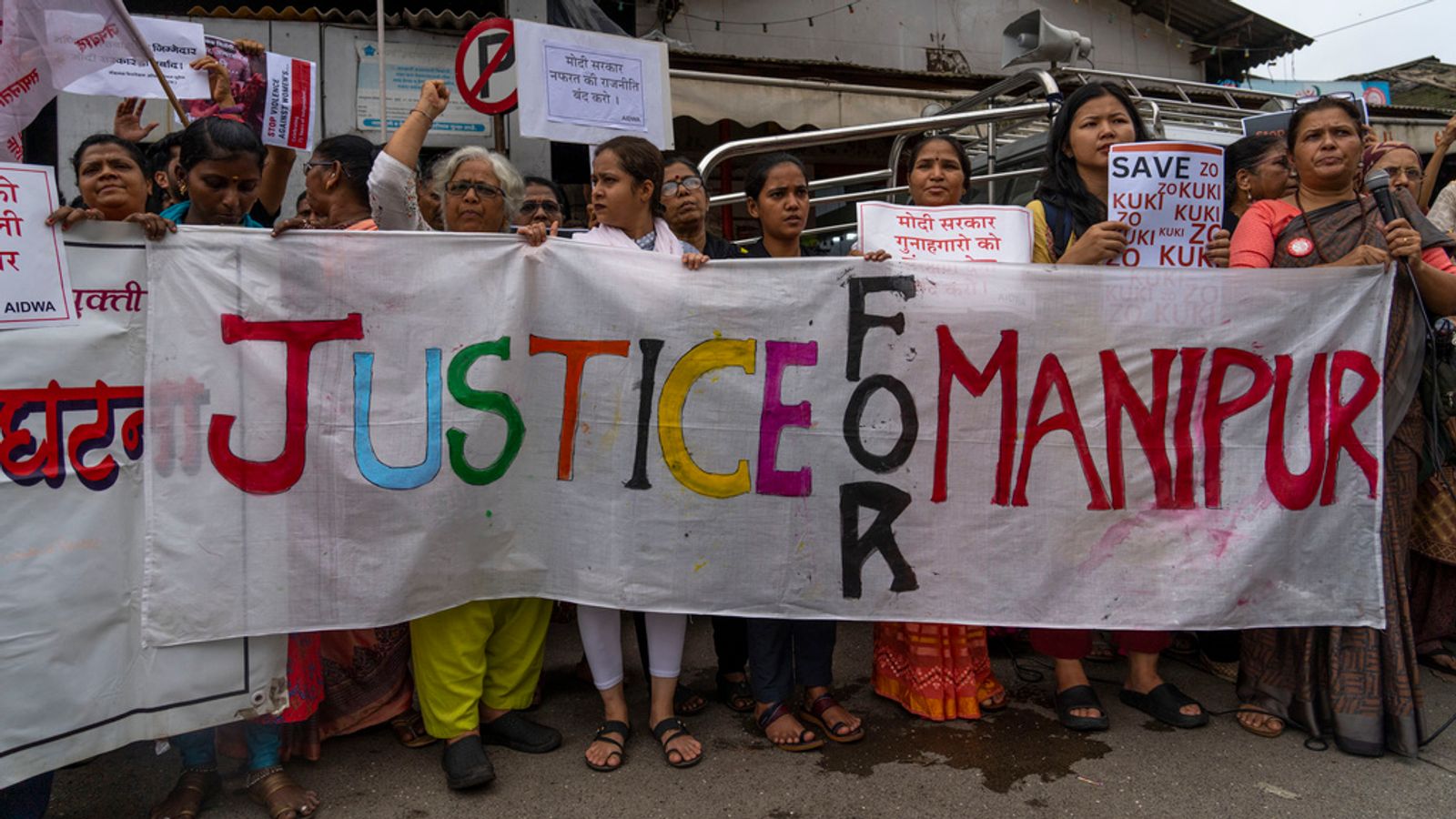
The Manipur government has responded to some of these pressures by accelerating resettlement efforts. Officials report that more than 16,500 displaced people, including around 3,700 families, have already been resettled—with a target to rehabilitate up to 40,000 individuals by March 2026. This initiative reflects attempts to move beyond temporary camps toward restoring livelihoods, education, and community stability in the state.
However, the “Save Manipur” rally highlighted that many residents believe these measures are insufficient without a stronger political commitment and a comprehensive, time‑bound rehabilitation policy. Resolutions adopted at the rally called for the abrogation of long‑standing Suspension of Operations agreements with armed groups, a clearer resettlement framework, and decisive action against alleged cross‑border militant activities fueling insecurity.
The size and diversity of the rally also point to a rare moment of unity among communities in a state long divided by ethnic tensions. Participants included Meitei Muslims, tribal groups, and members of multiple cultural communities, reflecting common stakes in peace, security, and the future of Manipur as a unified state.
The ongoing protests—and the state’s responses—illustrate a complex interplay between grassroots demands and political decision‑making in Manipur. While government committees work toward organised resettlement, mobilisation on the ground continues to pressure authorities for more holistic and sustained solutions. Whether this will translate into lasting peace and dignified return for displaced families remains a central question shaping the political discourse in India’s northeast.
—Sakya Mahar, B1Daily



 B1Daily
Leave a comment