—Barrington Williams, Michael Lyles, B1Daily
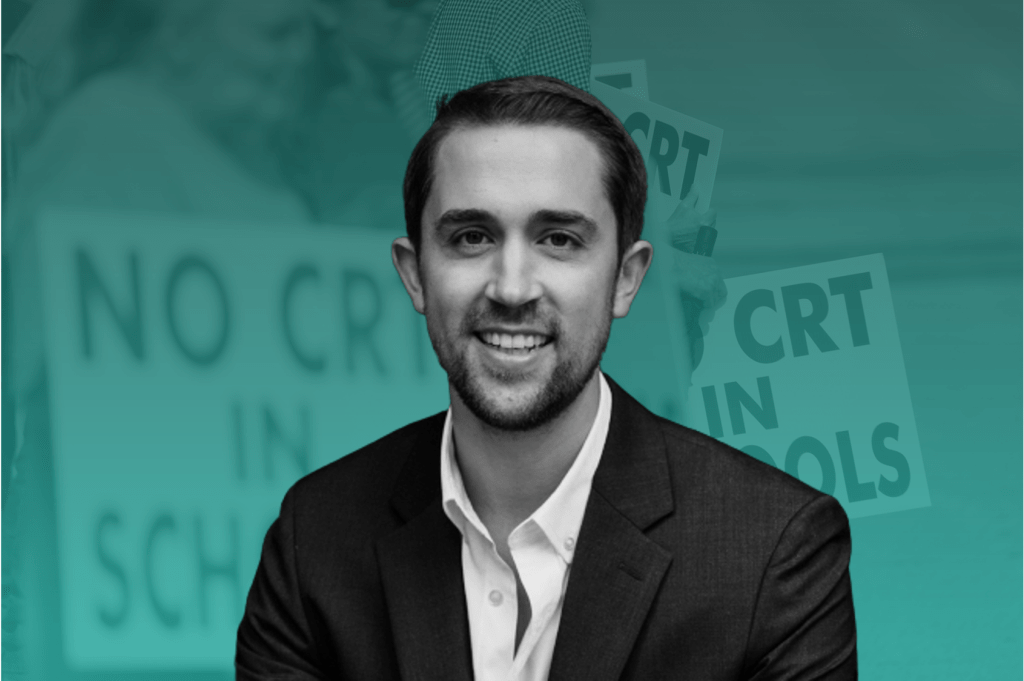
Chris Rufo didn’t stumble into prominence. He was carefully manufactured. For a brief, feverish stretch in American politics, Rufo became the darling of conservative donors, media outlets, and right-wing think tanks — all eager to fund a moral panic they could weaponize for political gain. With millions in backing, Rufo turned Critical Race Theory — a complex academic framework hardly taught in K–12 classrooms — into a national bogeyman, feeding outrage with surgical precision.
Rufo’s rise was less about ideas than optics. He framed CRT as a hidden, insidious threat to American children, schools, and values, presenting himself as the indispensable expert capable of exposing a supposed conspiracy. Parents’ fears were stoked, amplified, and monetized, while wealthy conservative donors poured cash into his campaigns, knowing a frightened electorate is far more valuable than the truth. He did not build a movement organically; he bought one, creating the illusion of a groundswell of popular support while quietly benefitting from a network of billionaire patrons.
Funding Data for Chris Rufo and Anti-CRT Campaigns
| Funder / Network | Recipient / Organization | Approximate Funding |
|---|---|---|
| Schwab Charitable Fund | American Studio | $400,000 |
| Fidelity Charitable Gift Fund | American Studio / Manhattan Institute | $122,000 / $1,900,000 |
| Vanguard Charitable Endowment Program | American Studio / Manhattan Institute | $18,500 / $1,000,000 |
| DonorsTrust | American Studio / Think Tanks | $370,000 |
| Lynde and Harry Bradley Foundation | Manhattan Institute / Policy Outreach | Millions |
| Edelman Family Foundation | American Studio | Six-figure range |
| Thomas W. Smith Foundation | American Studio / Anti-CRT Campaigns | Over $12,700,000 total |
| National Christian Charitable Foundation | American Studio / Affiliated Groups | Six-figure range |
This funding wasn’t merely supportive; it was foundational. Donor-advised funds and private foundations provided the cash necessary to manufacture a crisis and maintain it in the public imagination. The money amplified his media presence, secured institutional affiliations, and gave him credibility among conservative policymakers. Meanwhile, the Black community, educators, and students bore the consequences: harassment of teachers, disruption of classrooms, and a climate of racial tension stoked by fearmongering. Rufo’s work is a textbook case of stochastic terrorism, where elite-driven panic mobilizes others to act violently or aggressively against targets while the architect stays shielded.
As the CRT craze waned, the fragility of Rufo’s empire became clear. His influence was built on cash, not grassroots concern, and without constant media amplification, his platform has shrunk considerably. The donors who raised him up remain largely hidden, but the consequences of their investment — a national panic, real-world harassment, and attacks on Black educators and communities — are painfully visible.
The funding that fueled his campaigns makes clear that the anti-CRT movement was never spontaneous. It was the product of deliberate, well-financed efforts to weaponize outrage, exploit fear, and reshape education and culture in the interests of elite conservative networks.
But the cost of Rufo’s manufactured frenzy has been real — and devastating. His relentless fearmongering and his public naming of schools, teachers, and administrators have fueled harassment, threats, and harassment campaigns, disproportionately targeting educators of color. Experts have rightly called his work a form of “stochastic terrorism”: sowing seeds of anger and fear in the population, then stepping back while real-world attacks occur. In communities already struggling under systemic inequities, Rufo’s interventions have disrupted classrooms, demonized Black history, and stoked racial tension, all while masquerading as a fight for “neutrality” or “meritocracy.”
Now, with the CRT craze fading and media attention shifting elsewhere, the truth is undeniable: Rufo’s influence was never organic, and it was never benevolent. He profited from fear, incited harassment, and left a trail of harm in the Black community and beyond. Lawsuits, discredited claims, and a slowly awakening public have revealed that his crusade was less about education and more about fundraising, status, and creating chaos that serves conservative political interests.
Chris Rufo was not a populist hero or a concerned parent. He was a funded provocateur, a lightning rod of fear elevated by cash and ambition, who weaponized outrage for profit. The communities he targeted, the educators he endangered, and the Black students whose histories were attacked remain the collateral damage of a campaign built not on policy, but on panic, and the harsh truth is that Rufo’s manufactured empire of fear has left real scars that will linger long after the headlines have moved on.
—Barrington Williams, Michael Lyles, B1Daily


 B1Daily
Leave a comment