—Barrington Williams, B1Daily
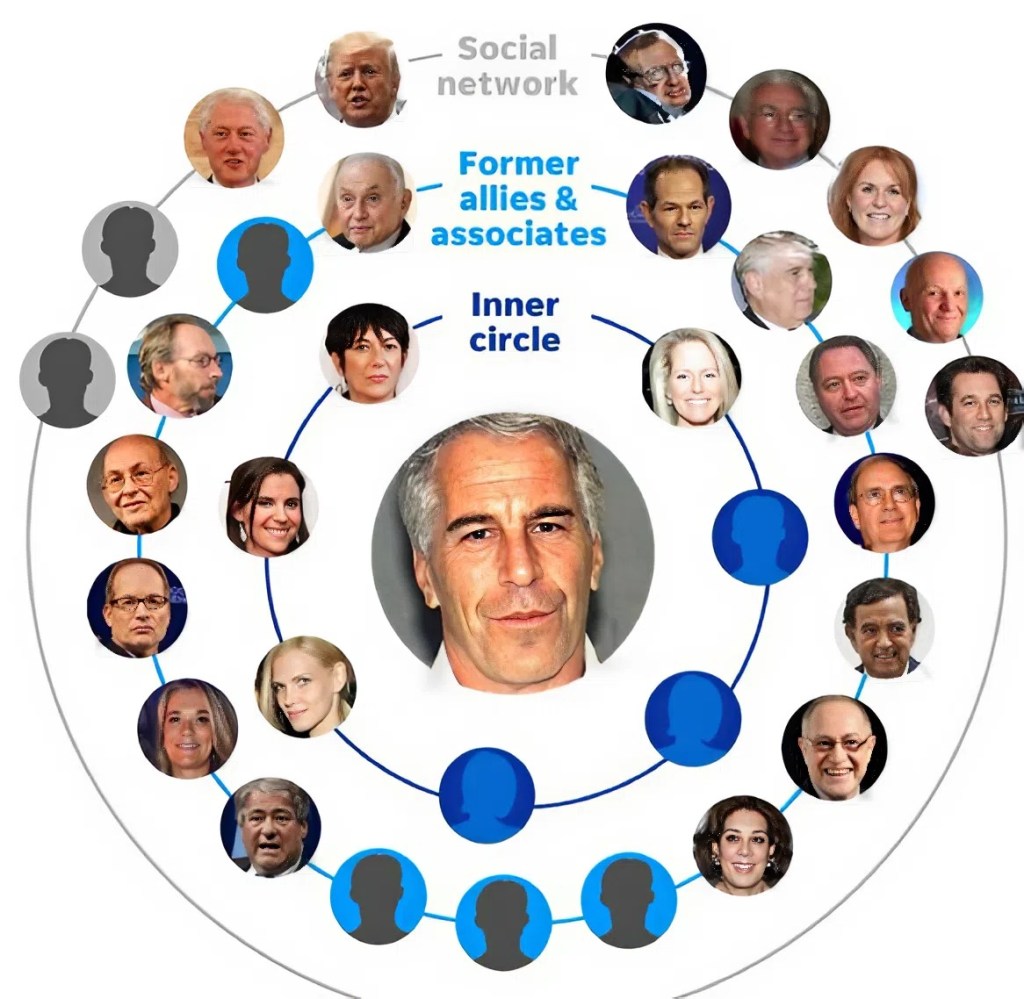
The Jeffrey Epstein files do more than catalogue crimes; they expose a pathology. Page after page, testimony after testimony, a pattern emerges that is not merely about one man’s depravity, but about a broader culture of entitlement, protection, and silence that allowed abuse to flourish in plain sight. What the records reveal is less an anomaly than a system working exactly as designed.
Epstein did not operate on the margins of society. He moved freely, a privilege most white Americans are afforded. His victims were young, poor, often desperate. His associates were wealthy, powerful, and overwhelmingly white. This contrast is not incidental; it is foundational to how his abuse functioned.
The files repeatedly show how proximity to whiteness insulated Epstein and those around him from scrutiny. Law enforcement hesitated. Prosecutors deferred. Journalists were warned off. Institutions closed ranks. In communities where whiteness and affluence are conflated with respectability, harm is often reclassified as misunderstanding, excess, or unfortunate behaviour rather than violence.
Sexual abuse in this context is not driven solely by desire, but by domination. Epstein’s operation relied on a belief that some bodies exist to be consumed while others exist to be protected. The girls were treated as disposable. The men were treated as valuable. The files show how frequently victims were disbelieved, discredited, or pressured into silence while their abuser was granted second chances and legal leniency.

This dynamic reflects a broader pathology within white culture: the idea that power entitles one not only to resources, but to harm others. Rules become flexible. Laws become negotiable. Morality becomes a relative. Abuse, when acknowledged at all, is reframed as personal failing rather than structural violence.
Perhaps most damning is how many white people “knew something” yet claimed to know nothing about Epstein and his cohorts when investigations came.
Abuse, when acknowledged at all, is reframed as personal failing rather than structural violence.
The files document drivers, staff, recruiters, lawyers, and social acquaintances who witnessed troubling behaviour but deferred responsibility upward. This diffusion of accountability is not accidental—it is how elite networks preserve themselves. Silence becomes a form of loyalty. Ignorance becomes plausible deniability.
The pathology is also predicated on wealth. Epstein’s victims were disproportionately young women from poor backgrounds, while his protection came from institutions historically structured to serve white power. When abuse occurs in systems that institute unfair treatments to certain groups while relegating other crimes to the background, it is not simply ignored—it is absorbed, normalised, and quietly managed.
The Epstein files force an uncomfortable reckoning for white America: this was not a failure of oversight, but a success of hierarchy. The system they worked to protect and values the most turned on them. That it abused their own daughters was not a accident, but a moral statement of its value of consumption by any means.
Until white elite culture confronts its reflexive instinct to shield power, dismiss victims, and confuse status with virtue, Epstein will not be remembered as an exception. He will be remembered as a case study—one that revealed how abuse survives not because it is hidden, but because it is tolerated by those who benefit from looking away.
—Barrington Williams, B1Daily




 B1Daily
Leave a comment