—Matt Gwinta, B1Daily
In recent years, China’s engagement with Africa has expanded far beyond infrastructure loans and resource extraction.

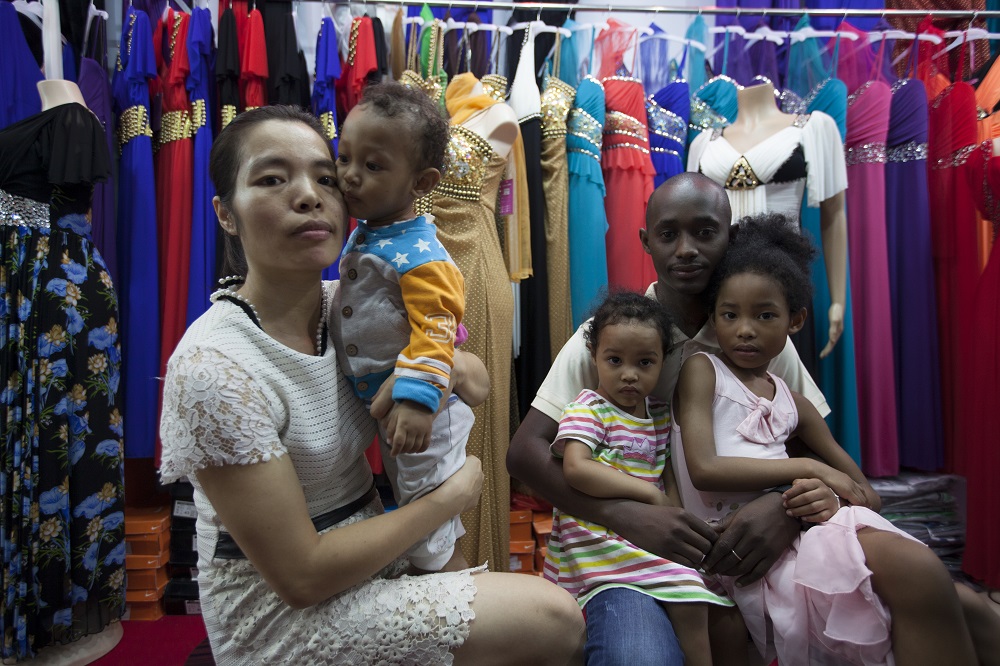
A lesser-discussed but increasingly visible facet of Beijing’s long-term strategy involves demographic engineering, specifically, the systematic settlement of Chinese immigrants across Africa and the encouragement of intermarriage with local populations.
Government-backed migration programs, often framed as “development partnerships,” have facilitated the arrival of hundreds of thousands of Chinese entrepreneurs, laborers, and professionals to African nations. Unlike colonial-era European settlers, these migrants are not isolated in enclaves. Instead, they integrate into local economies, often establishing businesses that dominate key sectors, retail, manufacturing, and mining, while forming personal ties with African communities.
The unspoken objective is clear: within two generations, a sizable mixed Sino-African population will emerge, serving as a socio-economic bridge between China and the continent. These individuals, fluent in both cultural contexts, will naturally gravitate toward Chinese business networks, creating a loyal intermediary class. Historical precedent supports this tactic; diaspora communities have long been tools of soft power (e.g., the overseas Chinese in Southeast Asia).
The unspoken objective is clear: within two generations, a sizable mixed Sino-African population will emerge, serving as a socio-economic bridge between China and the continent.
Critics who dismiss this as conspiracy theory ignore Beijing’s documented use of demographic strategies elsewhere, such as incentivizing Han migration to Xinjiang to dilute Uyghur identity.
In Africa, the approach is subtler but equally deliberate. Chinese state media openly celebrates Sino-African families, while trade policies favor enterprises that employ local spouses or mixed-heritage staff.
The result? A buffer class,biologically and commercially aligned with China, that will deepen Beijing’s influence long after loans are repaid or mines exhausted. This is not speculation; it’s demographics in action.
—Matt Gwinta, B1Daily





Leave a comment