—Kerry Hill, B1Daily
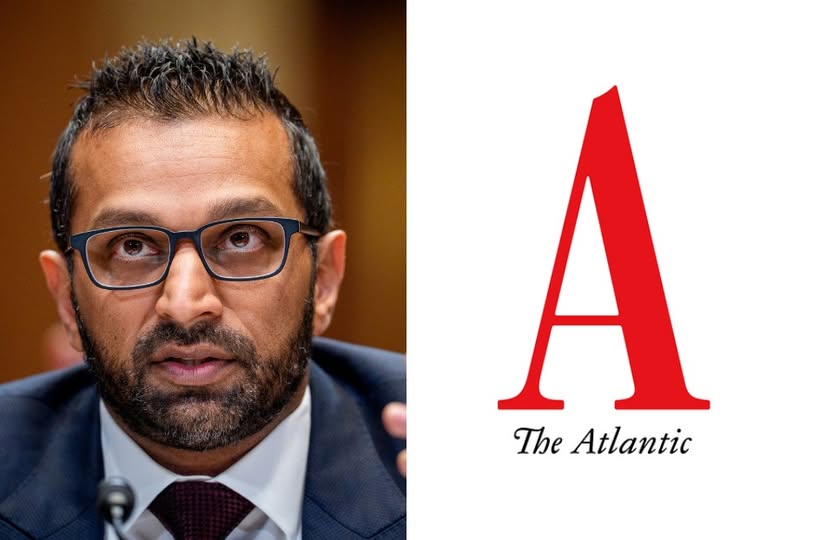
In a legal clash that feels less like a courtroom dispute and more like a political thunderstorm rolling over Washington, Kash Patel has filed a $250 million defamation lawsuit against The Atlantic, accusing the publication of publishing what he calls a “malicious hit piece” centered on claims of excessive drinking and erratic behavior.
The controversy ignited after The Atlantic published an article alleging that Patel’s conduct, including supposed intoxication and unexplained absences, had raised alarms among officials. The report leaned heavily on anonymous sources, painting a picture of instability that, if true, could have serious implications for national security leadership.
Patel, however, is swinging back hard.
His lawsuit argues that the article is not just inaccurate but knowingly false, accusing the magazine and its reporter of acting with “actual malice,” a high legal bar that requires proving the outlet either knew the claims were false or recklessly disregarded the truth. According to court filings, Patel’s legal team insists there is no credible evidence supporting the allegations and claims the story was designed to damage his reputation and push him out of office.
The Atlantic isn’t retreating.
Editors and reporters behind the piece have stood firmly by their reporting, citing multiple sources and defending the article as thoroughly vetted journalism. The publication has signaled it intends to fight the lawsuit aggressively, setting the stage for a prolonged legal battle that could test both the strength of its sourcing and the limits of defamation law in the political arena.
At the heart of this case is a familiar but explosive tension: the collision between media scrutiny and political power.
For Patel, the lawsuit is about more than reputation. It’s a direct challenge to what he frames as a pattern of politically motivated reporting aimed at undermining figures aligned with the current administration. His allies have echoed that sentiment, describing the article as part of a broader media campaign rather than an isolated investigative piece.
For the press, the stakes are just as high.
Defamation law in the United States gives significant protection to journalists, especially when reporting on public officials. To win, Patel must prove not just that the claims are false, but that they were published with reckless disregard for the truth. That standard, shaped by decades of Supreme Court precedent, is intentionally difficult to meet, designed to protect robust reporting even when it is controversial or uncomfortable.
Still, lawsuits like this carry weight regardless of outcome.
Even if ultimately unsuccessful, they can force media organizations to reveal sourcing practices, defend editorial decisions under oath, and absorb significant legal costs. In some cases, they’ve also led to settlements or corrections, adding another layer of unpredictability to the process.
This case also lands in a broader climate where clashes between political figures and media institutions are becoming increasingly common. Lawsuits, once rare in this space, are now emerging as a preferred weapon in the ongoing war over narrative, credibility, and control of public perception.
For now, the courtroom becomes the next battlefield.
Was this a reckless publication built on shaky sourcing, or a legitimate investigative report exposing uncomfortable truths? That question will likely take months, if not years, to untangle.
What’s certain is this: the fight between Kash Patel and The Atlantic isn’t just about one article. It’s about who gets to define reality in an era where information itself is contested terrain.
—Kerry Hill, B1Daily






Leave a comment