—Terrence Dorner, Sylvester Loving, B1Daily
Europe’s security architecture may be on the verge of its biggest nuclear transformation since the end of the Cold War.
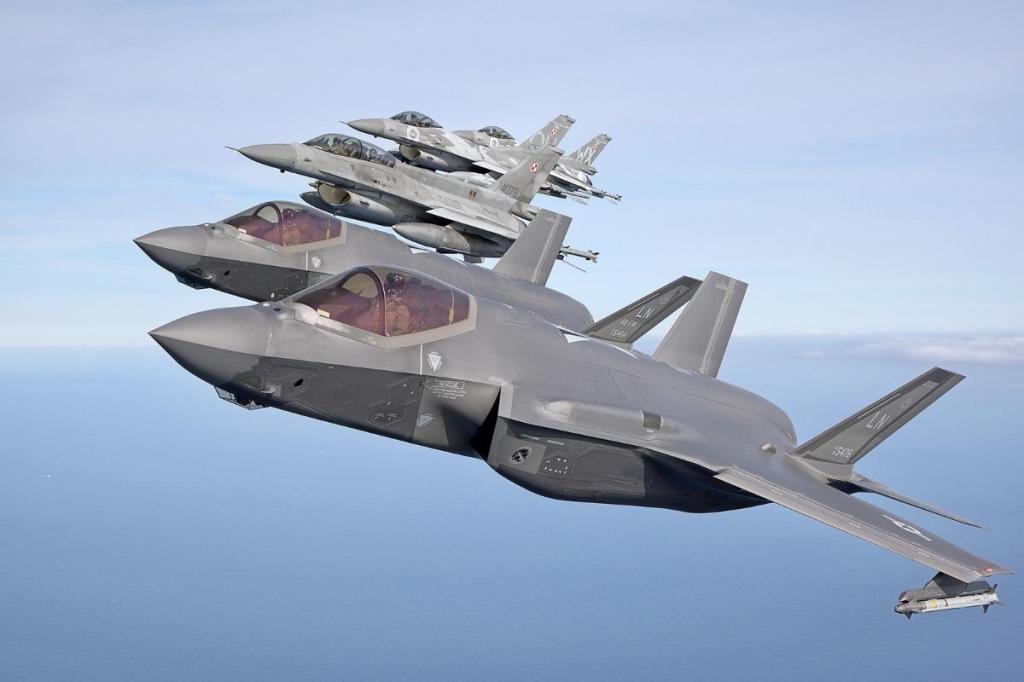
Reports emerging from NATO and U.S. defense circles indicate that Washington is considering expanding its nuclear-sharing arrangements beyond the alliance’s traditional host nations and potentially into Eastern Europe. Countries on NATO’s front line, particularly Poland and the Baltic states, are reportedly among those interested in hosting aircraft capable of delivering U.S. nuclear weapons as part of the alliance’s deterrence posture.
No final agreement appears imminent. Yet the mere fact that such discussions are taking place reveals how dramatically Europe’s strategic landscape has changed since Russia’s invasion of Ukraine.
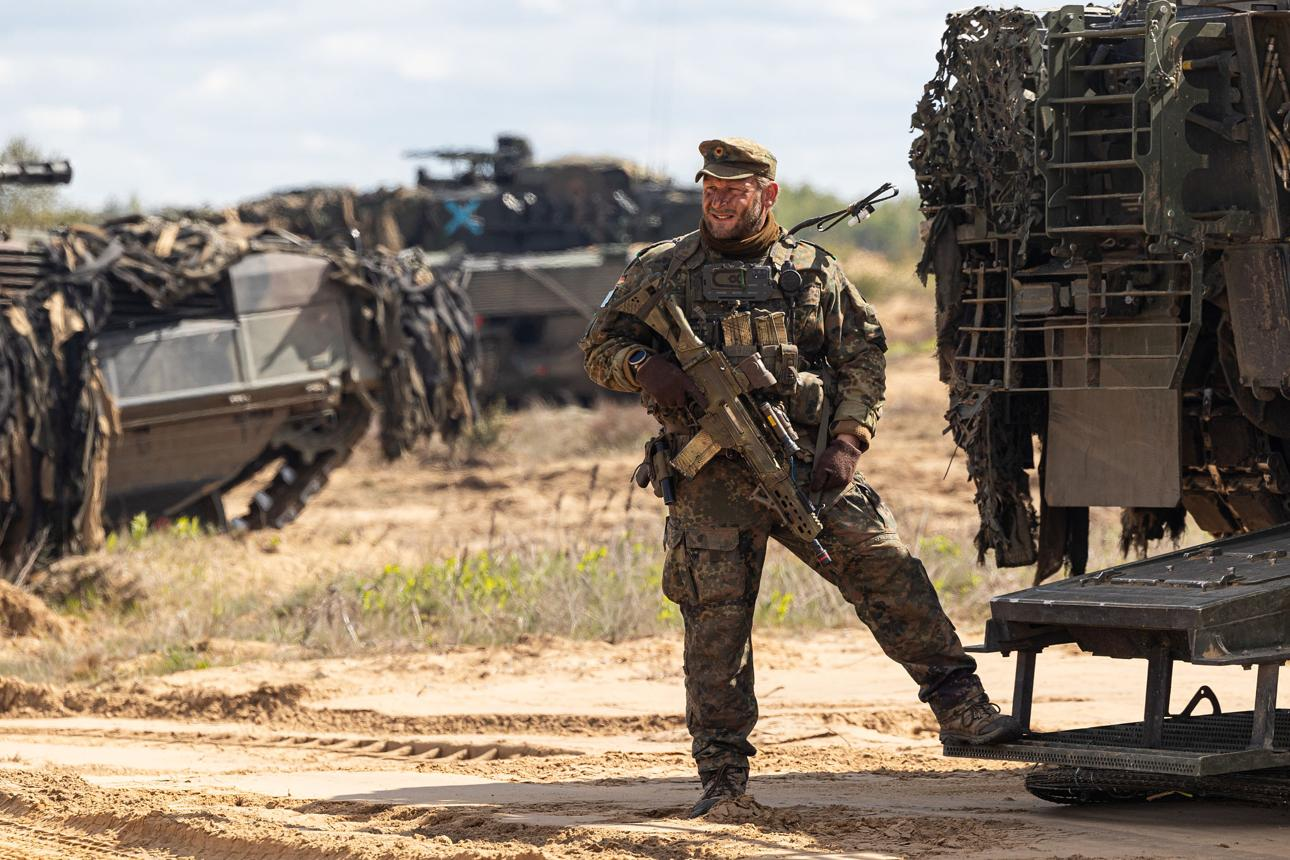
For decades, NATO’s nuclear-sharing framework remained largely unchanged. Belgium, Germany, Italy, the Netherlands, Turkey, and the United Kingdom formed the backbone of the alliance’s forward-deployed nuclear deterrent. Under the arrangement, American nuclear weapons remain under U.S. control while allied air forces train and prepare to support nuclear missions if authorized during wartime.
Now the alliance is considering whether the eastern flank should play a larger role.
The New Reality on NATO’s Eastern Border
The strategic logic is difficult to ignore.
Poland, Lithuania, Latvia, and Estonia sit closest to some of NATO’s most vulnerable frontiers. They border either Russia directly, the heavily militarized Russian enclave of Kaliningrad, or Moscow’s ally Belarus.
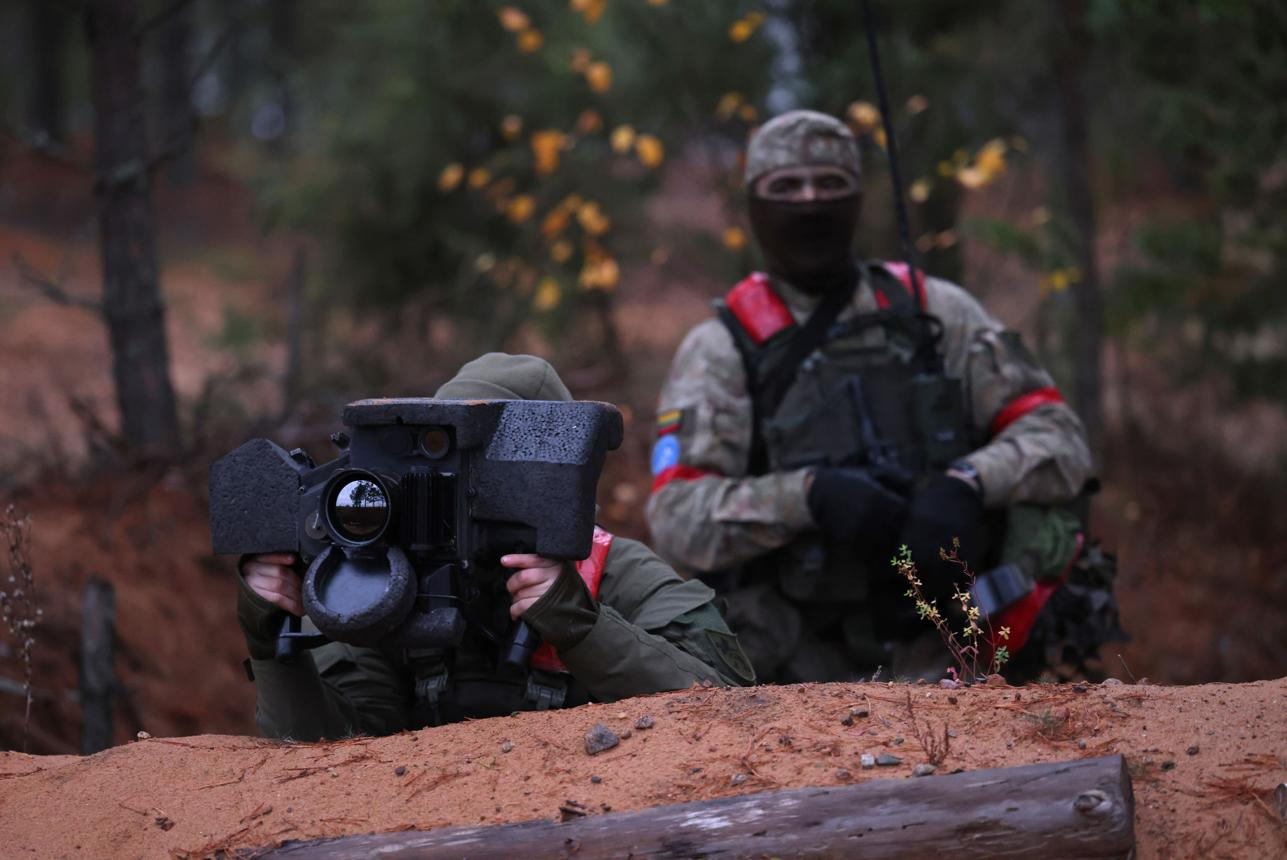
For years these nations have warned that Russia’s military modernization and aggressive regional posture require stronger deterrence measures. Those concerns intensified after the war in Ukraine demonstrated both Moscow’s willingness to use force and the importance of credible military preparedness.
The possibility of expanding nuclear-sharing arrangements is emerging at a moment when many European leaders are questioning how future U.S. force posture changes might affect continental security.
While American officials continue to emphasize their commitment to NATO’s nuclear umbrella, Washington has also pushed European allies to assume greater responsibility for conventional defense. Expanding nuclear-sharing participation could serve as a reassurance mechanism even as conventional force structures evolve.
Why Poland Keeps Appearing in the Conversation
Among potential candidates, Poland stands out.
Warsaw has spent years transforming itself into one of NATO’s most heavily armed and defense-focused members. Defense spending has surged, major modernization programs are underway, and Polish leaders have repeatedly advocated for stronger NATO military deployments on the alliance’s eastern flank.
Polish officials have openly discussed the possibility of participating in expanded nuclear-sharing arrangements in the past, arguing that the country’s geographic position makes it a logical location for enhanced deterrence capabilities.
From a military perspective, placing nuclear-capable infrastructure closer to NATO’s eastern frontier could shorten response times and strengthen the alliance’s credibility in the eyes of potential adversaries.
From a political perspective, however, such a move would almost certainly trigger a fierce reaction from Moscow.
The Baltic Question
The Baltic states present an even more sensitive scenario.
Lithuania, Latvia, and Estonia occupy some of NATO’s most strategically exposed territory. Their proximity to Russian military assets means that any discussion involving nuclear-related infrastructure immediately carries enormous geopolitical implications.
Recent reports indicate Lithuania has acknowledged participating in discussions regarding an expanded role in NATO’s nuclear deterrence framework. Officials have characterized the talks as exploratory rather than operational, but their existence highlights growing concern about long-term regional security.
For Baltic leaders, the issue is straightforward: deterrence is strongest when there is no ambiguity about NATO’s willingness to defend its members.
For critics, moving nuclear-related capabilities closer to Russia risks escalating tensions and increasing the likelihood of confrontation.
The Russian Response Would Be Immediate
Any effort to expand nuclear-sharing arrangements eastward would likely be viewed by Moscow as a major escalation.
Russian officials have consistently opposed NATO military expansion and have reacted sharply to previous deployments of missile defenses, advanced aircraft, and long-range strike systems near Russian territory.
The Kremlin would almost certainly portray any future nuclear deployment in Poland or the Baltics as evidence of NATO aggression, regardless of the alliance’s stated defensive intentions.
Such a response could lead Russia to reinforce military assets in Kaliningrad, increase nuclear signaling, or further strengthen its own regional force posture. The result could be a renewed cycle of military escalation across Europe’s eastern frontier.
A Signal of a Changing NATO
Perhaps the most important takeaway is not whether nuclear weapons ultimately arrive in Poland or the Baltic states.
It is that NATO is actively reconsidering assumptions that remained largely untouched for decades.
The alliance that emerged after the Cold War was built around the expectation of a relatively stable European security environment. That world no longer exists.
Russia’s war in Ukraine, rising geopolitical competition, uncertainty surrounding future force deployments, and growing defense investments across Europe are forcing NATO planners to rethink how deterrence should function in the twenty-first century.
Whether these discussions lead to actual deployments or remain theoretical, they reveal a fundamental shift in strategic thinking.
The nuclear center of gravity within NATO may no longer be confined to Western Europe. Increasingly, the alliance’s eastern flank is becoming the focal point of its security calculations.
And that reality alone is likely to shape European defense policy for years to come.
—Terrence Dorner, Sylvester Loving, B1Daily






Leave a comment