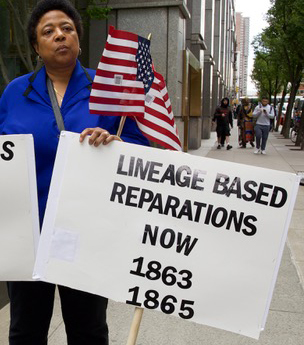
—Barrington Williams, B1Daily
The debate over reparations in the United States often conflates two distinct historical injustices: slavery and general racial discrimination. While systemic racism has harmed all Black Americans, reparations, specifically, financial restitution for chattel slavery, must be directed toward the descendants of Freedmen: those Black Americans whose ancestors were enslaved in the U.S.
The Legal and Historical Basis
Reparations are not about race alone, they are about lineage. The Freedmen (Black Americans descended from those emancipated after the Civil War) have a unique claim because their ancestors were legally classified as property, denied wages, and subjected to generational theft. This isn’t merely about skin color; it’s about tracing harm to specific victims.
Meanwhile, voluntary Black immigrants (like those from the Caribbean or Africa post-1965) and their descendants did not experience chattel slavery in America. While they face racism, their ancestors were not enslaved under U.S. law, meaning reparations would be misdirected if given to them.
Precedents Matter
Past reparations cases, like those for Japanese internment or Holocaust survivors, were lineage-based, not race-based. Similarly, Freedmen descendants are the direct heirs of an unpaid debt. Expanding eligibility to all Black Americans dilutes justice and ignores historical specificity.
A Necessary Distinction
This isn’t about exclusion, it’s about accuracy. Reparations must right a quantifiable wrong: centuries of stolen labor, broken families, and systemic exclusion targeting Freedmen. Broadening eligibility undermines the case by introducing legal ambiguity and political opposition.
Justice requires precision. Reparations belong to the Freedman lineage, no more, no less.
—Barrington Williams, B1Daily





Leave a comment