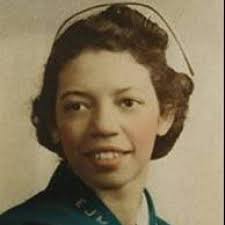
—Kerry Hill, B1Daily
History has a habit of dimming its brightest lights, especially when those lights didn’t fit the mold of who society thought should be holding the torch. Dr. Myra Adele Logan is one of those lights, blazing through barriers in a field that wasn’t just male-dominated, but structurally locked against Black women.
Born in 1908, Logan didn’t just enter medicine, she forced her way into its most guarded rooms. She studied at Columbia University College of Physicians and Surgeons, becoming its first Black woman graduate, and went on to build her career at Harlem Hospital, one of the few institutions where Black physicians could practice at the time. But even within those walls, the expectations placed on her were smaller than the ambitions she carried.
She ignored those limits.
Logan’s name is etched into medical history for a reason that still carries weight today. She became the first woman to perform open-heart surgery, a feat that, at the time, felt closer to science fiction than routine medicine. This wasn’t modern, high-tech surgery with decades of refinement behind it. This was early-stage cardiac experimentation, where every procedure carried enormous risk, and success required both precision and nerve. Logan had both.
Her work didn’t stop at breaking surgical records. She was deeply involved in improving techniques for diagnosing and treating heart disease, contributing to early advancements in electrocardiography and cardiovascular care. At a time when heart disease was becoming a leading cause of death, her work helped sharpen the tools doctors used to understand and combat it. She also played a role in researching and improving cancer detection methods, expanding her impact beyond a single specialty.
But to reduce Logan to a list of “firsts” would be missing the larger story.
She was part of a lineage, the American Freedmen, descendants of those who survived enslavement and rebuilt lives in a country that rarely returned the favor. For that community, Logan wasn’t just a surgeon. She was proof of trajectory. Proof that even in a system designed to stall progress, movement was still possible. Her success carried symbolic weight, not as a token, but as a counterargument to the limitations society tried to impose.
In the early and mid-20th century, Black Americans were systematically denied access to quality healthcare, both as patients and professionals. Logan stood at the intersection of both fights. By becoming a highly skilled surgeon, she didn’t just elevate herself. She expanded what was visible, and therefore imaginable, for others coming behind her. Representation in medicine isn’t abstract. It shapes who gets treated, how they’re treated, and who feels entitled to pursue the profession in the first place.
She also used her platform beyond the operating room, advocating for public health awareness and access to care in underserved communities. This wasn’t celebrity activism. It was grounded, practical work aimed at improving outcomes for people who were often left out of the healthcare system entirely.
There’s a tendency to treat pioneers like Logan as historical artifacts, figures to be admired from a distance and then quietly set aside. That does her a disservice. Her story is not just about what she achieved, but about the structures she disrupted and the doors she forced open.
Because the truth is, those doors didn’t swing open easily. They had to be pushed.
And when Dr. Myra Adele Logan pushed them, she didn’t just walk through. She made sure they couldn’t close the same way again.
—Kerry Hill, B1Daily





Leave a comment