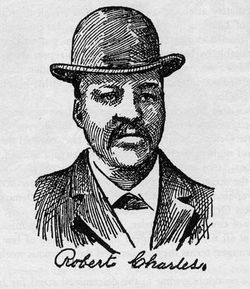
—Kerry Hill, B1Daily
The story of Robert Charles doesn’t read like a quiet footnote in history. It reads like a spark thrown into a powder keg that was already hissing.
New Orleans in 1900 was not a calm city interrupted by chaos. It was a city sitting on layers of tension, where Black residents lived under constant surveillance, harassment, and the looming threat of violence. Into that reality stepped Charles, a self-educated man who openly believed in Black self-defense at a time when that idea alone could get you killed.
The moment that lit the fuse was almost routine in its injustice. White police officers approached Charles and another Black man, labeling them “suspicious” for simply existing in the wrong space. The encounter escalated, blows were exchanged, and gunfire followed. Charles was wounded but escaped.
What happened next wasn’t just a manhunt. It was an eruption.
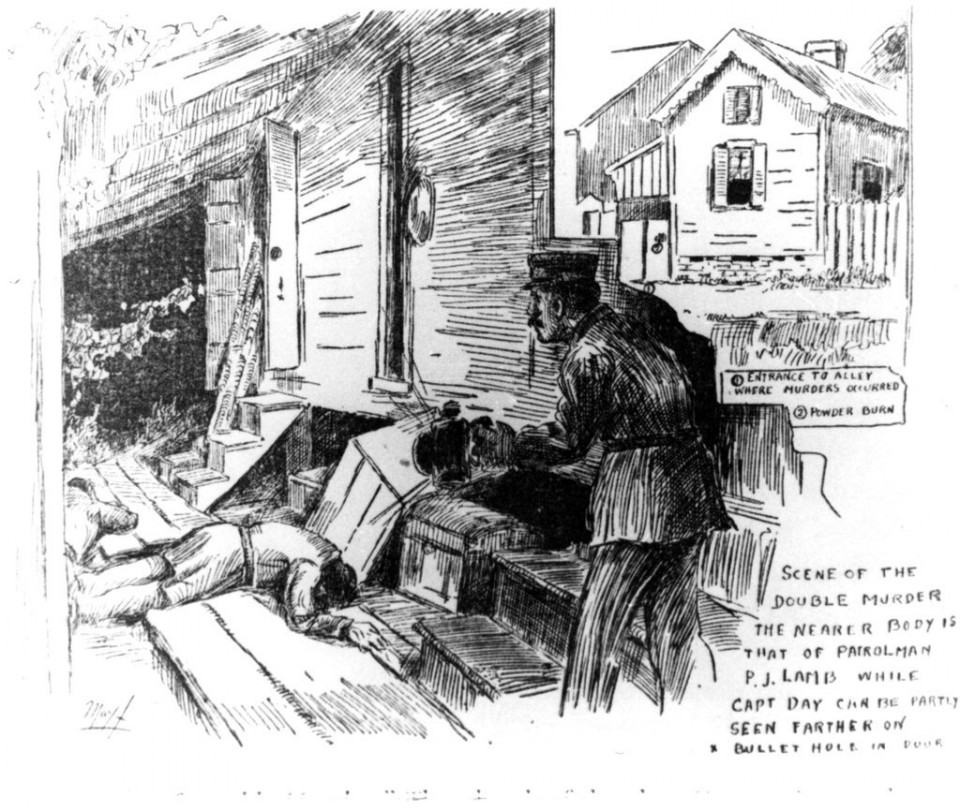
When officers later tracked Charles to his residence, he didn’t surrender. He fired back, killing two officers and disappearing into the city. That act flipped a switch. White New Orleans didn’t just look for one man, it turned on an entire population.
Mobs flooded the streets, not as law enforcement, but as roaming vengeance. Black citizens were dragged from streetcars, shot in the streets, homes burned, businesses destroyed. This wasn’t about justice. It was collective punishment, a city-wide backlash fueled by white supremacy and fear.
And in the middle of that storm, Charles became something larger than himself.
Hunted, cornered, and outnumbered, he barricaded himself and fought back against waves of police and armed civilians. For hours, he held them off, turning a single building into a defiant stand against overwhelming force. Eventually, sheer numbers won. The building was surrounded, set ablaze, and when Charles tried to escape, he was gunned down and his body riddled with bullets by the mob.
But even death didn’t end the violence. The mob kept going.
By the time it was over, at least 28 people were dead, most of them Black, and dozens more were injured. The riot didn’t just leave bodies behind. It tightened the grip of Jim Crow, justifying harsher controls and deeper repression in the years that followed.
So what is Robert Charles in the historical record?
To some, he was a violent figure whose actions ignited chaos. To others, especially within the Black community of that era, he was something else entirely, a man who refused to be beaten quietly, who chose resistance in a system designed to crush it. Even Ida B. Wells would later frame him as a symbol of defiance against unchecked racial terror.
The truth sits in a harder place.
Charles didn’t create the violence of 1900 New Orleans. That violence was already there, woven into policing, politics, and everyday life. What he did was expose it, violently and undeniably. His gunfire didn’t invent the storm. It revealed how quickly it could swallow a city.
And that’s why his story still burns.
Not because it’s comfortable. Not because it’s clean. But because it forces a confrontation with a reality many would rather smooth over: sometimes history doesn’t erupt out of nowhere. Sometimes it’s been boiling for years, waiting for someone, or something, to break the lid.
—Kerry Hill, B1Daily




Leave a comment