—Barrington Williams, B1Daily
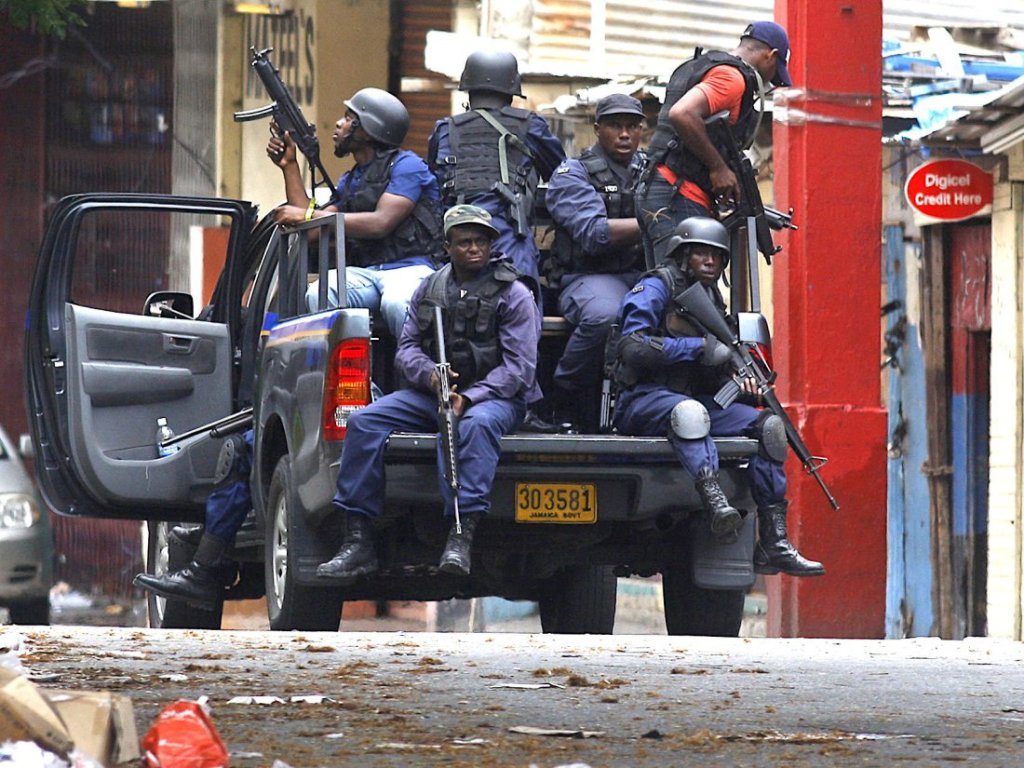
Postcards sell the Caribbean as a chain of calm horizons, but the data tells a louder, sharper story. In several countries, violent crime isn’t just rising, it’s sitting at levels that rank among the highest in the world.
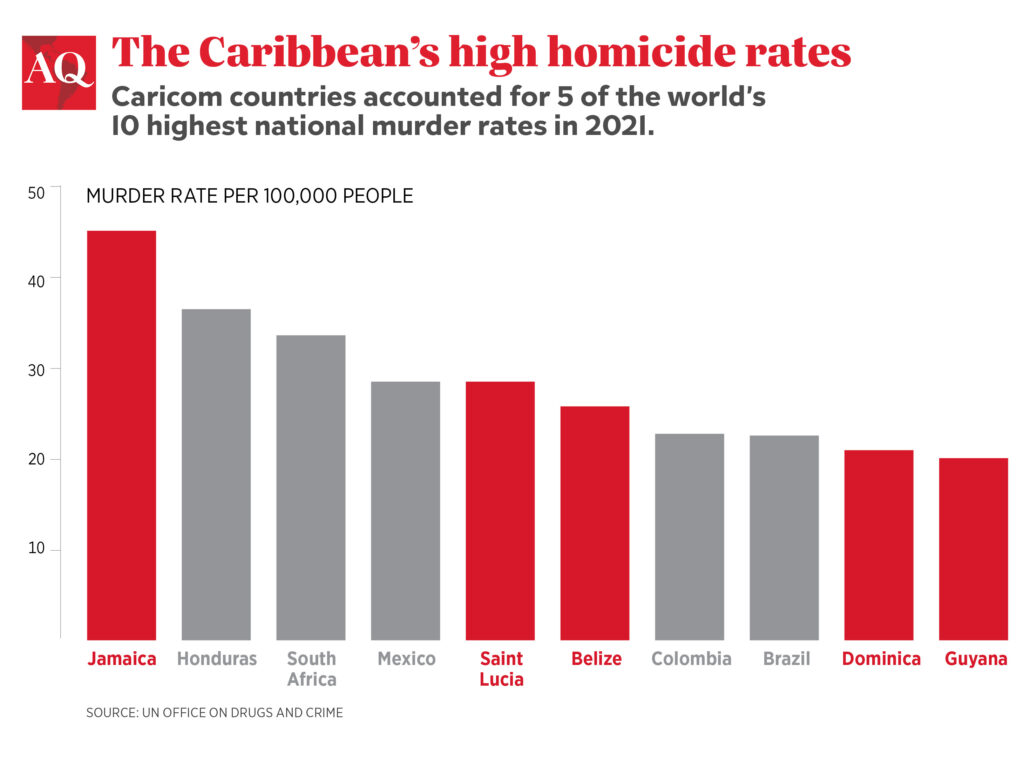
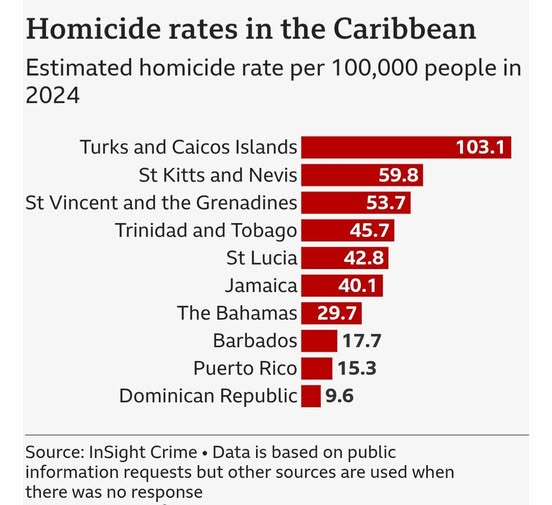
Start with Jamaica. The country has repeatedly recorded homicide rates above 40 per 100,000 people, and in peak years that number has climbed past 50 per 100,000, placing it among the most violent nations outside active war zones. Even in years where total killings dip slightly, the rate remains multiple times higher than the global average, which hovers around 6 per 100,000.
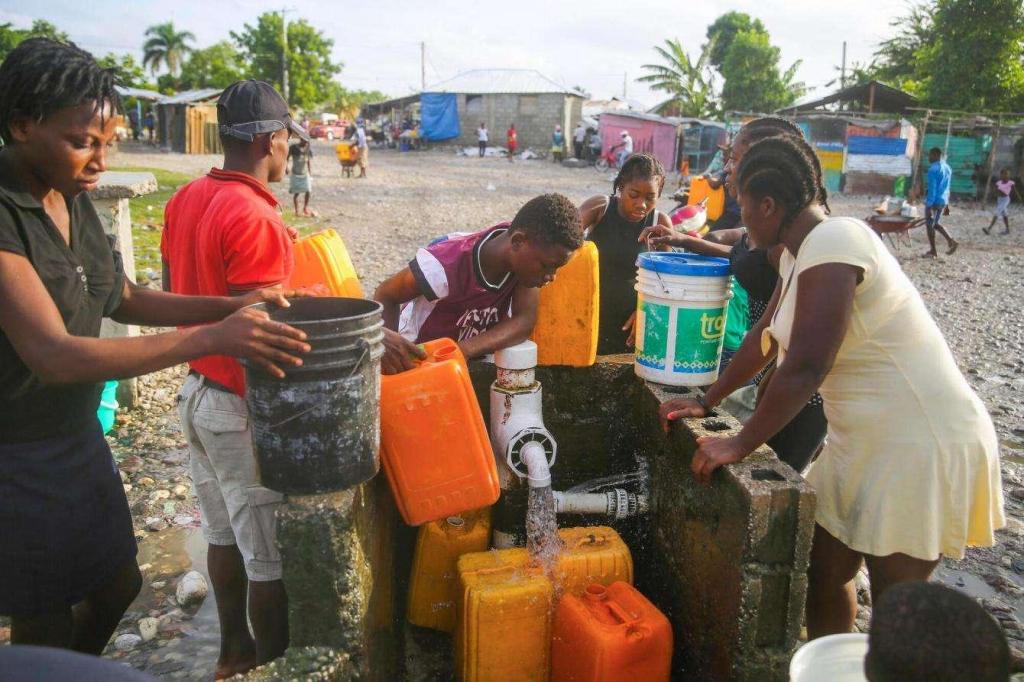
Then there’s Haiti, where the situation has tipped into something closer to systemic breakdown. In 2024 and 2025, the United Nations reported thousands of killings annually, with armed groups controlling an estimated 80% of Port-au-Prince. Kidnappings surged into the hundreds per year, turning abduction into a routine threat rather than a rare incident. In some neighborhoods, the state’s presence is effectively nonexistent.
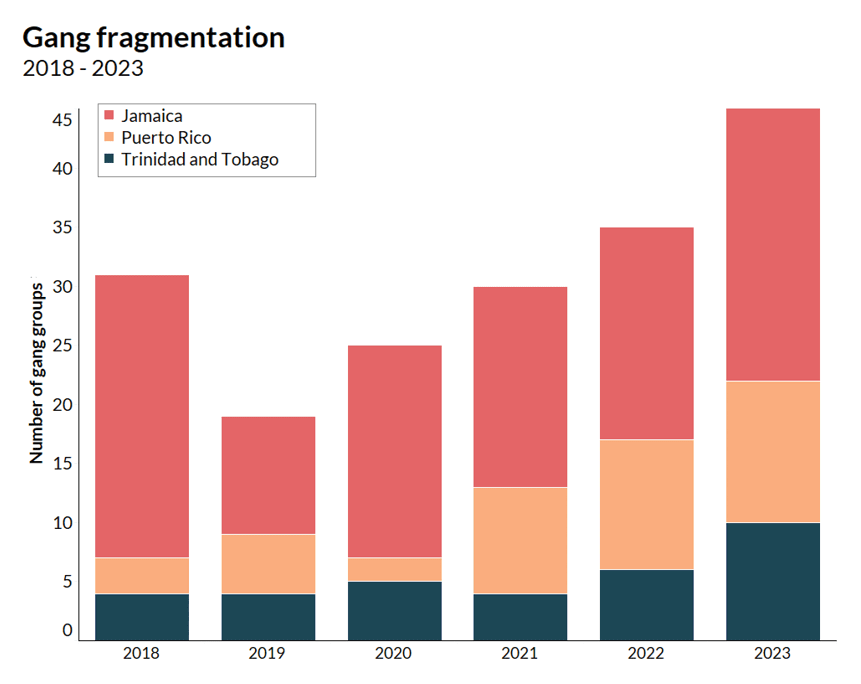
In Trinidad and Tobago, the numbers are smaller in absolute terms but alarming relative to population. The country recorded over 600 homicides in a single year, pushing its murder rate above 40 per 100,000. For a nation of just over 1.4 million people, that’s a heavy toll, driven largely by gang-related violence and organized crime networks.
Even places that once marketed themselves as insulated from this kind of instability are feeling pressure. Countries like The Bahamas and Barbados have reported spikes in violent incidents in recent years. The Bahamas, for example, has seen homicide rates exceed 30 per 100,000 during peak periods, a stark jump for a tourism-dependent country.
Zoom out, and the regional picture sharpens. The Caribbean as a whole consistently ranks as one of the most violent regions globally, with an average homicide rate estimated at 15–20 per 100,000, more than double the world average. In some hotspots, that figure triples or quadruples.
What’s driving it isn’t a mystery. Drug trafficking routes slice through the region, linking South American production zones to North American and European markets. That flow brings weapons, money, and competition. The Caribbean becomes both a corridor and a battleground. Add youth unemployment rates that can exceed 25% in certain areas, and you get a pipeline of recruits for gangs that offer income, identity, and protection.
Law enforcement capacity often struggles to match the scale of the problem. Police-to-population ratios can be stretched thin, and clearance rates for homicides in some countries remain low, meaning a significant percentage of murders go unsolved. That lack of resolution feeds a cycle of retaliation and impunity.
The economic stakes are just as high. Tourism accounts for up to 50% or more of GDP in several Caribbean nations. When crime headlines spike, bookings can dip, insurance costs rise, and entire local economies feel the shock. A single high-profile incident can ripple across an island’s financial ecosystem.
None of this means the entire Caribbean is unsafe. Crime is uneven, concentrated in specific neighborhoods and networks. Millions of visitors travel safely every year. But the statistical trend lines in key countries are moving in the wrong direction, and fast enough to force governments into emergency measures, curfews, and regional security partnerships.
The danger now isn’t just the numbers themselves. It’s normalization.
When homicide rates above 40 per 100,000 become something a country is “managing” rather than urgently reversing, the baseline has already shifted. And once that baseline moves, pulling it back down becomes a far steeper climb.
The Caribbean still has its beauty. That hasn’t changed.
But the numbers suggest something else is growing alongside it, and it’s not nearly as easy to ignore.
—Barrington Williams, B1Daily





Leave a comment