—Travis Luyindama, B1Daily
A battery used to be a silent brick of chemistry. Under the European Union’s new rules, it’s becoming a data-rich identity card that follows a product from mine to recycling plant, logging its life story along the way.

Welcome to the “battery passport,” a centerpiece of the EU Battery Regulation that aims to make the energy transition cleaner, more transparent, and easier to audit.
On paper, the idea is tidy. Every significant battery, especially those in electric vehicles and large storage systems, carries a digital record: origin of raw materials, carbon footprint, performance metrics, repair history, and end-of-life instructions.
Scan a code, see the lineage. Regulators get traceability, manufacturers get standardized reporting, and recyclers get a roadmap for safe handling. In a supply chain as tangled as modern energy storage, that kind of visibility has real appeal.
But tidy on paper can become messy in practice, particularly when the “passport” is really a constantly updated dataset tied to millions of devices.
The first question is ownership. Who controls this river of information once it starts flowing? The regulation sets requirements, but the ecosystem involves automakers, battery producers, software vendors, auditors, and public authorities.
That’s a lot of hands near the same vault. If the data is fragmented across platforms, accountability can blur. If it’s centralized, the prize for anyone trying to break in grows larger.
The second question is access. A passport that’s too locked down risks becoming useless; too open, and it becomes a map for bad actors. Detailed performance and location-adjacent data, if mishandled, could reveal patterns about fleets, facilities, or even individual users. Not every field is sensitive, but enough of them together can paint a picture that wasn’t intended to be public.
Then there’s the scale problem. The EU isn’t piloting this with a few thousand units; it’s building a framework that could apply to tens of millions of batteries over time. Scale changes the math. A system that is 99.9% secure still leaks at large volumes. And once a breach happens, it’s not just one record at risk, it’s potentially a cascade of linked datasets across companies and borders.
Cybersecurity professionals have been blunt about the challenge. Any high-value, standardized dataset becomes a target. The battery passport could attract everything from opportunistic hackers to organized groups looking for industrial intelligence. That doesn’t make the system doomed, but it does mean security can’t be an afterthought layered on top. It has to be baked into the architecture from day one, with encryption, strict access controls, segmentation, and independent audits.
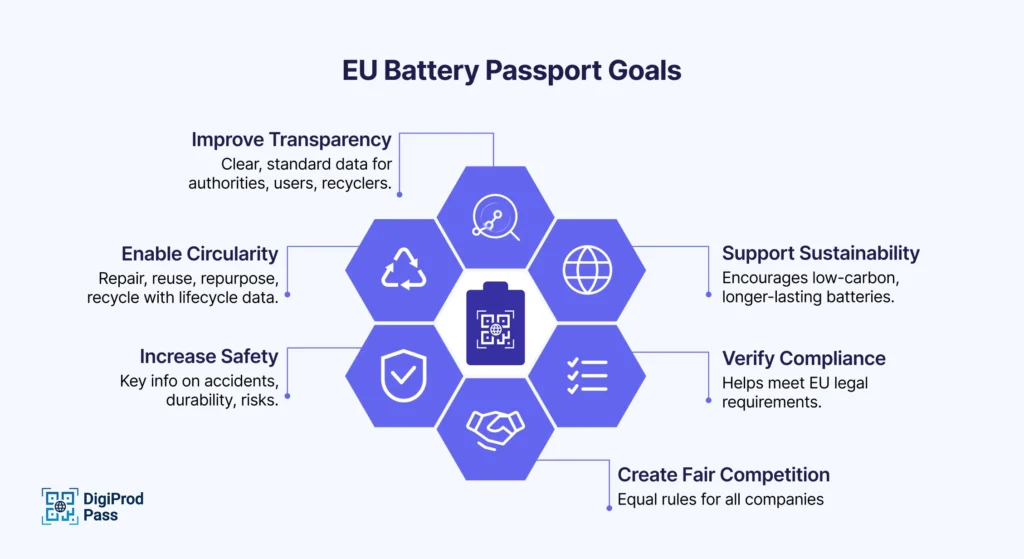
Supporters of the policy argue that the benefits outweigh the risks. Better traceability can expose unethical sourcing, reduce environmental damage, and improve recycling efficiency. It can also help regulators verify claims in a market where “green” labels are often hard to prove. In that sense, the passport is less a surveillance tool and more a ledger of accountability.
Critics aren’t convinced it will stay that way. They worry about mission creep, about data collected for sustainability gradually being repurposed for compliance enforcement, market advantage, or other uses that stretch beyond the original intent. They also point out that smaller companies may struggle to meet the technical requirements, concentrating power in the hands of larger players who can afford robust data infrastructure.
There’s a middle path, but it’s narrow. Clear rules on data minimization, purpose limitation, and retention could keep the system focused. Independent oversight could prevent quiet expansions of scope. Interoperability standards could avoid dangerous data silos. And transparent governance, who can see what, when, and why, could build the trust the system will need to function.
Because the battery passport is more than a policy tweak. It’s a blueprint for how physical products and digital records are fused in the next phase of industrial regulation.
If done right, it could make the clean energy transition more honest and efficient. If done poorly, it could create a sprawling, attractive target for cyberattacks and a thicket of unclear ownership over sensitive data.
The batteries may power the future. The question is who ends up holding the keys to the information that defines them.
—Travis Luyindama, B1Daily






Leave a comment